Write Your Fantasy Novel
Understanding Fiction Fundamentals
The Building Blocks of Story
Every great story, from a simple fable to a sprawling epic, is built from the same fundamental parts. Understanding these core elements is the first step to crafting a narrative that hooks readers and doesn't let go. These are the tools you'll use to build worlds, create memorable people, and tell a tale that matters.
Plot The Story's Skeleton
Plot is the sequence of events that make up your story. It's the answer to the question, "What happens next?" But a good plot is more than just a list of events; it's a chain of cause and effect. One event leads logically to the next, pulling the reader forward.
Most stories follow a basic pattern known as the three-act structure. Think of it as a beginning, a middle, and an end.
| Act | Purpose | Key Events |
|---|---|---|
| Act 1: The Setup | Introduce the world and characters. | The story begins in a state of normalcy, but an inciting incident occurs, disrupting the protagonist's life and setting them on a new path. |
| Act 2: The Confrontation | Develop the conflict. | This is the longest part of the story. The protagonist faces a series of obstacles and challenges, raising the stakes and building tension. |
| Act 3: The Resolution | Bring the story to a close. | The conflict reaches its peak in the climax, the story's most intense moment. Afterward, the falling action ties up loose ends, leading to a final resolution. |
This structure creates a satisfying narrative arc, taking the reader on a journey with a clear beginning and a conclusive end.
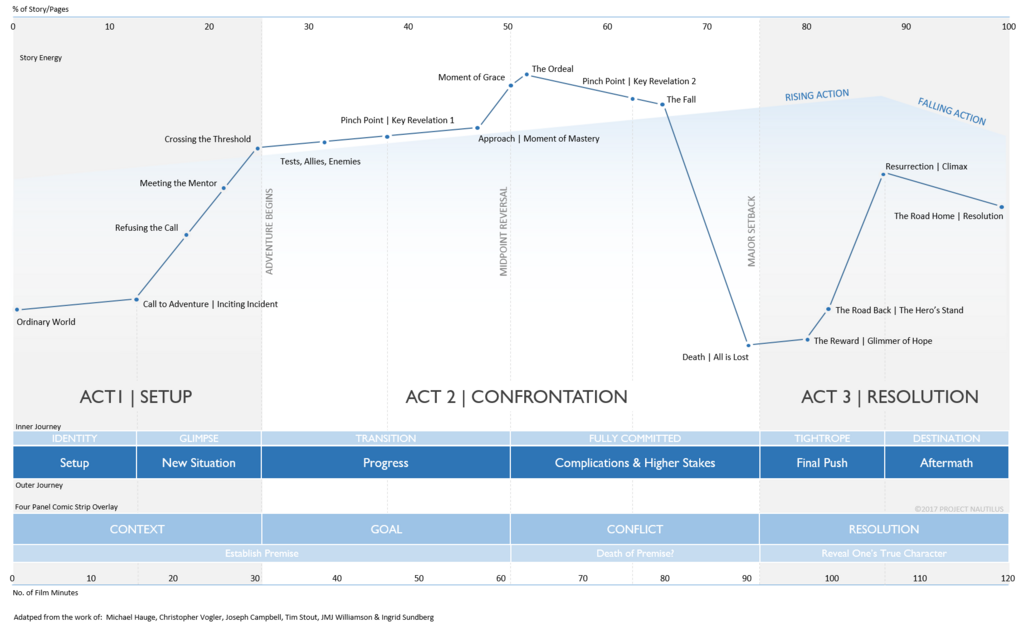
Plot is the engine of your story. Every scene should either advance the plot or develop a character, and the best scenes do both.
Characters The Story's Heart
Readers connect with characters. A thrilling plot might grab their attention, but a compelling character will earn their investment. Your characters are the lens through which the audience experiences the story's world and events.
To make a character feel real, you need to go beyond a simple description. What do they want more than anything else? What are they afraid of? What are their flaws? Answering these questions gives your character depth and makes their actions believable. A perfect character is boring; a flawed character is relatable.
Protagonist
noun
The main character of a story. Their journey and choices drive the narrative forward.
Consider a detective who is brilliant at solving cases but terrible at managing her personal life. Her internal conflict—her desire for order in her work versus the chaos in her life—makes her more interesting than a detective who is simply good at her job.
Setting The Story's World
The setting is the time and place where your story unfolds. It's more than just a backdrop; a well-realized setting can feel like a character in its own right. It influences the mood, shapes the characters' actions, and can even be a source of conflict.
A story set in a bustling, futuristic city will feel very different from one set in a quiet, medieval village. The setting affects how characters speak, what they wear, what they believe, and what challenges they face. Think about how weather can create atmosphere—a stormy night creates suspense, while a sunny morning can evoke a sense of hope.
Use sensory details to bring your setting to life. What does it sound, smell, and feel like? Immersing the reader in the physical world of the story makes the narrative more vivid and believable.
Theme The Story's Soul
The theme is the central idea or underlying message of your story. It's what the story is really about, beyond the surface-level plot. Themes often explore universal human experiences like love, loss, courage, or betrayal.
A theme isn't stated directly. Instead, it emerges naturally from the characters' actions, the conflicts they face, and the resolution of the plot. A story about a soldier returning from war might have a plot about readjusting to civilian life, but its theme could be about the difficulty of healing from trauma or the meaning of home.
Having a clear theme gives your story purpose and depth. It leaves the reader with something to think about long after they've finished the last page.
Ready to test your knowledge of these core concepts?
What is the plot of a story?
Which element is best described as the 'central idea or underlying message' of a story?
These four elements—plot, character, setting, and theme—are the foundation of all fiction. Mastering them is the key to writing stories that resonate.