World War I: The Spark and The Kaiser
Europe's Political Landscape
A Continent of Rivals
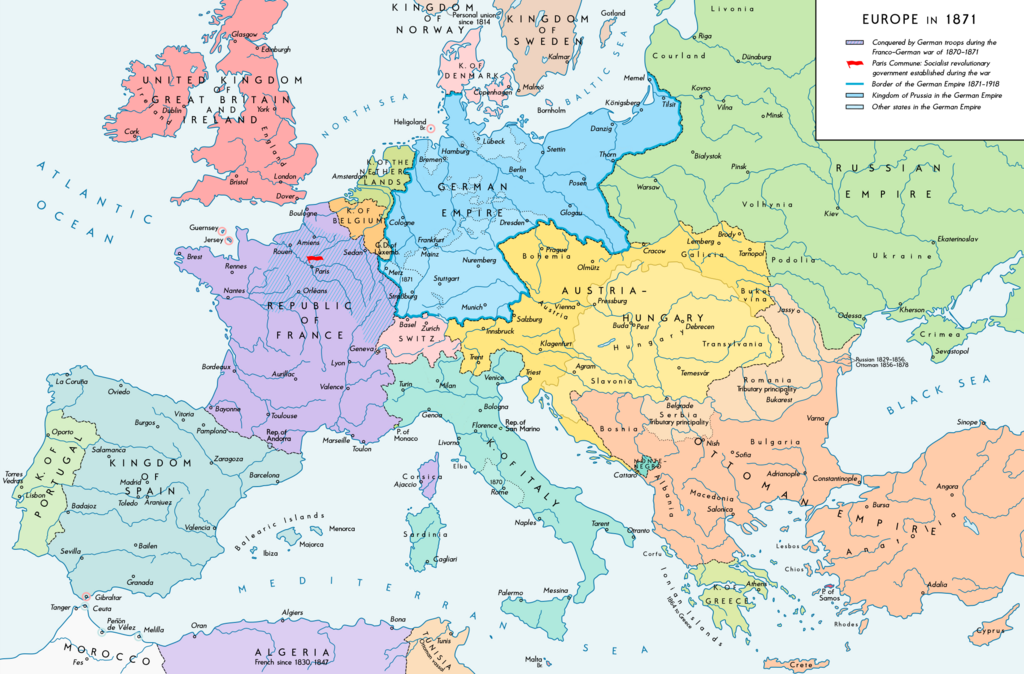
By the late 19th century, Europe was a patchwork of old empires and new nations, each jostling for position. The continent's five major powers dominated the scene.
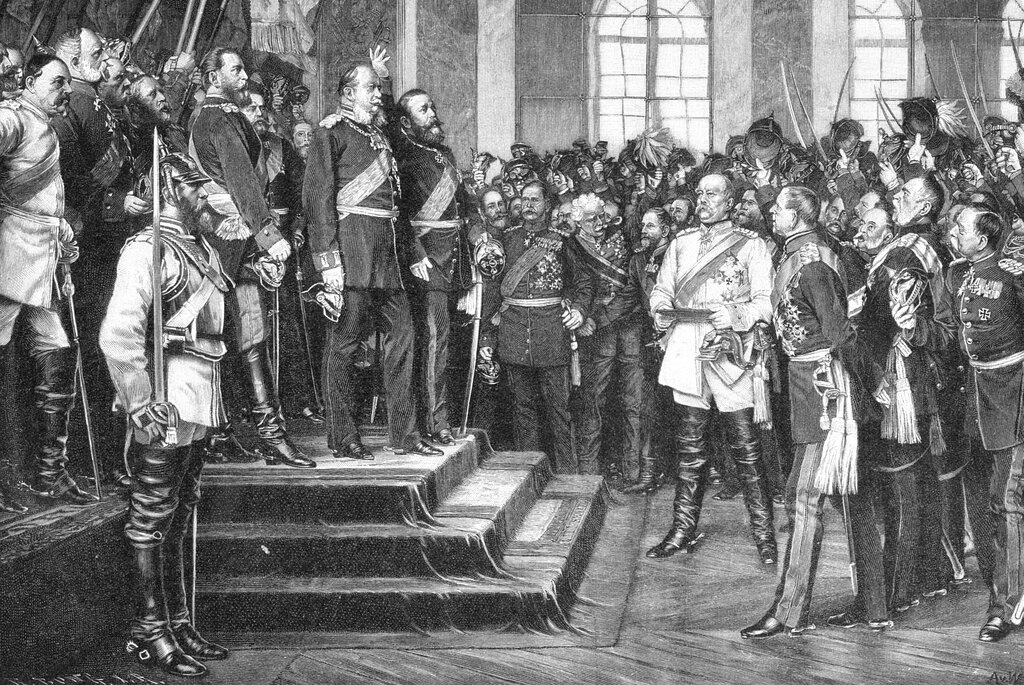
Germany: A new powerhouse, unified in 1871 under Prussian leadership. It boasted a booming industrial economy and the most formidable army in Europe. Berlin was ambitious, eager to claim its "place in the sun."
Great Britain: The world's leading naval and colonial power, presiding over a vast global empire. London's primary foreign policy goal, known as "splendid isolation," was to maintain a balance of power on the continent, ensuring no single nation became too dominant.
France: Still recovering from its humiliating defeat by Prussia in 1870, France was driven by a desire for revanche (revenge) and the return of the lost provinces of Alsace and Lorraine. It focused on rebuilding its army and expanding its colonial empire.
Austria-Hungary: A sprawling, multi-ethnic empire in Central Europe, ruled by the Habsburg dynasty. It faced constant internal pressure from various nationalist movements among its many subject peoples, particularly Slavs. Vienna's main concern was stability, especially in the volatile Balkan region.
Russia: A vast empire stretching from the Baltic Sea to the Pacific. Though immense, it was less industrialized than its western rivals and plagued by internal unrest. The Tsar saw Russia as the protector of the Slavic peoples, a role that often put it at odds with Austria-Hungary.
A Tangled Web of Alliances
Faced with this complex web of rivalries, the great powers sought security through alliances. These agreements, meant to be defensive, instead divided the continent into two armed camps. A conflict involving any two members had the potential to drag everyone else in.
The alliance system dividing Europe into two armed camps—the Triple Alliance (Germany, Austria-Hungary, Italy) and Triple Entente (France, Russia, Britain)—transformed what might have remained localized Balkan conflict into continental and ultimately global war.
First came the Triple Alliance. In 1879, Germany and Austria-Hungary signed the Dual Alliance, pledging mutual support if Russia attacked either of them. This was the cornerstone of German Chancellor Otto von Bismarck's foreign policy, aimed at isolating France. In 1882, Italy joined, forming the Triple Alliance. The Italians were motivated by anger at France's seizure of Tunisia, a territory they had coveted.
France, finding itself diplomatically isolated, sought its own partners. In 1894, it formed a military alliance with Russia. This was a logical, if ideologically odd, pairing: a democratic republic and an autocratic monarchy united by a common fear of Germany.
Great Britain, meanwhile, abandoned its policy of "splendid isolation" as it grew wary of Germany's expanding navy and aggressive foreign policy. In 1904, it signed the Entente Cordiale ("friendly understanding") with France, settling their colonial disputes. Then, in 1907, Britain and Russia resolved their own rivalries in Central Asia, forming the Anglo-Russian Entente. These three interlocking agreements created the Triple Entente.
Europe was now a continent of two halves. A crisis in one part of the system could trigger a domino effect, pulling all the major powers into a conflict they might not have wanted.
A New Kaiser for Germany
In 1888, a new emperor, or Kaiser, ascended the German throne: Wilhelm II. He was young, ambitious, and impulsive, a stark contrast to the cautious and calculating Chancellor Bismarck, who had guided German policy for decades. Wilhelm was determined to be his own master and chart a more assertive course for Germany on the world stage.
One of his first major acts was to force Bismarck's resignation in 1890. This move signaled a significant shift in German foreign policy. While Bismarck had focused on maintaining the balance of power and avoiding conflict, Wilhelm was eager to challenge the established order, particularly Britain's naval supremacy. His aggressive stance, known as Weltpolitik (World Policy), would undo much of Bismarck's careful diplomacy and increase tensions across Europe.
What was the primary goal of Great Britain's foreign policy of "splendid isolation" in the late 19th century?
The Triple Alliance was originally formed by which two countries as the Dual Alliance in 1879?
This complex interplay of powerful nations, rigid alliances, and assertive leaders created a fragile and dangerous political landscape. The stage was set for a major confrontation.