WhatsApp Security and Vulnerability Analysis
Signal Protocol Implementation
The Asynchronous Handshake
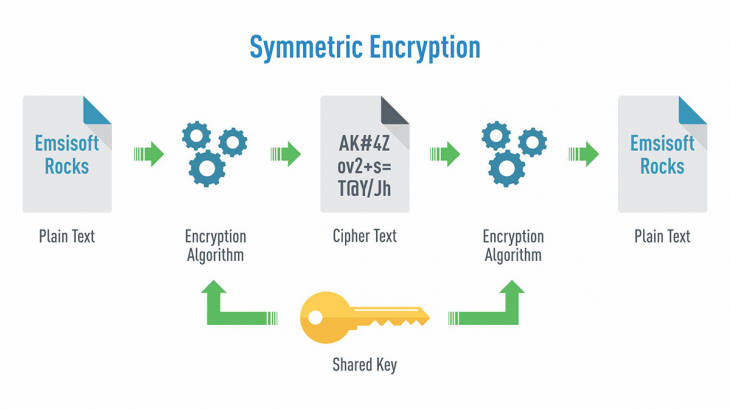
WhatsApp secures billions of conversations using end-to-end encryption, powered by the Signal Protocol. This means only the sender and recipient can read a message. Even WhatsApp itself can't decipher your chats. The magic behind this starts with a clever key exchange process called the Extended Triple Diffie-Hellman handshake, or X3DH for short. Its primary job is to establish a shared secret key between two users, even if one of them is offline. This is crucial for a mobile messaging app where users aren't always connected at the same time.
To make this work, each user's app generates and manages several types of keys. Think of it as having different keys for different levels of security and longevity. When you first install WhatsApp, your device creates a long-term Identity Key (IK). This key pair is your fundamental proof of identity in the system. It rarely changes. It also generates a medium-term Signed Prekey (SPK). This key is signed by your Identity Key to prove it belongs to you. It's periodically rotated for better security. Finally, your device generates a large batch of One-Time Prekeys (OTPs). These are disposable keys, each used only once for initiating a new chat session.
The combination of long, medium, and short-term keys provides both trust and forward secrecy.
The Prekey Bundle
All these public keys—the Identity Key, the Signed Prekey, and the list of One-Time Prekeys—are bundled together into what's called a prekey bundle. Your device uploads this bundle to WhatsApp's servers. When someone wants to message you for the first time, their app doesn't connect directly to your phone. Instead, it downloads your prekey bundle from the server.
This is where the handshake begins. Let's say Alice wants to send a message to Bob. Alice's app downloads Bob's prekey bundle. Her app then generates its own temporary key pair, called an Ephemeral Key (EK). Now, Alice has all the ingredients she needs: her own Identity Key (IKa) and Ephemeral Key (EKa), plus Bob's downloaded Identity Key (IKb), Signed Prekey (SPKb), and one of his One-Time Prekeys (OTPb).
Alice's app performs a series of calculations using these keys. Specifically, it uses an elliptic curve cryptography algorithm called to combine her private keys with Bob's public keys. This produces a single, shared secret key (SK) that only Alice can generate at this moment. The beauty of the Diffie-Hellman exchange is that this shared secret is created without ever being transmitted over the network. Alice then uses this SK to encrypt her first message to Bob, and sends it along with her own public keys (IKa and EKa). When Bob's phone comes online, it receives the encrypted message and Alice's public keys. His app performs the same set of calculations, but from his perspective, combining his private keys with Alice's public keys. The result is the exact same shared secret key, which he can now use to decrypt Alice's message.
Practical Trade-offs
While both WhatsApp and Signal use the same core protocol, their implementations differ slightly due to their different priorities and scale. WhatsApp, serving over two billion users, makes certain trade-offs for user convenience and reliability.
One major difference is in metadata protection. The Signal app has a feature called which encrypts the sender's identity, making it much harder for the server to know who is messaging whom. WhatsApp has not implemented this. On WhatsApp's platform, the server can see the metadata—who sent a message and who received it—even though it cannot see the message content. This information can still be valuable for traffic analysis.
Another trade-off involves cloud backups. By default, WhatsApp backups to Google Drive or iCloud are not end-to-end encrypted. While users can now opt-in to encrypted backups, many don't. This creates a potential vulnerability. If an attacker gains access to a user's cloud account, they can access their entire chat history. Signal avoids this problem by only storing message history locally on the device.
These decisions highlight a classic tension in system design: the balance between perfect security and user-friendly features like seamless backups and multi-device support. WhatsApp's implementation of the Signal Protocol is a masterclass in applying strong cryptography at a massive scale, but it involves pragmatic choices that reflect its status as a mainstream communication tool.
Now let's test your understanding of how WhatsApp implements its security.
What is the primary purpose of the Extended Triple Diffie-Hellman (X3DH) handshake as used by WhatsApp?
Which of the following keys is NOT included in a user's 'prekey bundle' that is uploaded to WhatsApp's servers?
This powerful combination of cryptographic keys and asynchronous handshakes is what allows you to communicate securely and privately, whether your contact is online or offline.