Vibe Coding Explained
Introduction to Vibe Coding
Coding with a Conversation
Imagine wanting to build a website, but instead of typing out every line of code, you just describe what you want. You might say, "Create a simple portfolio page with a photo gallery and a contact form." A moment later, the code appears, ready for you to test.
This isn't science fiction. It's a new approach to software development called vibe coding. It's all about having a conversation with an AI, guiding it to build what you envision. The AI does the heavy lifting of writing the syntax, while you focus on the big picture.
Vibe coding, a term coined by Andrej Karpathy in February 2025, has quickly become a compelling and controversial natural language programming paradigm in AI-assisted software development.
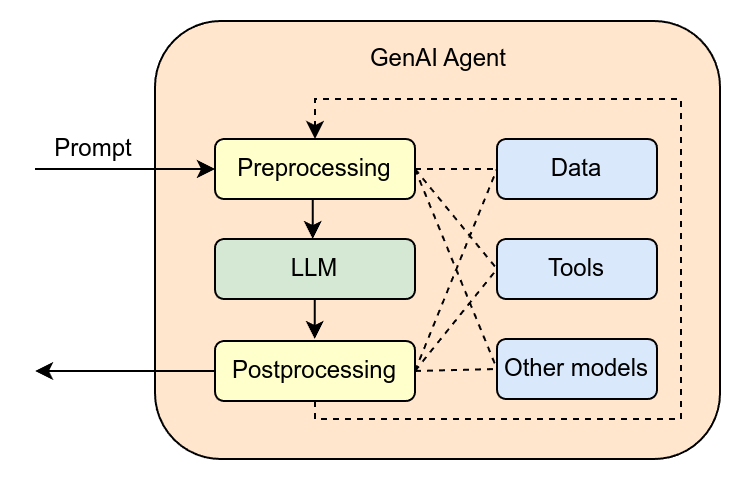
The "vibe" is your high-level idea. You provide the creative direction, and the AI, usually a Large Language Model (LLM), acts as your programming partner, translating your instructions into functional code. This process is iterative. You might ask the AI to make a button blue, then change your mind and ask for it to be green with rounded corners. Each step is a simple, plain-language request.
A New Kind of Workflow
So how does this differ from the way developers have traditionally worked? It's a fundamental shift in the developer's role from a writer to an editor or a director.
Instead of memorizing precise syntax and logic for a specific programming language, your most important skill becomes clear communication. You need to be good at describing your goals, testing the AI's output, and providing clear feedback for revisions.
| Feature | Traditional Coding | Vibe Coding |
|---|---|---|
| Primary Task | Manually writing code | Describing desired outcomes |
| Core Skill | Language syntax & logic | Clear communication & testing |
| Process | Write, compile, debug | Prompt, test, refine |
| Tools | Code editor, compiler | AI chat interface, LLM |
Think of it like working with a highly skilled but very literal assistant. The assistant knows how to do everything, but it needs you to tell it what to do and to check its work. You don't need to know how to build a car engine from scratch, but you do need to know how to describe the car you want and take it for a test drive.
Opening the Doors
Perhaps the most exciting aspect of vibe coding is its potential to make software development more accessible. You no longer need years of specialized training to build a simple application or automate a task.
If you have a clear idea and can describe it well, you can start building. This opens up software creation to designers, entrepreneurs, artists, and anyone else who wants to bring a digital idea to life. It lowers the barrier to entry, allowing people to focus on the problem they want to solve rather than the technical details of how to solve it.
Vibe coding shifts the focus from writing perfect syntax to clearly expressing creative intent.
Of course, it's not a magic wand. Understanding the basics of how software works is still helpful for testing and providing good feedback. But the need for deep, specialized coding knowledge is fading for many common tasks.
Ready to check your understanding?
What is the central idea behind "vibe coding"?
How does the role of a developer primarily change with the adoption of vibe coding?
This new approach represents a significant change in how we interact with computers, turning the craft of programming into a more collaborative and intuitive process.