Vibe Coding Explained
Introduction to Vibe Coding
What Is Vibe Coding?
Instead of writing code line by line, what if you could just describe what you want your program to do? That's the basic idea behind vibe coding. It’s a way of programming where you collaborate with an AI, specifically a large language model (LLM), to build software. You provide the high-level goals and the 'vibe,' and the AI handles the syntax.
Vibe coding is an AI-assisted software development method where a coder provides high-level instructions to a large language model (LLM), allowing it to generate and iteratively refine code.
The developer's role shifts from a writer to a director. You guide the AI, test the output, and provide feedback to refine the results. It’s a conversation. This approach makes development feel more like iterative experimentation than a rigid construction process.
The term was popularized by computer scientist Andrej Karpathy in early 2025. It perfectly captured this new, intuitive way of interacting with AI to create code, and the name stuck.
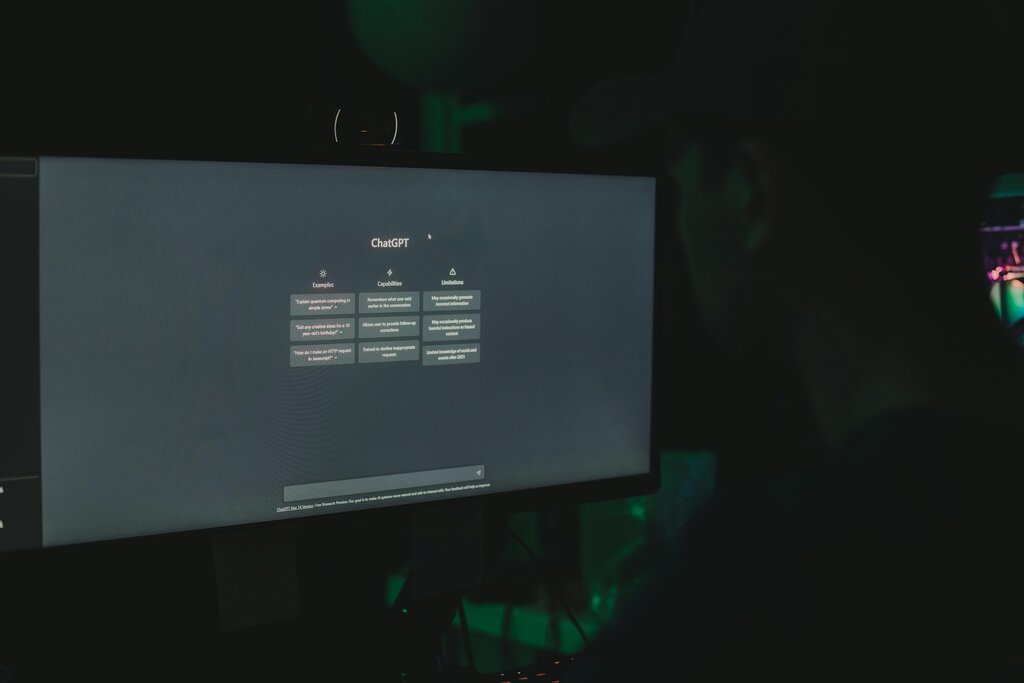
Vibe vs. Traditional Coding
Traditional coding requires you to know the specific syntax and logic of a programming language. You meticulously plan and write every function, loop, and variable. It's a highly structured process focused on precision.
Vibe coding flips this on its head. The focus isn't on perfect syntax, but on clearly communicating your intent to the AI. You might start with a simple prompt, see what the AI produces, and then tweak your instructions based on the output. It’s faster for prototyping and exploring ideas, as you're not bogged down by implementation details from the start.
| Aspect | Traditional Coding | Vibe Coding |
|---|---|---|
| Developer's Role | Writer, architect | Director, editor |
| Primary Focus | Syntax and logic | Intent and outcome |
| Process | Structured, manual | Conversational, iterative |
| Key Skill | Language mastery | Clear communication |
Vibe Coding in Action
Vibe coding is useful in many scenarios. It's great for quickly building prototypes to test an idea. If you're learning a new programming language, you can ask the AI to generate code snippets to help you understand different concepts.
Imagine you want to create a simple app that fetches the weather. Instead of looking up API documentation and writing HTTP requests from scratch, you could give an AI a prompt like this:
Create a Python function that takes a city name as input, uses the OpenWeatherMap API to get the current temperature, and returns it as a string.
The AI would then generate the necessary code. It might not be perfect on the first try, but it provides a solid starting point that you can refine through conversation.
import requests

def get_weather(city, api_key):
    """Fetches the current temperature for a given city."""
    base_url = "http://api.openweathermap.org/data/2.5/weather?"
    complete_url = f"{base_url}q={city}&appid={api_key}&units=metric"

    response = requests.get(complete_url)
    data = response.json()

    if data["cod"] != "404":
        main = data["main"]
        temperature = main["temp"]
        return f"The temperature in {city} is {temperature}°C."
    else:
        return "City not found."

# Note: You'd need to get your own API key to run this.
This interactive process lowers the barrier to entry for programming and can significantly speed up development for experienced coders. It allows creators to focus more on the 'what' and less on the 'how'.
Ready to check your understanding of vibe coding?
What is the core idea behind "vibe coding"?
In the vibe coding paradigm, the developer's role primarily shifts from a code writer to a ____.
By emphasizing high-level direction and rapid iteration, vibe coding is changing how we think about building software.