Vibe Coding Explained
Introduction to Vibe Coding
What is Vibe Coding?
Imagine telling a story to an artist and having them sketch it out perfectly. That's the essence of vibe coding. Instead of writing every single line of code yourself, you describe your goal and the desired 'vibe' to an AI partner. You focus on the big picture, the feeling, and the user's experience, while the AI handles the complex syntax.
This approach is less about typing precise commands and more about having a conversation. You might tell the AI, "Build a login page that feels modern and friendly," or "Create a data visualization that looks clean and professional." Your role shifts from being a bricklayer to an architect, guiding the construction process with high-level instructions.
Vibe coding is a way of building software by directing an AI to produce runnable code from plain-English instructions, shifting your role from typing syntax to shaping intent, UX, and edge cases.
The term itself is relatively new, reflecting the recent explosion in AI capabilities. It captures this shift towards a more intuitive and collaborative style of software development. It's not about replacing developers, but about changing what a developer does day-to-day.
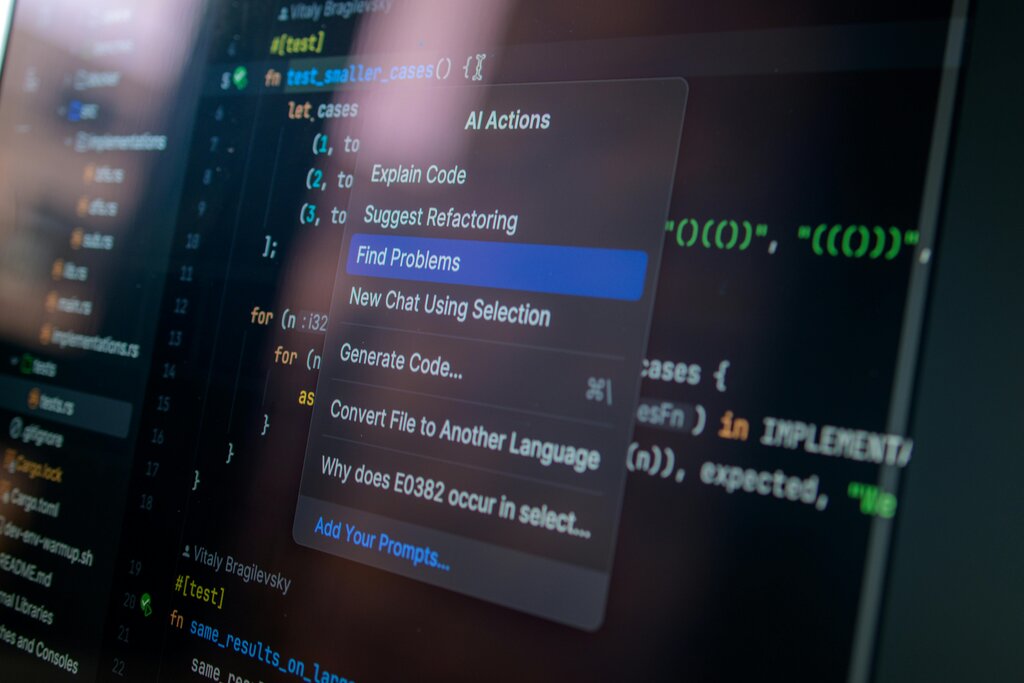
A New Kind of Workflow
Traditionally, programming has been a meticulous process. A developer would translate an idea into a highly structured language that a computer could understand, line by painstaking line. This required deep knowledge of specific syntax and logic.
Vibe coding turns this workflow on its head. The process becomes more iterative and fluid. A developer starts with a natural language prompt, the AI generates a first draft of the code, and then the developer refines it through conversation. The back-and-forth looks more like a creative partnership than a rigid set of instructions.
This focus on intent means developers spend more time thinking about the 'why' and 'how' from a user's perspective, rather than the 'what' of a specific line of code. It elevates the role to be more strategic.
Benefits and Challenges
Like any new technology, vibe coding comes with its own set of pros and cons. The most obvious benefit is speed. Brainstorming and prototyping can happen much faster when you don't have to write every piece of code from scratch. It also makes programming more accessible to people who have great ideas but lack formal coding training.
This new approach can also boost creativity. By offloading the tedious parts of coding, developers have more mental energy to focus on innovative solutions and better user experiences.
| Benefit | Description |
|---|---|
| Speed | Rapidly prototype and build applications by describing intent. |
| Accessibility | Lowers the barrier to entry for software creation. |
| Creativity | Frees up developers to focus on high-level design and user experience. |
| Efficiency | Automates the generation of boilerplate and repetitive code. |
However, there are challenges. Relying on AI can sometimes lead to code that is difficult to understand, debug, or maintain. The AI might produce code that works, but isn't written efficiently or securely. The developer's skill set must evolve to include prompt engineering and the ability to critically evaluate AI-generated code.
There's also a risk of losing a deeper understanding of how software works under the hood. A developer guiding an AI still needs strong foundational knowledge to spot errors and guide the AI toward an optimal solution. It's a powerful tool, but not a replacement for expertise.
The key challenge is moving from being a code writer to a code critic and director.
What is the core idea behind 'vibe coding'?
In the vibe coding paradigm, the developer's role shifts from a 'bricklayer' to a(n) ____.
Vibe coding represents a significant shift in software development, emphasizing collaboration with AI to translate intent and feeling into functional code. While it offers incredible speed and accessibility, it also requires developers to adapt, becoming skilled directors rather than just writers of code.