Vibe Coding Essentials
Introduction to Vibe Coding
What is Vibe Coding?
Instead of writing line after line of precise code, imagine describing what you want an application to do in plain English. You might say, "Build me a website that shows pictures of cats, with a new picture appearing every time I click a button." The computer then writes the code for you. That’s the essence of vibe coding.
Vibe coding is the practice of creating software by describing what you want in natural language, letting artificial intelligence generate the code, and then refining it through conversation.
It’s a partnership between a human and an AI, specifically a large language model (LLM). The developer provides the vision and the general direction—the "vibe"—and the AI handles the technical details of turning that vision into functional software. The process becomes a dialogue, where the developer refines the AI's output through further instructions until the application is just right.
How It's Different
Traditional programming requires you to learn a specific language with strict syntax rules. You are the architect and the construction worker, meticulously placing every digital brick. Vibe coding changes your role from a writer to a director. You guide the AI, which acts as a highly skilled programmer that can build and rebuild things instantly based on your feedback.
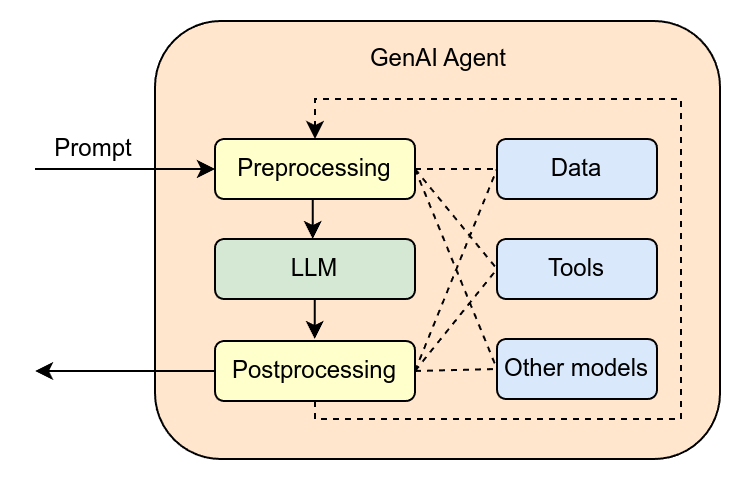
This shift makes software development feel more like a creative conversation. The focus moves from getting syntax perfect to clearly communicating your intent.
| Feature | Traditional Coding | Vibe Coding |
|---|---|---|
| Developer's Role | Writer and builder of code | Director and editor of AI output |
| Input | Precise code in a programming language | Natural language descriptions |
| Process | Manual, line-by-line creation | Conversational and iterative refinement |
| Skill Requirement | Deep knowledge of syntax and logic | Strong communication and problem-solving skills |
A Quick History
While AI-assisted coding tools have been around for a while, the idea of vibe coding gained significant traction around 2025. This was driven by the explosive improvement in large language models. These models became so adept at understanding human language and generating complex code that a new way of working became possible.
Early AI tools could only suggest snippets of code or find bugs. With modern LLMs, developers could delegate entire features or even whole applications to the AI, fundamentally changing the development workflow. This conversational and intuitive approach is what came to be known as vibe coding.
The key change wasn't just better autocompletion; it was the AI's ability to grasp high-level intent from a simple conversation.
Pros and Cons
Vibe coding offers some powerful advantages. It dramatically speeds up development, allowing for rapid prototyping and iteration. An idea can go from a simple thought to a working application in a fraction of the time it would take with traditional methods. It also makes software development more accessible to people without formal programming training, empowering designers, writers, and entrepreneurs to build their own tools.
However, it has limitations. The code generated by AI isn't always perfect or optimized. It can contain subtle bugs or security vulnerabilities that require a discerning human eye to catch. A developer still needs a solid understanding of programming principles to effectively guide the AI and troubleshoot its output. Over-reliance on vibe coding without foundational knowledge can lead to poorly constructed and inefficient applications.
Ultimately, vibe coding is a powerful tool, not a replacement for human expertise. It augments a developer's skills, freeing them from tedious tasks to focus more on creativity and the user experience.
Ready to check your understanding of this new paradigm?
What is the primary role of a human developer when using the "vibe coding" approach?
Vibe coding focuses more on clearly communicating intent than on perfecting syntax.
Vibe coding represents a significant shift in how we create software, moving from rigid syntax to creative collaboration with AI.