UX and UI Design Fundamentals
Introduction to UX and UI
What are UX and UI?
Think about your favorite app. What makes it great? It probably works exactly how you expect, and it looks good while doing it. The feelings and logic behind that experience are the result of User Experience (UX) and User Interface (UI) design.
User Experience is the overall feeling a person has when using a product. It's the invisible structure, the logic, and the flow. Is the app easy to navigate? Does it solve your problem without frustration? That’s the work of a UX designer. They are the architects, focusing on the user’s journey from start to finish.
UX design is about the why and the how. It’s the entire process of creating a product that is useful, usable, and enjoyable.
User Interface, on the other hand, is what you actually see and interact with. It’s the collection of buttons, colors, fonts, and images. UI designers are the visual designers. They take the architectural plans from the UX designer and make them beautiful and accessible. They choose the color palette that sets the mood and design the icons you tap.
UI design is about the what. It's the visual presentation and interactivity of the product.
Teammates, Not Rivals
While UX and UI are different disciplines, they are completely dependent on each other. A product can't succeed with just one.
Imagine a beautiful website with stunning graphics and elegant fonts (great UI). If it’s impossible to find the search bar or the checkout process is a confusing maze, you’ll leave frustrated. The underlying structure (the UX) failed.
Now imagine a website that is logically organized and incredibly easy to use (great UX). If it looks like a document from 1995 with clashing colors and tiny text, you might not trust it or enjoy using it. The visual presentation (the UI) let it down.
Great products happen when UX and UI work together seamlessly. The UX team maps out the user’s path, and the UI team paves that path with clear, attractive, and consistent visuals.
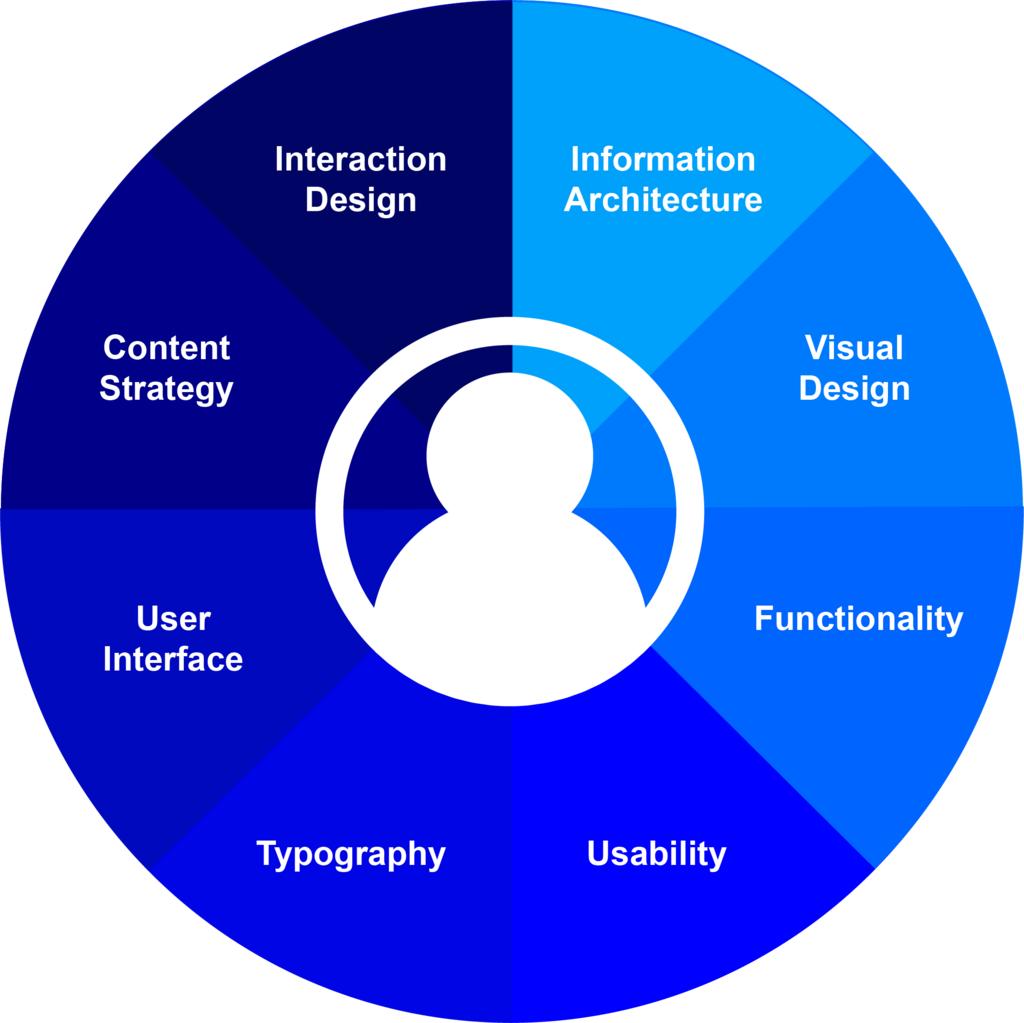
Why Good Design Matters
Effective UX/UI design isn't just about making things look nice. It has a direct impact on both the people using the product and the business that created it.
For users, good design creates satisfaction and trust. When an app or website is intuitive, it feels effortless. You accomplish your goal quickly and might even enjoy the process. A poorly designed product, however, causes friction and frustration, wasting your time and energy. Think about the last time you abandoned an online shopping cart because the site was too complicated. That's a failure of design.
For businesses, the benefits are clear. A positive user experience leads to higher customer loyalty, better reviews, and increased engagement. When people love using a product, they keep coming back and recommend it to others. This directly translates to business success, whether the goal is selling a product, providing a service, or sharing information.
Investing in exceptional UI/UX design isn’t just about aesthetics—it’s about creating a product that delivers real value, drives business growth, and keeps users returning for more.
How We Got Here
The way we interact with computers has changed dramatically over the decades, and UX/UI design evolved right alongside it.
In the early days of computing, there was no “user interface” to speak of. Users had to type complex commands into a black screen with blinking text. This was the Command Line Interface (CLI). It was powerful but required specialized knowledge. You had to know the exact commands to make the computer do anything.
> move document.txt /documents/archive
> File moved successfully.
The major breakthrough came with the Graphical User Interface (GUI). Instead of typing commands, people could now click on icons, open windows, and use menus. The introduction of the computer mouse made this interaction even more direct. The GUI used metaphors from the real world, like folders and trash cans, to make computers understandable for everyone, not just experts.
Today, we are in the era of the Natural User Interface (NUI). We interact with devices through touch, voice, and gestures. Swiping on a smartphone, talking to a smart speaker, or using hand gestures with a virtual reality headset are all examples of NUIs. The goal is to make the interaction feel as natural and intuitive as possible, almost like there is no interface at all.

This evolution shows a clear trend: moving the burden of understanding from the human to the machine. Good UX/UI design is the engine of that trend, constantly working to make technology more accessible, efficient, and enjoyable for everyone.
Which of the following tasks would a User Interface (UI) designer be primarily responsible for?
An app that is logically structured and easy to navigate but looks outdated and visually unappealing has strong ___ but weak ___.