Universal JavaScript Developer Mastery
Modern JavaScript Architecture
The Architectural Shift
For years, the standard approach to building interactive websites involved sending a minimal HTML file to the browser and letting JavaScript handle the rest. This model, known as Client-Side Rendering (CSR), powered the rise of Single-Page Applications (SPAs). The browser downloads a large JavaScript bundle, which then fetches data and renders the entire user interface. While this creates a fluid, app-like experience after the initial load, it comes with significant upfront costs.
The main drawbacks of CSR are slow initial load times and poor Search Engine Optimization (SEO), as search crawlers often see a blank page before the JavaScript executes.
To solve these issues, developers shifted to Server-Side Rendering (SSR). With SSR, the server generates the full HTML for a page in response to a browser request. The browser can start rendering the page as soon as it receives the HTML, leading to a much faster perceived load time. This is great for SEO and for the user's initial experience.
However, SSR introduced its own complexity: hydration. After the server-sent HTML is displayed, the browser must download and run the same JavaScript to attach event listeners and make the page interactive. This process can be costly, leading to a period where the page looks ready but isn't responsive. This delay is measured by a key metric: Time to Interactive (TTI).
The Rise of Server Components
The latest evolution in this journey is the concept of React Server Components (RSCs). This architecture challenges the idea that all UI components need to run in the browser. Instead, it distinguishes between components that render on the server and those that render on the client.
React Server Components (RSCs) run exclusively on the server. They can access server-side resources like databases or file systems directly, without needing an API endpoint. They render to an intermediate format that can be streamed to the browser, and critically, they don't send any of their own JavaScript to the client. This dramatically reduces the client-side bundle size.
Client Components are the components we're already familiar with. They render on the client (though they can also be pre-rendered on the server via SSR) and can use state, effects, and browser-only APIs. They are the interactive pieces of your application.
React powers the component-based UI, while Next.js enhances it with server-side rendering, static site generation, and SEO optimization.
This hybrid model allows developers to be intentional. Static, non-interactive content is handled by RSCs, keeping the JavaScript payload minimal. Only the truly interactive parts of the UI are sent to the browser as Client Components. The result is a server-first mindset that prioritizes sending as little JavaScript as possible.
| Feature | React Server Component (RSC) | Client Component |
|---|---|---|
| Environment | Server-only | Client (can be pre-rendered on server) |
| JS Sent to Client | None | Yes |
| State & Effects | No (useState, useEffect) | Yes |
| Data Access | Direct (e.g., database, file system) | Via API calls (fetch) |
| Interactivity | No (cannot use event listeners) | Yes (onClick, onChange) |
Rendering Strategies and Trade-offs
Modern frameworks give us a spectrum of rendering strategies, each with its own set of trade-offs. Choosing the right one depends on the specific needs of your application, from performance goals to content dynamism.
Static Site Generation (SSG): This strategy renders all pages at build time. The server produces a set of static HTML files that can be served instantly from a Content Delivery Network (CDN). This offers the fastest possible load times and is perfect for content that doesn't change often, like a blog or marketing site.
Server-Side Rendering (SSR): As discussed, SSR generates pages on-demand for each request. This is ideal for pages that need to display dynamic, user-specific data, like a social media feed or an e-commerce dashboard. The trade-off is higher server load compared to SSG.
Incremental Static Regeneration (ISR): A hybrid approach that combines the speed of SSG with the flexibility of SSR. Pages are generated statically at build time but can be automatically re-generated in the background after a certain time has passed or when data changes. This is useful for content that is mostly static but needs to be updated periodically, like a news site's homepage.
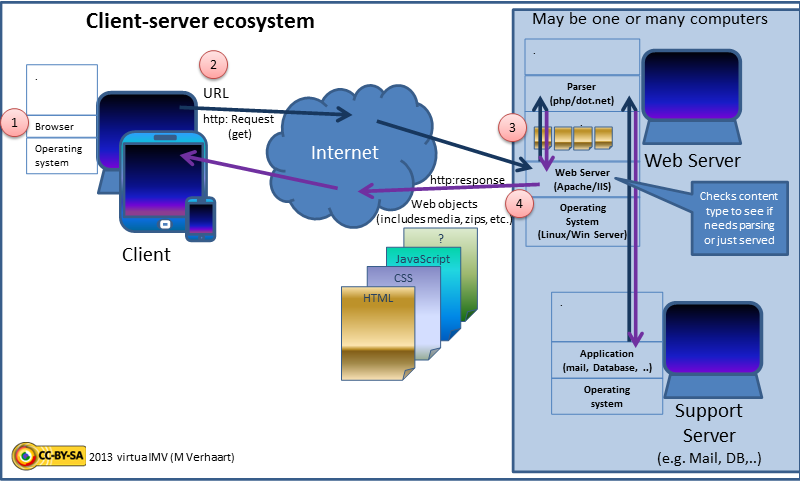
The architectural decision boils down to balancing key metrics:
- Time to First Byte (TTFB): How quickly the server responds. SSG excels here.
- First Contentful Paint (FCP): When the first piece of content appears. SSR and SSG are much better than CSR.
- Time to Interactive (TTI): When the page becomes fully responsive. This is where the RSC model shines by minimizing hydration costs and reducing the client-side JavaScript that blocks interactivity.
Adopting a server-first mindset means you start by assuming a component should be a Server Component. You only opt into a Client Component when you explicitly need browser-based interactivity or state. This inversion from the old CSR model is the cornerstone of building high-performance, modern JavaScript applications.
Ready to test your understanding of these architectural patterns?
What is the primary drawback of traditional Server-Side Rendering (SSR) that can lead to a period where a page looks ready but is unresponsive to user input?
Which of the following best describes the fundamental characteristic of a React Server Component (RSC)?
By understanding these core architectural principles, you're prepared to make informed decisions about how to build applications that are not just functional, but also fast, scalable, and user-friendly.