Understanding Time
Introduction to Time
What is Time?
We organize our entire lives around it, but what exactly is time? It’s the invisible current that carries us from birth to death. It’s the difference between a seed and a tree, between a memory and a plan. At its core, time is the progression of events from the past to the present and into the future.
time
noun
The indefinite continued progress of existence and events in the past, present, and future regarded as a whole.
Unlike the space we can move through—forward, backward, left, or right—time seems to have only one direction. We can remember the past, experience the present, but we can't visit the future. This one-way journey is a fundamental part of how we experience reality.
Time is often called the "fourth dimension," alongside the three spatial dimensions of length, width, and height. Together, they create the fabric of our universe.
A Journey Through Time's History
Human understanding of time has changed dramatically throughout history. Early societies experienced time cyclically, guided by the rising and setting of the sun, the phases of the moon, and the turning of the seasons. Life was a series of repeating patterns: planting and harvesting, winter and summer, birth and death.
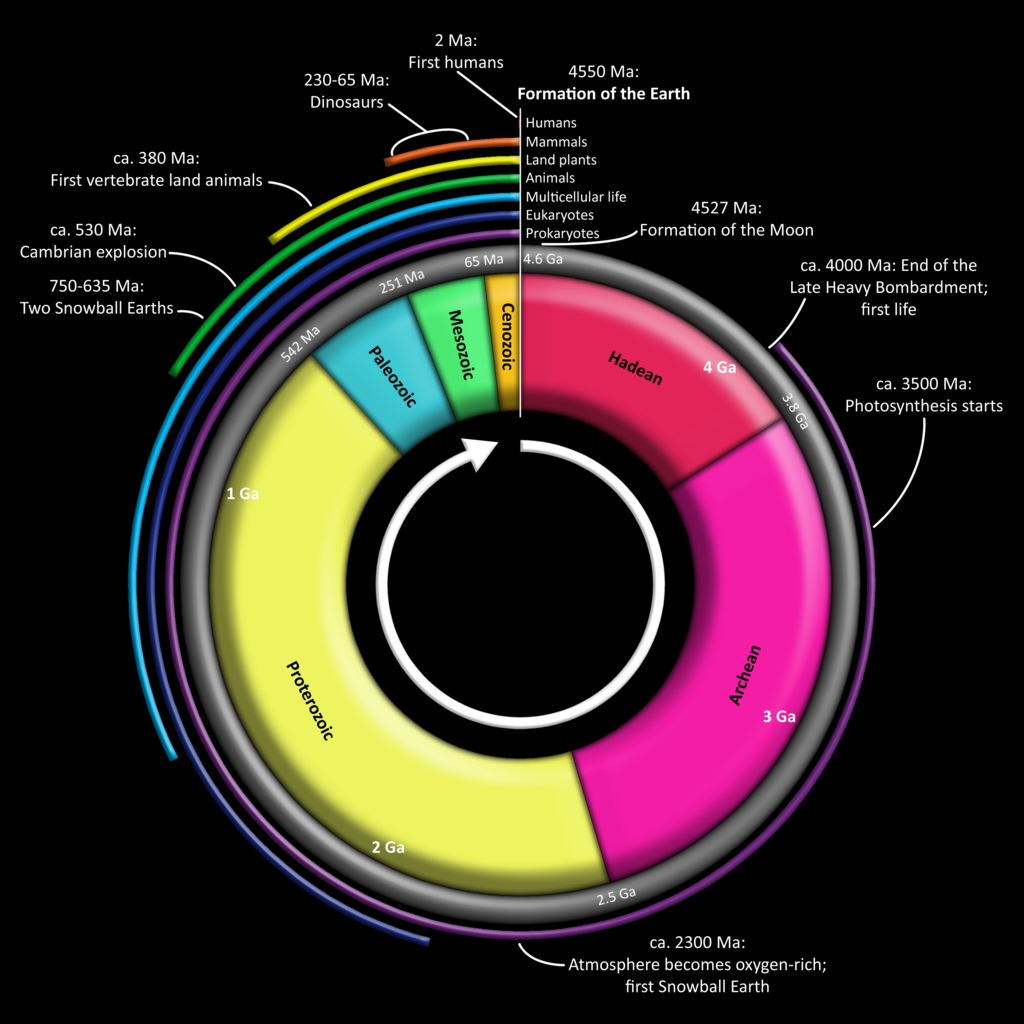
The idea of linear time—a straight line moving from a distinct past toward an unknown future—became more common with the rise of major religions and historical record-keeping. History was no longer just a repeating cycle, but a story with a beginning, a middle, and an end. Events became unique moments on a grand timeline.
Time Across Cultures
How we perceive time isn't universal; it's deeply shaped by culture and language. Some cultures view time as a scarce resource that can be saved, spent, or wasted. Others see it as abundant and flexible. These different perspectives influence everything from daily schedules to long-term planning.
| Time Perception | Common Characteristics | Example Cultures |
|---|---|---|
| Monochronic | Time is linear and finite. Focus is on one task at a time. Punctuality is highly valued. | United States, Germany, Japan |
| Polychronic | Time is fluid and flexible. Relationships are prioritized over schedules. Multiple tasks are handled at once. | Latin America, Middle East, Sub-Saharan Africa |
| Cyclical | Time is seen as a repeating cycle. The future is thought to be similar to the past. | Many Indigenous and Eastern cultures |
Language also plays a role. In English, we talk about the future being "ahead" of us and the past "behind" us. But for the Aymara people of the Andes, it's the reverse. The past is in front of them because it has already been seen and is known. The future is behind them because it is unseen and unknown. This shows just how differently humans can conceptualize the same fundamental aspect of reality.
Your Personal Experience of Time
Beyond history and culture, our personal experience of time is incredibly subjective. We've all felt time fly when we're having fun or drag on when we're bored. This psychological experience of time can feel just as real as the ticking of a clock.
Our perception also changes with age. For a five-year-old, a year is 20% of their entire life, which feels like an eternity. For a fifty-year-old, a year is just 2% of their life, passing by much more quickly.
Emotions have a powerful effect, too. Moments of intense fear can feel like they unfold in slow motion, as our brains process more information to handle the threat. In contrast, joyful memories might feel like fleeting, beautiful moments.
Our relationship with time defines our lives. It shapes our memories of the past, our actions in the present, and our hopes for the future.
Time to review what we've learned.
Now, let's test your understanding.
What is the primary difference between how early societies and later societies conceptualized time?
According to the Aymara people of the Andes, why is the past considered to be 'in front' of them?
Time is a simple word for a deeply complex idea. It's the silent backdrop to everything we do, a concept that humans have pondered for millennia and experience differently across the globe.