Understanding Tantra
Introduction to Tantra
What is Tantra?
Tantra is an ancient spiritual tradition that arose in the Indian subcontinent around the 6th century CE. Unlike some paths that suggest renouncing the world to find enlightenment, Tantra offers a different approach. It teaches that every aspect of our existence, from the mundane to the sublime, can be a tool for spiritual awakening.
Tantra
noun
An ancient spiritual tradition originating in India that uses rituals, meditation, and bodily practices to achieve spiritual awakening.
The word itself comes from Sanskrit and can be translated as “loom” or “weave,” suggesting the interconnectedness of all things. The core idea is to weave together the physical and spiritual aspects of life, rather than seeing them as separate. This path is not about escaping reality but engaging with it fully and consciously.
Core Principles
At the heart of Tantra is the principle of non-duality. This is the understanding that everything in the universe is a manifestation of a single, divine consciousness. There is no fundamental split between good and evil, pure and impure, or spirit and matter. Everything is part of the same whole.
Because of this, the body is not seen as an obstacle to spiritual progress but as a sacred vessel. It is a microcosm of the entire cosmos, containing divine energies that can be awakened and harnessed. Tantra is deeply concerned with this inner energy, often called Shakti (the divine feminine power) or prana (life force).
The goal is not to suppress human desires and experiences, but to transform them into channels for spiritual growth.
This leads to another key principle: using the world as your practice. Instead of withdrawing from life, a Tantric practitioner, or tantrika, uses everyday activities, emotions, and relationships as opportunities for awareness and transformation. The senses are not to be denied but are gateways to experiencing the divine.
Rituals and Practices
To work with these principles, Tantra employs a rich variety of practices. These are not random acts but carefully designed techniques to transform consciousness.
- Meditation and Visualization: Practitioners often visualize deities, seeing them not as external gods but as archetypal energies within themselves. This helps awaken those same qualities internally.
- Mantras: These are sacred sounds or phrases repeated to focus the mind and invoke specific energies. The vibration of the sound is believed to have a powerful effect on the practitioner's consciousness.
- Mandalas and Yantras: These are intricate geometric diagrams used as tools for meditation. Gazing at a yantra can help quiet the mind and lead to deeper states of concentration.
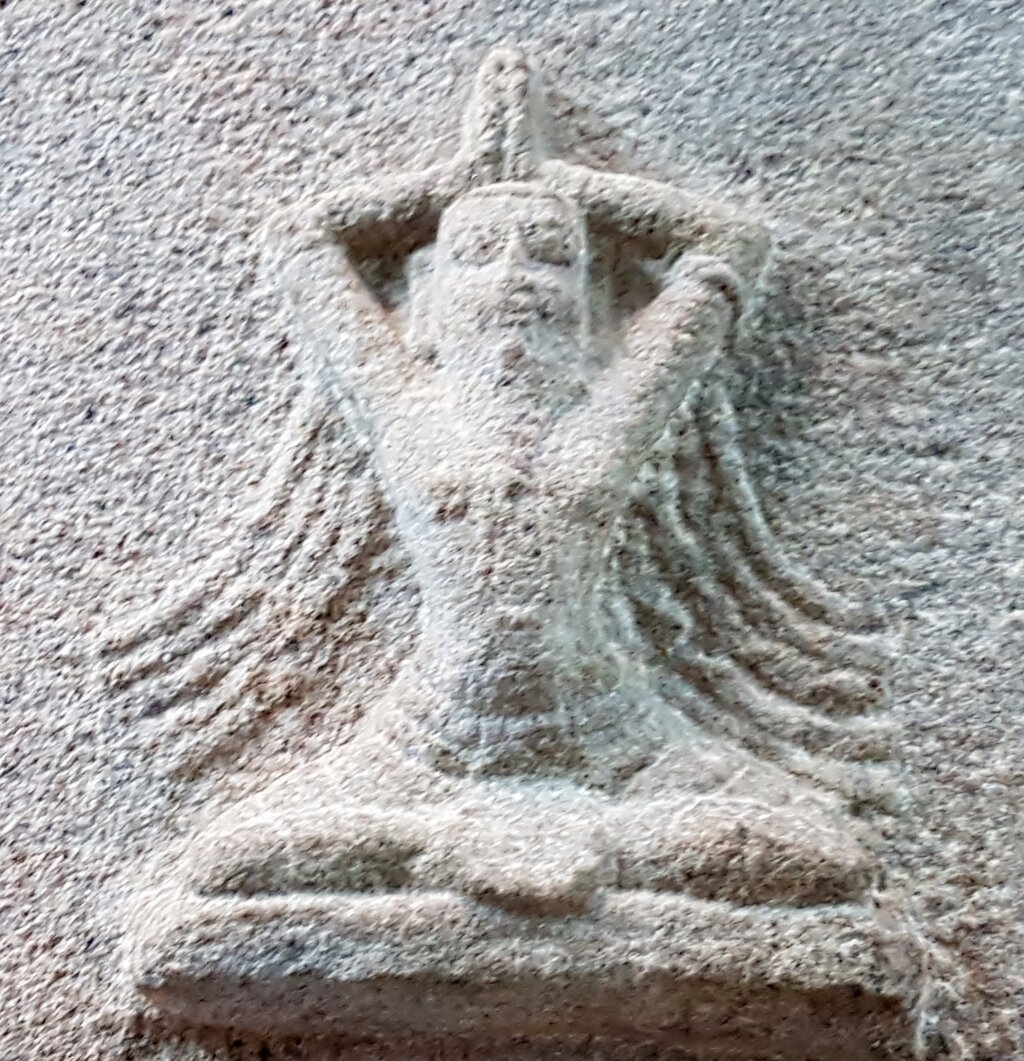
- Bodily Practices: Yoga postures (asanas), breathing techniques (pranayama), and symbolic hand gestures (mudras) are used to purify the body and control the flow of energy within it.
It's important to note that Tantra is not a single, monolithic tradition. It has influenced and been expressed through Hinduism, Buddhism, and Jainism, leading to a wide diversity of schools and practices. Some traditions are highly philosophical, while others are more ritualistic. What unites them is the fundamental view of the world as divine and the use of specific techniques to realize that divinity directly.
Ready to check your understanding?
The Sanskrit word “Tantra” is often translated as “loom” or “weave.” What core concept does this metaphor represent?
According to the principle of non-duality in Tantra, the body is viewed as: