Understanding Network Attacks
Network Security Basics
The Pillars of Network Security
When we talk about protecting a network, we're not just throwing up digital walls and hoping for the best. Security is built on a foundation of core principles. The most fundamental of these is known as the CIA triad. It's a simple model that helps us think about what we're trying to protect and why.
Confidentiality, integrity, and availability—the CIA triad—are the three pillars of information security.
These three concepts guide every security decision. Let's break down what each one means.
Confidentiality
noun
Ensuring that information is not disclosed to unauthorized individuals, entities, or processes.
Think of confidentiality as secrecy. It's about keeping private data private. A sealed envelope is a good analogy. The contents are meant only for the recipient, and the envelope ensures no one else can read it along the way.
In the digital world, we achieve confidentiality through tools like encryption, which scrambles data into an unreadable format without the proper key. Access controls, like passwords and permissions, also play a crucial role by limiting who can see certain information.
Integrity
noun
Maintaining the consistency, accuracy, and trustworthiness of data over its entire lifecycle.
Integrity is about trust. It's the guarantee that information has not been altered or tampered with. Imagine a legal contract. If someone could secretly change the terms after it was signed, the document would be worthless. Data integrity ensures the information we rely on is the same as it was when it was created.
Techniques like hashing create a unique digital fingerprint for a piece of data. If even one character in the data changes, the fingerprint changes completely, making it easy to detect unauthorized modifications.
Availability
noun
Ensuring that systems and data are accessible to authorized users when they are needed.
Availability means the network and its services are up and running when you need them. If you can't access your email or a company's website is down, their availability has been compromised. It's like a library that's unexpectedly closed; the books are still there, but they're useless if you can't get to them.
Ensuring availability involves maintaining hardware, performing regular backups, and having disaster recovery plans in place. The goal is to prevent and minimize downtime, whether it's caused by hardware failure, a power outage, or a malicious attack.
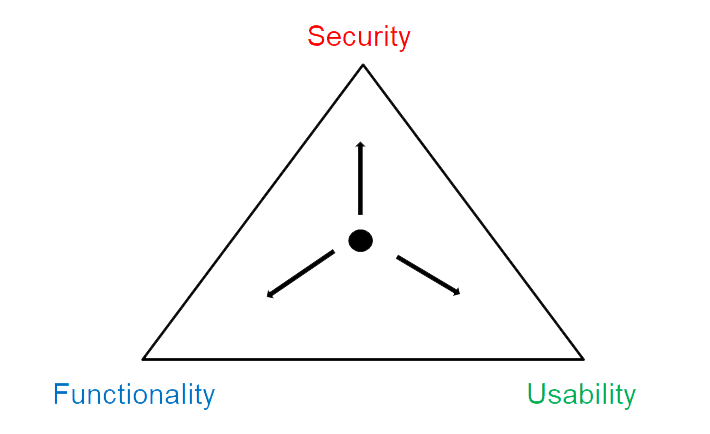
These three principles don't exist in a vacuum. Sometimes, strengthening one can weaken another. For example, extremely tight security controls (high confidentiality) might make a system harder to use and access, thus reducing its availability. The goal of network security is to find the right balance for a specific situation.
Putting Principles into Practice
Understanding the CIA triad is the first step. The next is implementing measures to uphold it. While there are countless tools and techniques, a few common measures form the backbone of network protection.
A layered approach to security is key. No single tool is a silver bullet. By combining multiple defenses, you create a more resilient and robust network.
One of the most fundamental tools is a firewall. It acts as a gatekeeper for a network, monitoring incoming and outgoing traffic and deciding whether to allow or block it based on a set of security rules. Think of it as a security guard at the entrance to a building, checking IDs and deciding who gets in.
Another core concept is access control. This is about making sure users only have access to the information and systems they absolutely need to do their jobs. This principle, often called the "principle of least privilege," limits the potential damage an attacker can do if they manage to compromise a user's account.
Simple Habits for Strong Defense
Beyond specific tools, good security relies on consistent, smart practices. These are habits that everyone, from network administrators to everyday users, should adopt.
| Best Practice | Why It Matters |
|---|---|
| Use Strong Passwords | Your password is the first line of defense. Make it long, complex, and unique. |
| Enable MFA | Multi-factor authentication adds a crucial second layer of security, like a text code, to your login. |
| Keep Software Updated | Updates often contain patches for security vulnerabilities that attackers could otherwise exploit. |
| Be Wary of Phishing | Don't click on suspicious links or open strange attachments. This is a common way attackers gain access. |
Finally, security is a team sport. Training people to recognize threats and follow best practices is one of the most effective security measures an organization can take. A knowledgeable user is a powerful defense against cyber threats.

With a solid understanding of the CIA triad and these foundational practices, you're on your way to building a more secure network environment. Now, let's review what we've covered.
Which of the following best describes the principle of Integrity in the CIA triad?
Encrypting data to prevent unauthorized individuals from reading it is a primary method for achieving which security goal?