Understanding Bond Duration
Introduction to Bonds
What Is a Bond?
Think of a bond as a formal IOU. When a government or a company needs to raise money for a big project, like building a bridge or a new factory, they can borrow from the public. They do this by issuing bonds.
When you buy a bond, you are essentially lending money to the issuer. In return for your loan, the issuer promises to pay you periodic interest payments over a set period. At the end of that period, they pay back the original amount of the loan.
Bond
noun
A debt instrument where an investor loans money to an entity (typically corporate or governmental) which borrows the funds for a defined period of time at a variable or fixed interest rate.
This makes bonds a type of fixed-income investment. You know exactly how much interest you'll receive and when you'll get your money back, which makes them appealing to investors looking for predictable returns.
The Anatomy of a Bond
Every bond has three core components that define the terms of the loan. Understanding these is key to understanding how bonds work.
| Characteristic | Description |
|---|---|
| Face Value | Also called par value, this is the amount of money the bondholder will receive back when the bond matures. It's the original loan amount. |
| Coupon Rate | This is the annual interest rate the issuer pays on the bond's face value. These interest payments, or coupons, are usually paid twice a year. |
| Maturity Date | This is the date when the bond "matures," and the issuer repays the face value to the bondholder. Bond terms can range from a few months to 30 years or more. |
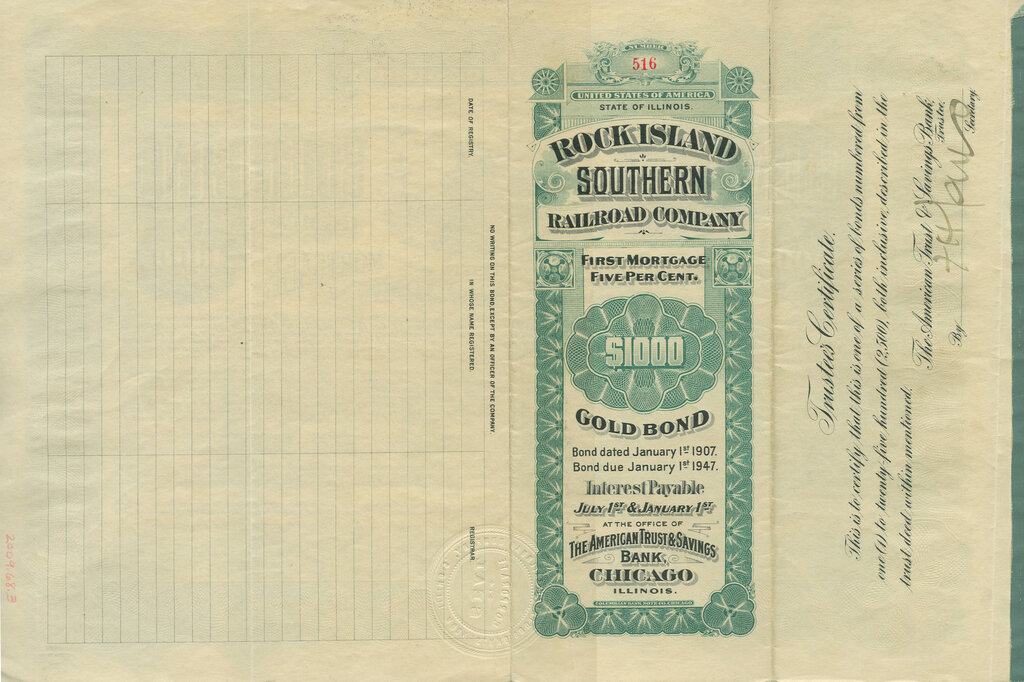
Let's look at an example. Suppose you buy a 10-year bond with a face value of $1,000 and a 5% coupon rate. This means you will receive 5% of $1,000, which is $50, in interest payments each year for ten years. Typically, this would be paid as $25 every six months. After the ten years are up, the issuer will pay you back the original $1,000 face value.
Types of Bonds
Bonds are issued by different types of organizations, and they are usually categorized by who the issuer is.
Corporate Bonds: Issued by companies to raise capital for things like expansion, research, or acquisitions. They tend to offer higher interest rates than government bonds because they carry more risk. If the company goes bankrupt, it may not be able to repay the loan.
Municipal Bonds: Issued by cities, states, and other local governments to fund public projects like schools, highways, and hospitals. A key feature of "munis" is that the interest income is often exempt from federal taxes, and sometimes state and local taxes, too.
Government Bonds: Issued by national governments. In the United States, these are issued by the U.S. Department of the Treasury and are known as Treasuries. Because they are backed by the full faith and credit of the government, they are considered one of the safest investments in the world.
Prices and Interest Rates
One of the most important concepts for a bond investor is the relationship between a bond's price and prevailing interest rates. The relationship is inverse.
Bonds are priced as the present value of future cash flows, comprising periodic coupon payments and principal repayment at maturity, discounted at the yield to maturity (YTM), which represents the internal rate of return assuming the bond is held to maturity.
Simply put: When interest rates go up, the prices of existing bonds go down. When interest rates go down, the prices of existing bonds go up.
Why does this happen? Imagine you own a bond that pays a 3% coupon. If the central bank raises interest rates and new bonds are now being issued with a 4% coupon, your 3% bond suddenly looks less attractive. To convince someone to buy your bond, you would have to sell it for a lower price, or a discount, to make its overall return competitive with the new 4% bonds.
Conversely, if interest rates fall to 2%, your 3% bond is now very appealing. You could sell it for a higher price, or a premium, because it pays more interest than what new bonds are offering.
This dynamic is why the value of a bond can change in the secondary market, where bonds are bought and sold after their initial issuance. It's a fundamental principle that affects all fixed-income investments.
Now let's review what we've covered.
Ready to check your understanding?
When an organization issues a bond, what is it primarily doing?
You purchase a bond with a face value of $1,000 and a coupon rate of 4%. What is the total amount of interest you will receive each year?
Understanding these basics is the first step. You now have the foundational knowledge of what a bond is, its key features, the major types, and how its price is influenced by the broader economy.