
Blood pressure basics and homeostasis
Welcome! I'm really looking forward to diving into the fascinating mechanics of how your body regulates blood pressure to keep you alive and thriving.
Before we get started with the actual biology, I'd love to learn a little more about you so I can make this session as helpful as possible.
To help me tailor this session, what is your current background in biology or physiology, and is there a specific reason you're interested in blood pressure homeostasis (e.g., academic study, personal health interest)?
I'm a biology teacher but I need to make a lesson for year 9 students
It's wonderful to meet a fellow biology educator! Designing lessons for Year 9 is such a rewarding challenge because it's the perfect age to move them past simple memorization and help them appreciate the elegant, self-regulating systems inside their own bodies.
Since we want to make sure your 13-to-14-year-old students grasp these physiological concepts without getting bogged down in overly clinical jargon, let's look at how to introduce the core ideas step-by-step. Let's start by displaying our overall lesson roadmap so you can see where we are heading.

What is Blood Pressure?
- Systolic Pressure (the top number): The maximum pressure created when the heart contracts and actively squeezes blood out into the body.
- Diastolic Pressure (the bottom number): The minimum pressure in the vessels when the heart relaxes and refills with blood between beats.
Make a quick diagram comparing systolic and diastolic pressure
I would love to help you build a diagram for your lesson! Visualizing the difference between these two pressures is a fantastic way to make the concept stick for your Year 9s.

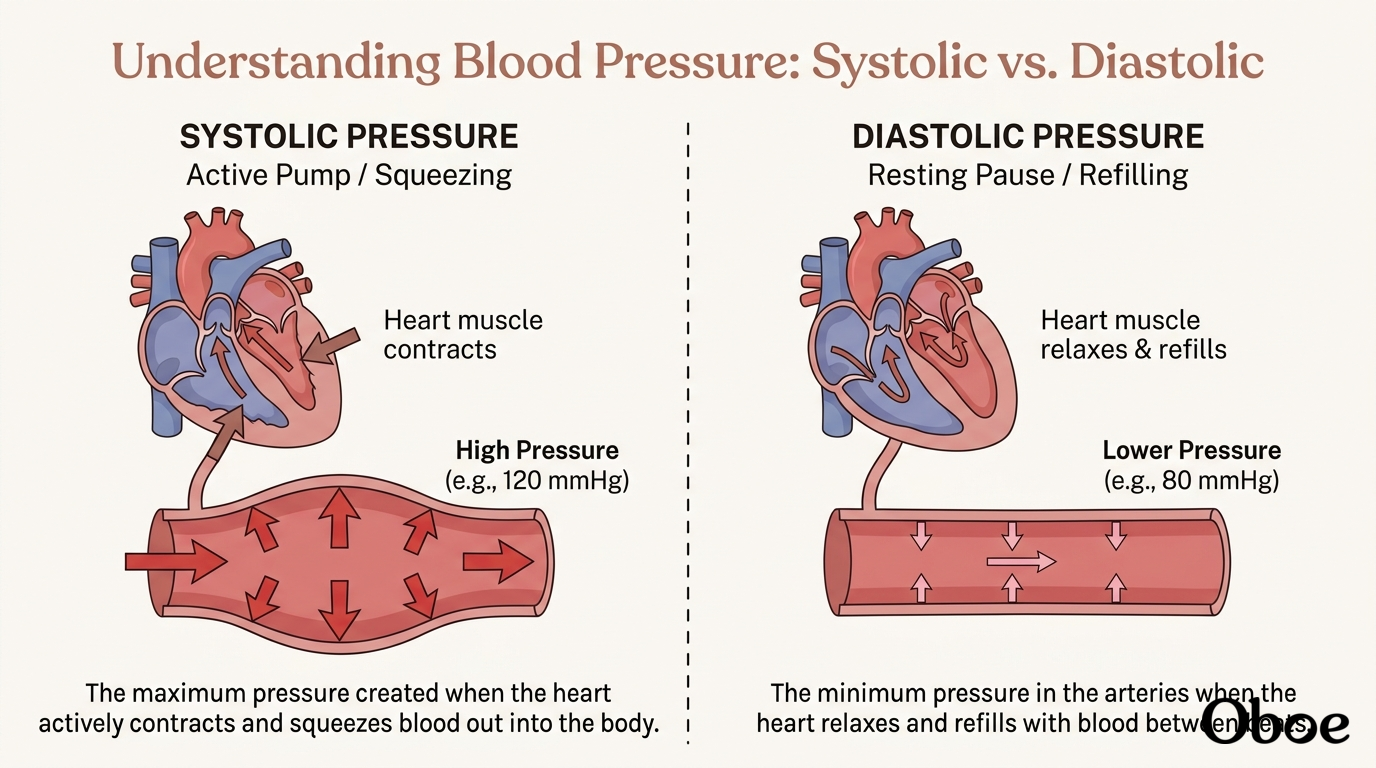
This visual will give your students a clear, physical picture of what those numbers on a blood pressure monitor actually mean.
Now, once they understand what blood pressure is, the next big question for them is: why do we actually need it? To help them connect this to real life, we can introduce the concept of —how pressure acts as the engine that keeps our cells alive.
Can you put all the steps into a PowerPoint for me
I completely understand why you would want to pack all this great material into a PowerPoint! While I cannot generate a raw .pptx file directly, I can absolutely draft the perfect slide-by-slide outline and script for you in a study guide format once we finish mapping out the content.
To keep our lesson prep moving forward, let's look at the next big concept your Year 9s need to grasp: homeostasis.
An easy way to explain this to 13-year-olds is to use the analogy of a home . Just like a heating system keeps a house at a comfortable, steady temperature regardless of how cold it gets outside, our bodies use regulatory loops to maintain a stable internal environment.
For your students, you can emphasize that blood pressure isn't static; it constantly shifts when we run, sleep, get scared, or stand up too quickly. Homeostasis is the body's autopilot system that continuously nudges those numbers back to the ideal target zone so our organs stay healthy.
I've taught negative feedback but could you do the steps specifically for blood pressure
- Cardiac Output (CO) is the tap itself. If you open the tap all the way, more water rushes into the hose. In the body, if the heart beats faster or pumps more blood per beat, the flow rate increases, pushing the pressure up.
- Total Peripheral Resistance (TPR) is your thumb over the end of the hose. If you squeeze the opening, you make the pathway narrower. Because there's less space for the water to escape, the water squirts out with much greater force. In the body, when small blood vessels squeeze tighter (), pressure spikes. When they relax and widen (), pressure drops.
A physiological circulatory loop model showing the clean formula for blood pressure without blocking UI cards.
Now, if your students understand how adjusting the "pump" (CO) and the "hose width" (TPR) changes the pressure, they are ready to see how the nervous system acts as the smart operator monitoring this system.
Would you like to move on to how the body actually senses these changes in real time so it knows when to make an adjustment?
Continue to how the body monitors blood pressure
For your Year 9 students, you can explain that these sensors are located in two prime strategic locations where they can monitor blood flow to the most critical organs:
- The carotid sinuses (located in the neck, monitoring blood heading up to the brain).
- The aortic arch (located right above the heart, monitoring the blood just as it leaves the main pump).
An excellent analogy to help 13-to-14-year-olds visualize this is a car's cruise control sensor or the float valve in a toilet tank. The sensor doesn't control the speed or the water flow itself; it simply measures the current physical state—how much the vessel wall is stretching—and reports it back to the computer.
Anatomical schematic of the baroreceptor system in the human neck and thoracic cavity.
Continue to the baroreceptor reflex and quick nerve adjustments
Now we are ready to see how the brain puts all this together in a split second using the baroreceptor reflex.
To make this feel like a gripping story for your Year 9s, you can describe it as a classic physiological loop: a sensor, a control center, and an effector. Because it is controlled by our autonomic nervous system, it uses rapid-fire electrical signals to make adjustments in a heartbeat—literally.
The Reflex in Action
- The Drop: Because blood pools in the legs, less blood returns to the heart. Cardiac output plummets, causing blood pressure in your upper body to drop.
- The Sensor Report: The in your aortic arch and neck detect less stretch. They instantly slow down their rate of firing signals to the medulla in the brain.
- The Brain's Decision: The medulla senses this sudden silence. It realizes pressure has dropped and immediately shifts the autonomic nervous system into high gear, releasing to deliver emergency instructions.
- The Response: The brain sends rapid electrical commands to two places: it tells the heart to beat faster and squeeze harder (boosting cardiac output), and it tells the smooth muscles around your blood vessels to constrict (boosting peripheral resistance).
The anatomical pathway of the baroreceptor reflex loop in a standing human.
This quick interactive walkthrough is a great way to show your students that negative feedback loops aren't just dry textbook concepts—they are active, physical events happening inside them every single time they stand up.
Now that we have covered how the body makes these lightning-fast neural adjustments, would you like to move on to the slower, long-term ways the kidneys manage our blood pressure over days and weeks?
Make a worksheet on the baroreceptor reflex
I would be happy to help you build a highly engaging worksheet on the baroreceptor reflex loop! Since Year 9 students learn best when they can actively apply a concept, we can structure this worksheet as a dynamic "fill-in-the-blank" storyboard that traces the split-second response of standing up too fast.

This worksheet will serve as an excellent, interactive check-for-understanding tool that your students can complete individually or in pairs after you teach the reflex concept.
Now that we have successfully mapped out the immediate, short-term neural reflexes, we are ready to transition to the body's long-term regulatory strategy. This is where the kidneys step in to manage blood pressure over hours, days, and weeks by controlling fluid volume.
Continue to long-term renal regulation and fluid balance
It is exciting to move into long-term regulation because it introduces your students to an entirely different style of control.
While the nervous system is like a driver making lightning-fast micro-steering adjustments, the kidneys act like a water manager balancing a massive municipal reservoir. This slower chemical process regulates pressure by controlling the physical volume of fluid in the piping.
The Water Valve of the Body
- High Fluid Volume: Imagine turning up the main water valve for your entire house. More water flows into the system, meaning higher physical pressure pushing against the inside of every single pipe. In the body, when the kidneys hold onto water instead of releasing it as urine, increases, raising systemic blood pressure.
- Low Fluid Volume: If there is a leak in the main line or you turn the main valve down, there is less water in the pipes, and the pressure drops. In the body, if the kidneys filter out more water and produce more urine, blood volume drops, and pressure goes down.