Understanding Artificial Intelligence
Defining Artificial Intelligence
What Is Artificial Intelligence?
Artificial Intelligence, or AI, is about building computers that can perform tasks that normally require human intelligence. Think of things like recognizing faces, understanding spoken language, or making a decision. It’s a branch of computer science dedicated to creating 'smart' machines.
The goal isn't to create a machine that thinks exactly like a person, but one that can solve problems effectively.
AI vs. Traditional Programs
So, how is an AI different from the regular software on your computer? A traditional program is like a very strict recipe. A programmer writes exact, step-by-step instructions: if 'X' happens, do 'Y'. For example, a simple calculator app follows rigid rules of arithmetic. It doesn't learn or adapt. If you tell it 2+2, it will always follow the pre-programmed rule to give you 4.
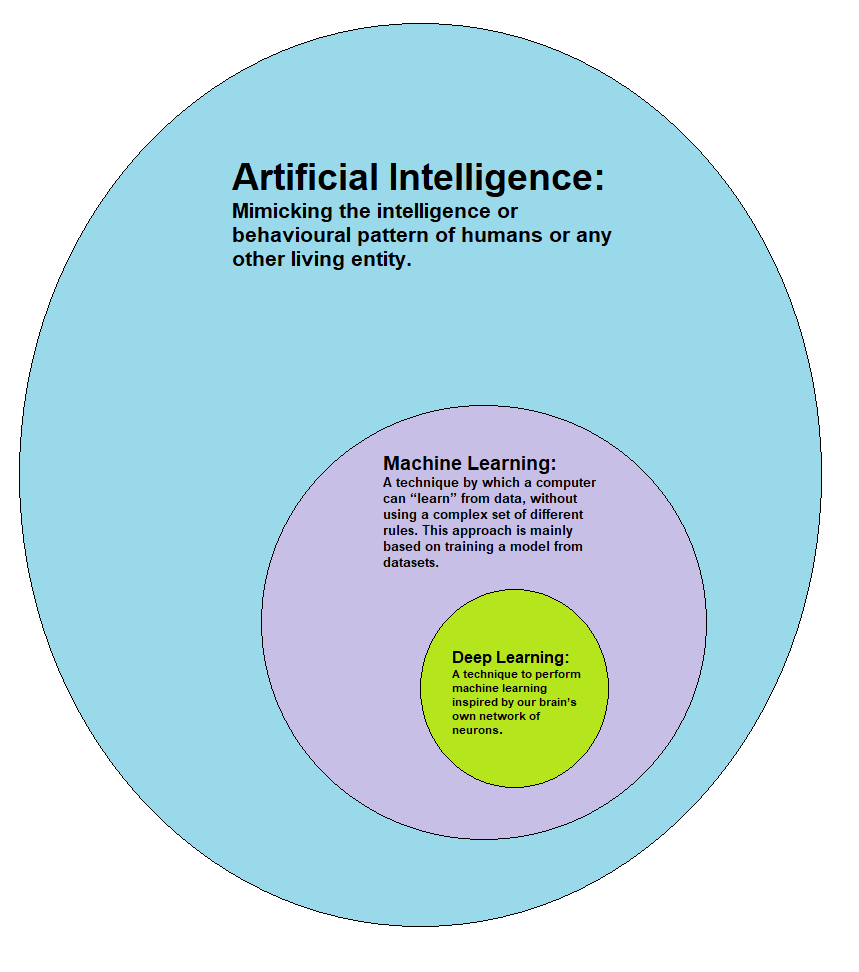
AI works differently. Instead of being given an exact recipe, an AI system is given a goal and a massive amount of data. It then 'learns' the best way to achieve that goal by identifying patterns in the data. This core process is often driven by something called a major subfield of AI.
Imagine you want a program to identify pictures of cats. Using traditional programming, you'd have to write millions of rules describing what a cat looks like, which is practically impossible. With AI, you simply show the system thousands of labeled cat photos. The AI learns the features of a cat on its own and can then spot a cat in a new photo it has never seen before.
Not All AI Is the Same
It's important to know that the AI we interact with today is very specific. Scientists often separate AI into two main categories: Narrow AI and General AI.
| Type | Description | Example |
|---|---|---|
| Narrow AI | Designed and trained for one specific task. | A digital assistant like Siri, a chess-playing computer, or a movie recommendation engine. |
| Artificial General Intelligence | A hypothetical type of AI that could understand, learn, and apply knowledge across a wide range of tasks at a human level. | The self-aware robots you see in science fiction movies. This does not exist yet. |
Everything we call 'AI' today, from your phone's digital assistant to self-driving cars, is a form of Narrow AI. These systems can be incredibly powerful at their specific jobs, but you can't ask your chess-playing AI to write you a song. It only knows chess.
Ultimately, AI is a tool. It's a powerful way of using data to find patterns and make predictions. It doesn't 'think' or 'feel' like a human, but it mimics cognitive functions like learning and problem-solving to help us accomplish complex tasks more efficiently.