Two-Factor Authentication Security
Understanding Two-Factor Authentication
Beyond the Password
Think of your password as the key to your digital front door. For a long time, that single key was enough. But what if someone steals or copies it? A password alone is a single point of failure. If it's compromised, your account is wide open.
This is where two-factor authentication, or 2FA, comes in. It requires a second piece of evidence to prove you are who you say you are. It’s like needing your house key and a secret knock that only you know. Even if a thief steals your key, they can't get inside without the knock.
Two-factor authentication (2FA) adds an extra layer of security by requiring not only a password and username but also something that only the user has on them, such as a physical token.
This second layer makes it much harder for an unauthorized person to access your accounts. The core idea is to combine different types of proof, making your account exponentially more secure than it would be with just a password.
The Three Factors
Authentication methods are grouped into three categories, or "factors." True two-factor authentication combines any two of these different types.
1. Knowledge Factor: This is the most common type of authentication. It's something only you should know, like a password or a Personal Identification Number (PIN). A correct answer to a security question also falls into this category.
2. Possession Factor: This is something only you should have. It could be a physical object like a USB security key, or it could be your smartphone receiving a one-time code via a text message or an authenticator app. Even a smart card or a bank token generator fits here.
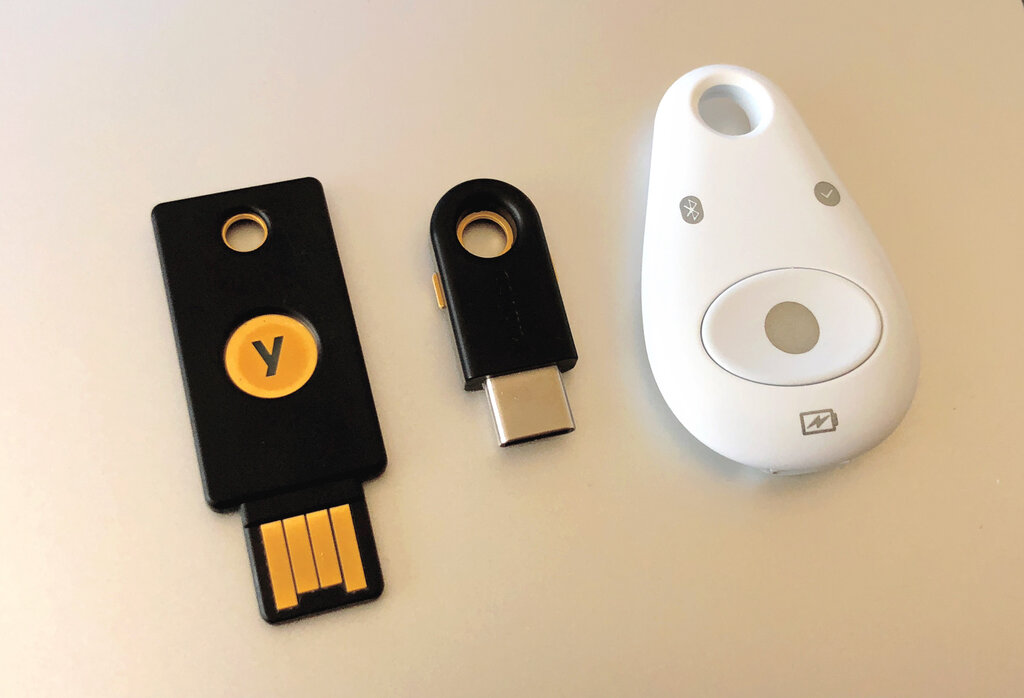
3. Inherence Factor: This is something you are. It refers to your unique biological traits, often called biometrics. Examples include your fingerprint, a facial scan, your voice, or even the pattern of veins in your eye. These are much harder to steal or replicate than a password.
For example, when you use an ATM, you combine a possession factor (your debit card) with a knowledge factor (your PIN). That's 2FA in action.
The Benefits of a Second Factor
The main benefit of 2FA is a massive boost in security. Passwords can be stolen in data breaches, guessed by brute-force attacks, or tricked out of you through phishing scams. A password alone is a fragile defense.
When a second factor is required, a criminal needs more than just your password. They would also need to physically steal your phone or security key (the possession factor) or somehow replicate your fingerprint (the inherence factor). This is far more difficult and significantly reduces your risk of a security breach.
By adding this extra step, you create a powerful barrier that protects your sensitive information, from your email to your bank account.
Ready to test what you've learned? Give these questions a try.
What is the primary purpose of two-factor authentication (2FA)?
A one-time code sent to your phone via an authenticator app is an example of which authentication factor?
Adding a second factor is one of the most effective steps you can take to secure your digital life.