Two-Factor Authentication Explained
Introduction to 2FA
More Than a Password
Think of your password as the key to your digital home. It unlocks your email, bank account, and social media. But what happens if someone steals or copies that key? A stolen password gives an intruder free access to your private information.
This is where an extra lock comes in handy. Even if someone has your key, they still can't get inside without getting past the second lock. In the digital world, this extra layer of security is called two-factor authentication, or 2FA.
Two-factor authentication (2FA) has emerged as an essential security measure that provides a critical additional layer of protection for your online accounts.
2FA combines two different ways of proving you are who you say you are. Instead of just entering a password to log in, you'll be asked for a second piece of evidence. This makes it much harder for anyone else to access your accounts, even if they know your password.
What You Know, Have, and Are
Authentication methods, or "factors," fall into three basic categories. 2FA works by combining any two of these categories to verify your identity.
Knowledge Factors are things only you should know. The most common example is your password. Other examples include PINs or the answer to a security question, like your mother's maiden name.
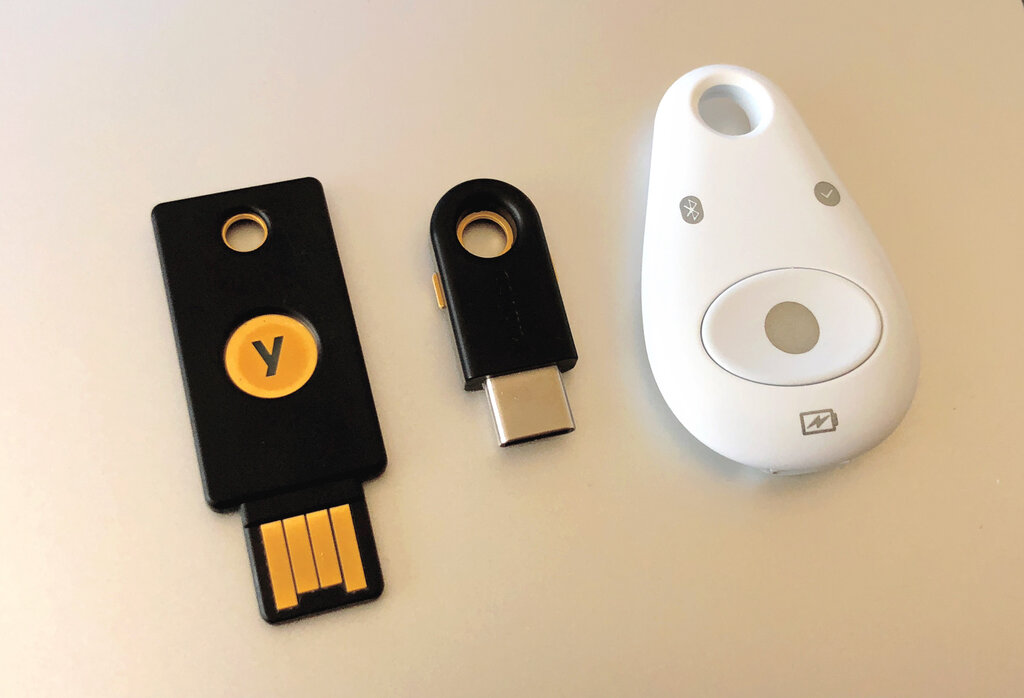
Possession Factors are physical items you have with you. This could be your smartphone, which receives a verification code via text message or an authenticator app. It could also be a dedicated hardware device, like a USB security key.
Inherence Factors are unique to you as a person. These are your biological traits, often called biometrics. Using your fingerprint to unlock your phone is a perfect example. Other inherence factors include facial recognition scans and voice patterns.
Everyday Security
You probably use 2FA already without realizing it. When you use your debit card at an ATM, you use a possession factor (the card) and a knowledge factor (your PIN). This simple combination of two factors keeps your money secure.
Online, 2FA is becoming the standard for protecting important accounts. Email providers, banks, and social media platforms all encourage users to enable it. Typically, you'll log in with your password (knowledge) and then be prompted to enter a code sent to your phone (possession).
By requiring two separate pieces of proof, 2FA ensures that even if a hacker steals your password, they can't access your account without also having your phone or your fingerprint. It's a simple step that adds a powerful layer of defense to your digital life.