Third Grade Foundations
Mathematics
Multiplying and Dividing
Think of multiplication as a shortcut for adding. If you have 4 bags with 5 apples in each, you could add . Or, you could multiply . Both get you to the same answer: 20 apples. It’s just a faster way to handle groups of equal size.
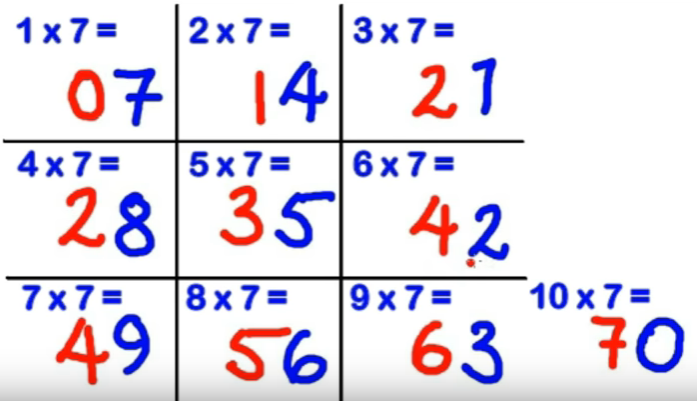
Division is the opposite. It’s about splitting things into equal groups. If you have 12 cookies to share among 3 friends, how many does each friend get? You’re dividing 12 by 3. You can think of it as fair sharing. Each friend gets 4 cookies. Division also helps you figure out how many groups you can make. With those 12 cookies, how many groups of 3 can you form? The answer is 4 groups.
Let's try one. A farmer plants 7 rows of carrots with 8 carrots in each row. How many carrots did the farmer plant in total? That's carrots.
Working with Bigger Numbers
When we see a number like 735, every digit has a job. The 5 is in the 'ones' place. The 3 is in the 'tens' place, so it really means 30. And the 7 is in the 'hundreds' place, meaning 700. Understanding this 'place value' is key to working with any number, big or small.
Sometimes, you don't need the exact number. An estimate is good enough. This is where rounding comes in. If a toy costs $27, you might say it costs 'about $30'. This is rounding to the nearest ten.
To round, you look at the digit to the right of the place you're rounding to. If that digit is 5 or more, you round up. If it's 4 or less, you round down. So, 47 rounds up to 50, but 42 rounds down to 40. The same rule applies for rounding to the nearest hundred. The number 671 rounds up to 700, because 7 is '5 or more'.
Slicing Up the Whole
Fractions are a way of talking about parts of something. Imagine you have a pizza cut into 8 equal slices. If you eat one slice, you've eaten a fraction of the pizza. We write this as $1/8$.
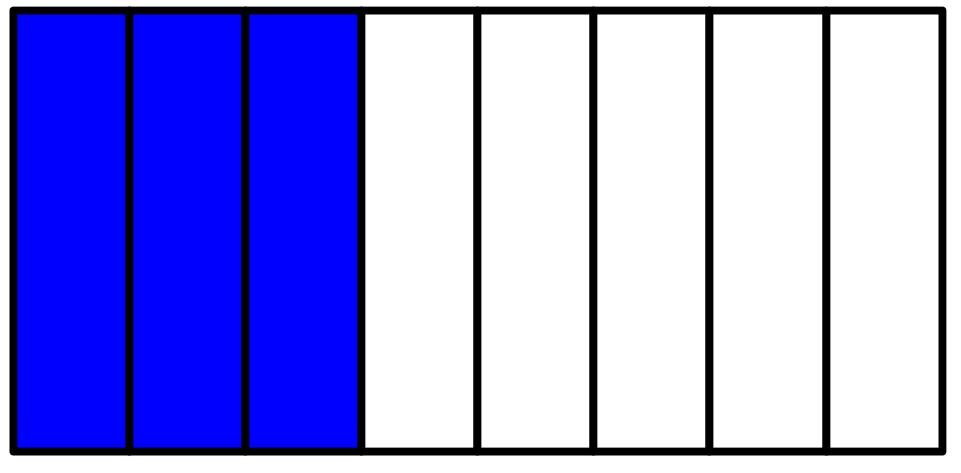
Every fraction has two parts. The bottom number, the denominator, tells you how many equal parts the whole is split into. In our pizza example, that's 8. The top number, the numerator, tells you how many of those parts you have. If you ate one slice, the numerator is 1.
So, if you have a chocolate bar with 4 squares and you eat 3 of them, you ate $3/4$ of the bar.
Shapes, Space, and Measurement
Geometry is the study of shapes. Flat shapes like squares, circles, and triangles are all around us. We can describe them by their sides and corners, which are also called vertices.
Two important ideas in geometry are perimeter and area. The perimeter is the distance all the way around the outside of a shape. Imagine walking along the edge of a soccer field; the total distance you walk is its perimeter. The area is the amount of space inside the shape. It's like the amount of grass covering the entire field.
We can also use math to understand data. If you track the temperature every day for a week, you can put that information in a bar chart to easily see which day was the hottest. This is called interpreting data, and it helps us see patterns and make sense of the world.
Which of the following is the same as adding ?
In the number 952, what is the value of the digit 5?
These concepts are the building blocks for all kinds of math you'll encounter later. Getting comfortable with them now makes everything that follows a little bit easier.