Theories of Media Ownership
Introduction to Media Ownership
Who Owns the News?
Every time you read an article, watch a news broadcast, or scroll through a social media feed, you're consuming information shaped by someone. But who? The answer lies in media ownership. Simply put, media ownership refers to who controls the companies that produce and distribute information. It could be an individual, a family, a large corporation, or even the government.
This might not seem important at first glance, but it’s fundamental to how we understand the world. The owner of a media outlet has the power to set its editorial direction, decide which stories get covered, and determine the overall tone and perspective. This influence shapes public opinion, political discourse, and even cultural norms. Understanding who owns the media is the first step toward becoming a more critical and informed consumer of information.
The Three Main Models
Media ownership generally falls into three main categories. Each model has a different funding source, a different primary goal, and a different relationship with its audience and the government.
Private Ownership: Media outlets are run as for-profit businesses. They are owned by individuals, families, or shareholders of a corporation. Their primary goal is to generate revenue, usually through advertising, subscriptions, or a combination of both. This model encourages competition and innovation, but it can also lead to content that prioritizes ratings and clicks over public service.
Public Ownership: This model is funded by the public, often through taxes, government grants, or viewer and listener donations. The goal isn't to make a profit but to serve the public interest by providing informative, educational, and culturally relevant programming. Public media is typically designed to be independent from direct government control and commercial pressures, aiming for impartiality.
State-Controlled Ownership: In this system, the government directly owns and operates media outlets. Unlike public media, state-controlled media is not independent. Its primary purpose is to serve the interests of the state, promote government ideology, and control the flow of information to the public. Content is often heavily censored and presents a perspective aligned with the ruling power.
| Ownership Model | Primary Goal | Funding Source |
|---|---|---|
| Private | Profit | Advertising, Subscriptions |
| Public | Public Service | Public funds, Donations |
| State-Controlled | Government Agenda | State budget |
A Shifting Landscape
Media ownership patterns have never been static. In the early days of print, newspapers were often owned by individuals or political parties, serving as mouthpieces for specific viewpoints. The 20th century saw the rise of mass media, and with it, the growth of large media corporations. Families and entrepreneurs built vast newspaper chains and broadcasting networks.
This trend toward consolidation accelerated over time. A few massive conglomerates began to acquire more and more outlets, from movie studios and television networks to book publishers and websites. This concentration of ownership means that a small number of people now control a significant portion of the information we consume.
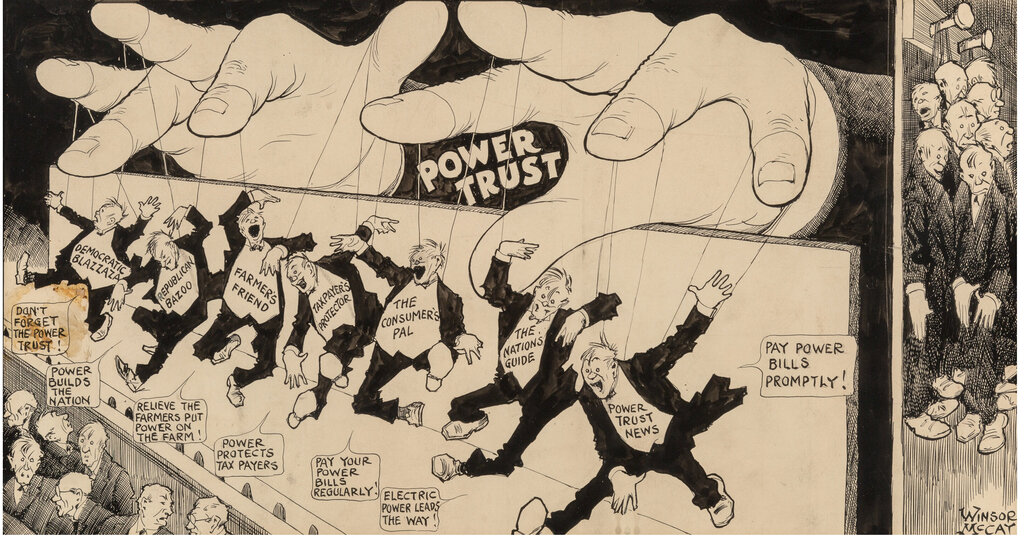
The rise of the internet has complicated this picture. On one hand, it has enabled a new wave of independent creators, bloggers, and citizen journalists to share their voices with a global audience. On the other, a handful of giant tech companies now control the primary platforms—search engines and social media feeds—through which most people discover and access news, giving them immense power over public discourse.
Why Ownership Dictates the Story
The structure of media ownership has a direct impact on the content we receive. An owner’s business interests, political leanings, and personal values can all seep into the editorial decisions of their media properties.
A commercially driven outlet might favor sensational or entertaining stories over complex, serious issues because they attract a larger audience and more advertising revenue. A state-controlled news channel will likely ignore stories that are critical of the government while highlighting its achievements. A public broadcaster might dedicate resources to in-depth documentaries or local news stories that a private company would find unprofitable.
Ultimately, the ownership model sets the boundaries for what is considered 'news' and how that news is framed. This can affect everything from which political candidates get favorable coverage to which social issues are given prominence.
Pluralism, or a diversity of voices and viewpoints in media, is considered essential for a healthy democracy. When ownership is concentrated in too few hands, it can limit the range of perspectives available to the public, making it harder for citizens to form their own well-rounded opinions.
Ready to test your knowledge on media ownership?
What does the term 'media ownership' primarily refer to?
A national news channel is funded entirely by the government and its main purpose is to promote the state's official ideology. What type of ownership model is this?