The Rise and Fall of the Mughal Empire
Origins and Establishment
A Conqueror's Ambition
The story of the Mughal Empire begins not in India, but in the heart of Central Asia. Its founder, Zahir-ud-din Muhammad Babur, was born in 1483 in what is now Uzbekistan. He was a man of impressive, if intimidating, lineage. On his father's side, he descended from Timur, the formidable Turco-Mongol conqueror. Through his mother, he could trace his ancestry back to Genghis Khan, the legendary founder of the Mongol Empire.
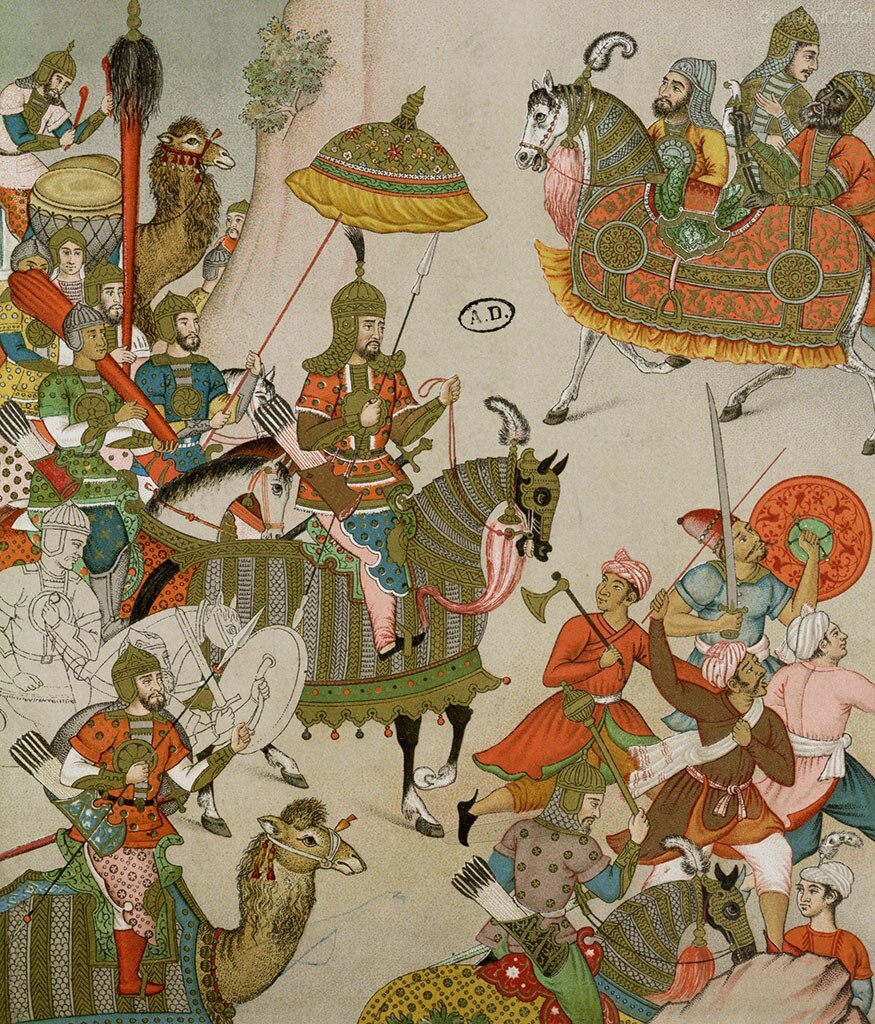
This heritage filled Babur with a burning ambition to rule a great empire. Yet, his early life was marked by constant struggle. He spent years fighting to control his ancestral lands, including the fabled city of Samarkand, only to be driven out by rival Uzbek khans. With his ambitions thwarted in Central Asia, Babur turned his gaze south, towards the vast and wealthy plains of Hindustan (northern India).
The Path to Panipat
India in the early 16th century was a fractured landscape. The once-mighty Delhi Sultanate was crumbling under the unpopular rule of Sultan Ibrahim Lodi. The Sultan's nobles were resentful and plotted against him. Seeing an opportunity, some of these discontented nobles invited Babur to invade, hoping he would overthrow Lodi and leave them in power.
For Babur, this was the chance he had been waiting for. India was legendary for its riches, a stark contrast to the sparse lands he had been fighting over. He saw not just a chance for plunder, but the potential to establish a lasting dynasty. After several initial raids into the Punjab region to test the waters, Babur marched his army towards Delhi in 1526, ready for a decisive confrontation.
The stage was set for a battle that would change the course of Indian history. On one side was Sultan Ibrahim Lodi with a massive army, confident in his numbers. On the other was Babur, with a smaller, more disciplined force armed with new technology.
A New Kind of Warfare
The two armies met on April 21, 1526, on the plains of Panipat, a site that had seen many pivotal battles. Sultan Lodi's army was enormous, numbering around 100,000 men and 1,000 war elephants. In contrast, Babur's force was a fraction of that size, perhaps only 15,000 soldiers.
But Babur had two secret weapons: gunpowder and superior tactics. He arranged his front line with a chain of carts tied together, a tactic borrowed from the Ottomans called the araba. Between the carts, he placed his cannons and matchlock musketeers, protecting them from the enemy's initial charge and allowing them to fire devastating volleys into the dense enemy ranks.
Just as important was his tulguhma strategy, a classic Mongol flanking tactic. He divided his cavalry into left and right wings, which would sweep around the enemy's massive army, attacking it from the sides and the rear. Lodi's forces, packed tightly together, were unable to maneuver. They were hammered from the front by cannon fire and beset from all sides by Babur's cavalry. The battle was over in a matter of hours. Ibrahim Lodi was killed, and his army was routed. Babur promptly seized Delhi and Agra, the twin capitals of the Sultanate, and claimed the throne of Hindustan for himself.
Securing the New Empire
Winning at Panipat was one thing; holding onto a vast new territory was another. Babur faced immediate challenges. Many local Afghan chiefs who had served the Lodis refused to accept his rule. More formidable was the threat from the Rajput Confederacy, a powerful alliance of Hindu warrior kings led by the veteran Rana Sanga of Mewar.
In 1527, Babur met Rana Sanga's forces at the Battle of Khanwa. Once again, Babur's tactical skill and use of gunpowder won the day against a larger army. This victory was even more significant than Panipat, as it crushed the most powerful opposition to Mughal rule and secured Babur's foothold in northern India. Over the next few years, he continued to campaign, expanding and consolidating his new empire.
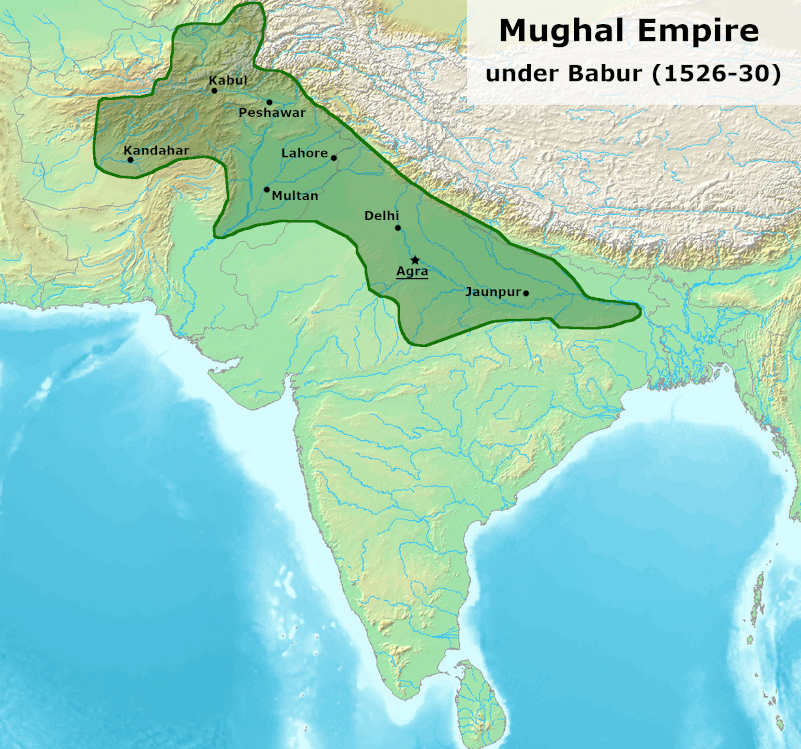
Babur did not live long to enjoy his conquest, dying in 1530. But in just four short years, he had laid the groundwork for one of the world's most magnificent empires. His combination of Central Asian military tactics and modern firepower had proven unstoppable, establishing a dynasty that would rule India for over 300 years.
What was the primary reason Babur turned his attention towards invading Hindustan (northern India)?
At the First Battle of Panipat in 1526, Babur's smaller army defeated the massive forces of Sultan Ibrahim Lodi. What were Babur's two key advantages?