The Rich History of Pool and Billiards
Ancient Origins
From Fields to Tables
Long before anyone chalked up a cue stick, people were playing games that involved hitting a ball with a stick. These weren't played in dimly lit halls but out in the open, on manicured lawns. Games like ground billiards, a popular pastime in Northern Europe since the 15th century, were early ancestors of the games we play today. Think of it as a blend of croquet and pool, where players used a wooden stick called a mace to shove balls through hoops on a lawn.
The main problem with outdoor games, of course, is the weather. A rainy day could ruin a perfectly good match. Eventually, inventive players brought the game indoors, creating a miniature version on a wooden table covered with green cloth to mimic grass. Simple wooden rails were added around the edges to keep the balls from rolling off.
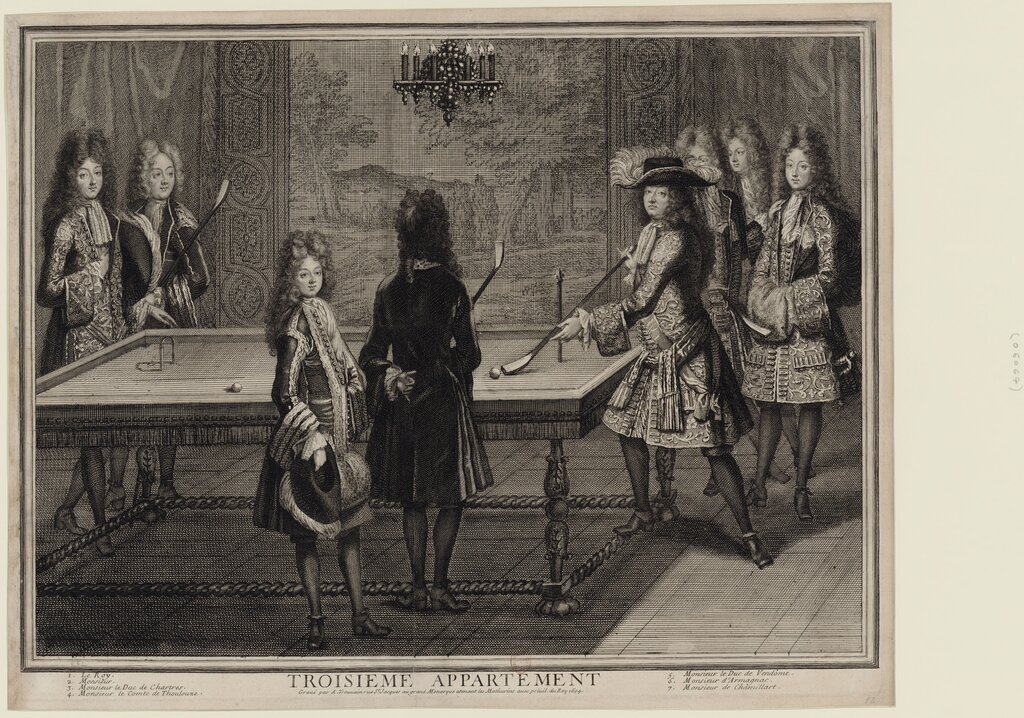
This new indoor version caught on, especially with royalty and the nobility. It was a game of skill that could be played year-round, making it a fixture in castles and estates across Europe. For centuries, it was known as a “noble game,” a sophisticated diversion for the upper class.
The First Equipment
The equipment for these early table games was quite different from what we use now. The balls were typically made of wood or ivory, and the stick used to hit them, the mace, was essentially a small mallet. Players would use the large head of the mace to push the ball forward rather than strike it.
The mace worked well enough in the open, but it had a major flaw. When a ball was frozen against a rail, the large head was too clumsy to use. Players would have to turn the mace around and use the narrow tail end to hit the ball.
This makeshift solution—using the tail, or queue in French—was so effective that it eventually led to the invention of a new instrument designed specifically for striking the ball: the cue stick. This innovation marked a critical step in the evolution from a simple lawn game to a game of precision and strategy.
This shift from pushing to striking the ball opened up new possibilities, allowing for greater control and the development of more complex shots. It was the beginning of cue sports as we know them.