The Master Analyst: Decoding Screenplay and Scene in Real Time
Semiotic Decoding
The Language Beyond Words
Great film and television speak a language that has nothing to do with dialogue. It’s a visual language, built from light, colour, and composition. Developing a 'semiotic eye' means learning to read this language, to see how every choice on screen is loaded with meaning. It's about moving past what you see to understand what is being communicated.
At the heart of this is the relationship between the signifier and the signified. The signifier is the thing itself—a leather briefcase, a wilting flower, a sterile white room. The signified is the concept it evokes—corporate power, decay, or clinical isolation. In visual media, directors don't just show you things; they use signifiers to plant ideas and emotions in your mind.
Two Layers of Meaning
Every image operates on two levels, an idea championed by the French theorist in his analysis of culture. The first level is denotation: what you literally see. If a film shows a shot of a roaring fireplace, the denotative meaning is simple: there is a fire in a hearth.
But the real storytelling happens on the second level: connotation. This is the cultural and emotional baggage the image carries. That roaring fireplace might connote warmth, safety, wealth, tradition, or even passion. The director's job is to control these connotations, using them to shape your understanding of the characters and the story. The specific context of the scene—the music, the character's expression—guides you to the intended meaning. Is it a family home or the lair of a villain plotting by the flames?
Denotation is what is filmed. Connotation is how it is filmed.
Objects as Characters
In prestige dramas, the entire world of the story, or , is carefully curated to communicate themes and character psychology. Nothing is accidental. Wardrobe, props, and set design become silent storytellers.
Consider the colour palette in a show like Succession. The Roy family exists in a world of muted, expensive neutrals: beige, grey, and soft browns. This isn't just an aesthetic choice. Denotatively, it's just clothing and interior design. Connotatively, this absence of vibrant colour signifies a world of emotional sterility, old money conservatism, and a kind of corporate camouflage. The characters are so wealthy they don't need to use colour to signal their status. Their power is quiet, understated, and suffocating.
This principle extends to space itself. Spatial semiotics examines how the arrangement of characters in a frame defines their relationships. Who is in the foreground? Who is in the background? A character positioned higher than another, or who takes up more of the frame, is usually communicating dominance. Conversely, a character made to look small against a vast landscape can signify feelings of isolation or powerlessness.
Watch how characters are blocked in a corporate boardroom scene. The person at the head of the table holds the most power. Characters who stand together form an alliance, while those who are isolated physically are often isolated within the narrative as well.
Colour as a Signifier
Beyond the muted tones of Succession, colour theory is a powerful semiotic tool. Directors and cinematographers build entire visual arguments using colour. The vibrant, almost sickly sweet pastels of a show like The White Lotus create a sense of artificial paradise. The beauty is overwhelming and slightly 'off', mirroring the hollow lives and moral decay of the wealthy guests. The colours signify a manufactured happiness that masks deep anxiety.
Contrast this with the harsh, neon-drenched blues and pinks of a film like Drive. These colours don't just light the scene; they externalise the protagonist's inner world, a blend of romantic fantasy and brutal violence. The colour palette becomes a direct line to the film's thematic core.
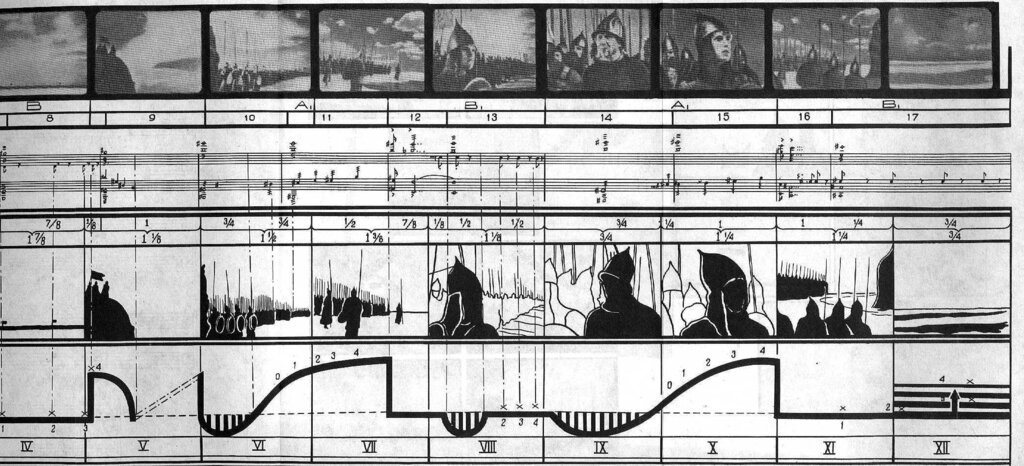
By learning to recognise these patterns—in objects, space, and colour—you can decode the rich, layered stories being told beneath the surface of the dialogue. It transforms watching a film from a passive experience into an active analysis.
Ready to test your semiotic eye? This quiz will challenge you to apply these concepts to new scenarios.
In semiotic analysis of film, what is the 'signified'?
A scene in a television drama shows a single character standing on a small boat in the middle of a vast, empty ocean. What is this use of spatial semiotics most likely intended to connote?
With practice, this kind of analysis becomes second nature. You'll start to see the hidden language everywhere, enriching your experience of every film and show you watch.