The Internet and Web Architecture
Architectural Hierarchy
Infrastructure vs. Service
People often use the terms "Internet" and "World Wide Web" interchangeably, but they aren't the same thing. The distinction is crucial for understanding how digital communication works. Think of it like a system of highways and the cars that drive on them. The Internet is the highway system—the physical and logical infrastructure. The Web is just one type of traffic, like a fleet of cars, that uses those roads.
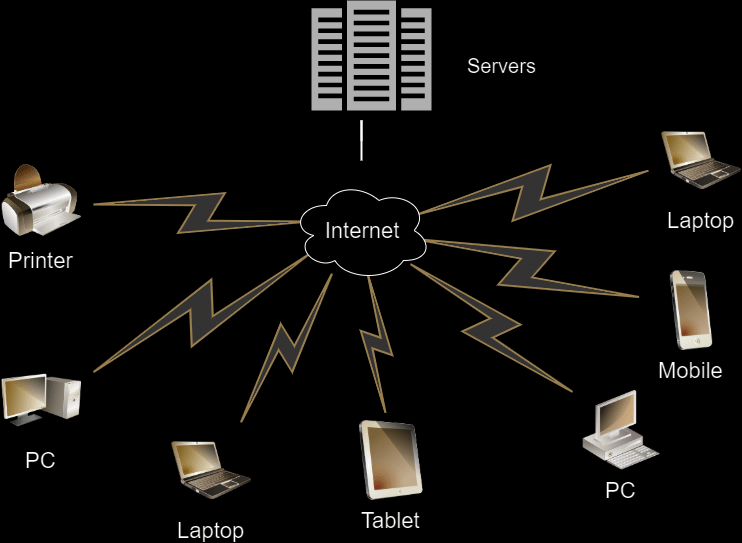
The Internet is a massive, global "network of networks." It's the hardware: the fiber-optic cables crisscrossing ocean floors, the routers in your home and office, and the servers storing data. This physical infrastructure is connected through a set of rules, or protocols, that allow different networks to communicate. A key feature of the Internet is its decentralized routing, which means data can take many different paths to get from its source to its destination. There is no central control point, making the system incredibly resilient. If one path is blocked, data simply finds another way.
The Web: An Application on the Internet
The World Wide Web, or simply "the Web," is an information service that runs on top of the Internet. It's a vast collection of interconnected documents and other web resources, linked by hyperlinks and identified by URLs. You access the Web using a browser, which uses protocols like HTTP (Hypertext Transfer Protocol) to request and display information.
Unlike the Internet's decentralized structure, the Web traditionally operates on a client-server model a centralized approach where information is stored on servers. Your web browser acts as a client, sending a request to a specific server for a webpage. The server then finds the requested information and sends it back to your browser to display.
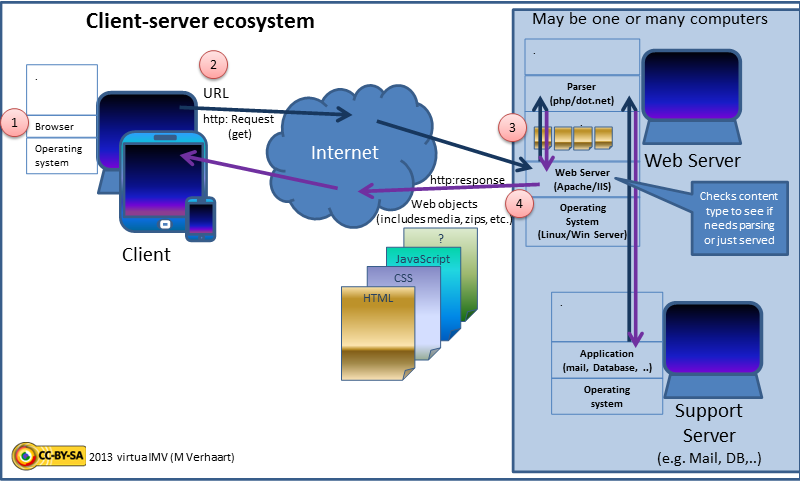
This request-response cycle is the foundation of how we browse websites, watch videos, and interact with online applications. A single server might host thousands of files for a website, and it's responsible for serving them to any client that asks. This is fundamentally different from the Internet's job, which is simply to provide the pathway for that request and response to travel between the client and the server.
More Than Just the Web
The Web might be the most visible service using the Internet, but it's far from the only one. Many other essential applications rely on the Internet's infrastructure to function, each using its own set of protocols.
Email (SMTP), file transfers (FTP), voice calls (VoIP), and online gaming all run on the Internet but are not part of the World Wide Web.
Each of these services is like a different kind of vehicle on the Internet highway. Email is like the postal service, FTP is like a dedicated fleet of moving trucks, and the Web is like the public bus system. They all share the same roads but have different purposes and follow different rules.
| Service | Common Protocols | Primary Use |
|---|---|---|
| World Wide Web | HTTP, HTTPS | Browsing interconnected pages and apps |
| SMTP, IMAP, POP3 | Sending and receiving electronic messages | |
| File Transfer | FTP, SFTP | Uploading and downloading files to a server |
| Voice/Video Calls | VoIP, RTP | Real-time audio and video communication |
Understanding this hierarchy is key. The Internet provides the fundamental connectivity, and services like the Web leverage that connectivity to provide rich experiences to users around the globe.