The Cold War Explained
Origins of the Cold War
An Uneasy Alliance Crumbles
When World War II ended in 1945, the old world was in ruins. Nations that had dominated the globe for centuries, like Great Britain and France, were exhausted. Two new superpowers rose to take their place: the United States and the Soviet Union. Though they were allies who had just defeated a common enemy, their partnership was one of convenience, not shared values. Deep-seated mistrust simmered beneath the surface.
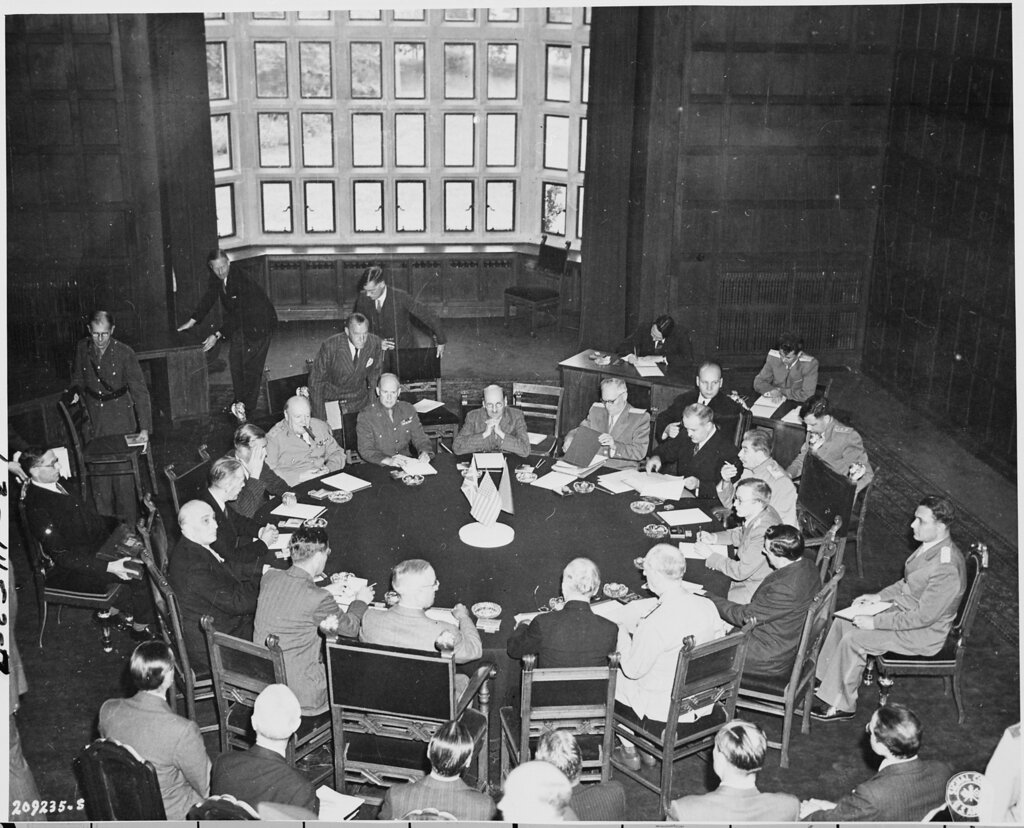
The leaders of these nations met to draw up the map of the new world, but they had fundamentally different visions for the future. The Soviet Union, having suffered immense destruction, was determined to create a buffer zone of friendly states on its western border to prevent future invasions. The United States, now the world's leading economic and military power, wanted to promote democracy and free markets across the globe.
Two Worlds, Two Ideologies
The core of the conflict was a clash of ideologies. The United States championed capitalism, a system built on private ownership and free enterprise, and a democratic government where citizens elect their leaders. In contrast, the Soviet Union was a communist state. Under its totalitarian system, the government controlled all property and economic activity, and a single political party held all power. Individual freedoms were secondary to the goals of the state.
These systems were not just different; they were seen as direct threats to one another. Each side believed its own system was superior and that the other was bent on global domination.
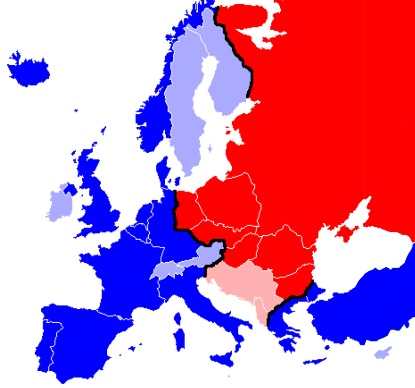
This ideological divide quickly turned into a geopolitical one. As the Soviet Red Army liberated Eastern European countries from Nazi control, it remained in place, installing communist governments loyal to Moscow. Countries like Poland, Hungary, and Czechoslovakia became Soviet "satellite states." This expansion alarmed Western leaders, who saw it as a violation of promises for free elections and a clear sign of Soviet aggression.
Containment and Reconstruction
In 1947, President Harry S. Truman announced a new foreign policy to address the perceived Soviet threat. Fearing that communism could spread to war-torn countries like Greece and Turkey, he declared that the United States would support free peoples resisting subjugation. This principle became known as the Truman Doctrine.
The Truman Doctrine established the U.S. policy of containment: a strategy to prevent the spread of communism rather than trying to roll it back where it already existed.
The economic arm of this policy was the Marshall Plan. Europe was devastated, its economies shattered and its people facing poverty and starvation. U.S. Secretary of State George Marshall proposed a massive aid program to help rebuild the continent. The plan offered billions of dollars to any European nation that needed it, but it came with a condition: countries had to work together and embrace free-market principles.
While the plan was a remarkable success in reviving Western Europe and curbing the appeal of local communist parties, the Soviet Union rejected the aid for itself and its satellite states. Stalin saw it as an American scheme to undermine Soviet influence and create a U.S.-aligned economic bloc. This decision deepened the economic division of the continent.
Hardening Alliances
Economic and political divisions soon solidified into military ones. The Berlin Blockade of 1948-49, where the Soviets cut off all land access to West Berlin, convinced the Western powers of the need for a formal military alliance to deter Soviet aggression.
In 1949, the United States, Canada, and ten Western European nations formed the North Atlantic Treaty Organization (NATO). Its core principle was collective defense: an attack on one member was considered an attack on all. This was a historic shift in American foreign policy, marking an end to its tradition of avoiding permanent alliances.
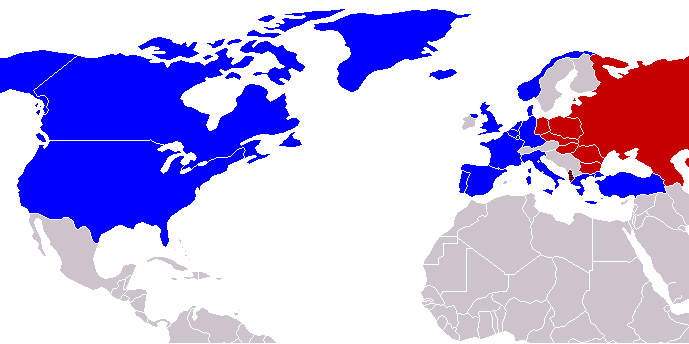
The Soviet Union responded in kind. In 1955, after West Germany joined NATO, the USSR and its Eastern European satellite states formed their own military alliance, the Warsaw Pact. With the creation of these two opposing armed camps, the Cold War's framework was complete. Europe, and much of the world, was now clearly divided into two hostile blocs, setting the stage for decades of tension and proxy conflicts.
Ready to test your knowledge on how the Cold War began?
Which two nations emerged as the dominant global superpowers immediately following the end of World War II?
The core conflict between the United States and the Soviet Union was a clash between which two opposing ideologies?
Understanding these early decisions and divisions is key to grasping the four decades of global tension that followed.