The Art of Singing
Vocal Foundations
Your Built-In Instrument
Think of your voice as an instrument you carry with you everywhere. Like any instrument, it has specific parts that work together to create sound. Understanding these parts is the first step to using them well.
The main sound generator is your larynx, or voice box, which sits in your throat. Inside the larynx are your vocal cords, which are actually two small, flexible bands of muscle tissue. They're more accurately called vocal folds.
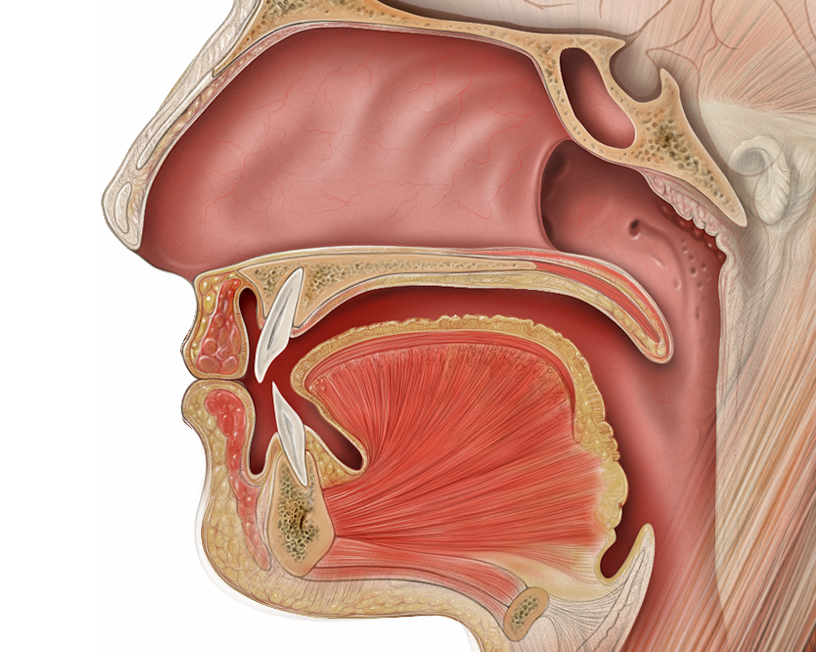
When you breathe silently, your vocal folds are open, letting air pass through freely. When you decide to speak or sing, your brain sends a signal for them to come together. Then, as air from your lungs pushes through them, they vibrate rapidly. This vibration is the raw source of your vocal sound.
The pitch of the sound depends on how stretched or relaxed your vocal folds are. Tighter, longer folds vibrate faster, creating higher pitches. Looser, shorter folds vibrate slower, making lower pitches. The volume is controlled by the amount of air pressure from your lungs. More air pressure creates a louder sound.
The Power of Breath
The fuel for your voice is your breath. Without a steady, controlled stream of air, your vocal folds can't vibrate efficiently. This is why learning to breathe correctly is fundamental to singing. Weak breath support leads to a shaky, weak tone and can cause strain.
The foundation of all vocal study lies in control of the breath
Many people breathe shallowly from their chest, raising their shoulders with each inhale. For singing, you want to use diaphragmatic breathing, often called belly breathing. The diaphragm is a large, dome-shaped muscle at the base of your lungs. When you inhale, it contracts and moves downward, pulling air deep into your lungs and causing your abdomen to expand.
This technique provides a much more powerful and stable column of air to support your voice. It allows for longer phrases and better control over your volume and tone.
Here’s a simple way to practice diaphragmatic breathing:
- Lie on your back with your knees bent.
- Place one hand on your chest and the other on your stomach, just below your rib cage.
- Inhale slowly through your nose. Feel your stomach rise as your diaphragm contracts. The hand on your chest should remain relatively still.
- Exhale slowly through pursed lips, as if you're whistling. Feel your stomach fall back to its starting position.
Practice this until it feels natural, then try it while sitting and standing. The goal is to make deep, supported breathing an automatic habit.
Warming Up Your Voice
You wouldn't run a marathon without stretching, and you shouldn't sing without warming up your voice. Vocal warm-ups are gentle exercises that prepare the muscles of your larynx, mouth, and breathing system for the work ahead. They increase blood flow to the vocal folds, improve flexibility, and help prevent strain or injury.
Begin each session with physical and vocal warm-ups to help students feel comfortable.
A good warm-up routine doesn't need to be long, just consistent. Start with your body by releasing tension. Gently roll your shoulders, neck, and jaw. Then, move on to vocal exercises.
One of the best warm-ups is the lip trill, also known as a lip bubble. You simply blow air through your closed, relaxed lips, making them vibrate with a "brrrr" sound. Try to maintain a steady pitch, then slide the pitch up and down. This exercise is great because it engages your breath support while keeping the pressure on your vocal folds very low.
| Exercise | Description | Benefit |
|---|---|---|
| Lip Trills | Blow air through relaxed lips to create a motorboat sound. Slide the pitch up and down. | Engages breath support with minimal vocal strain. |
| Hums | Hum a gentle "hmmm" sound on a comfortable note. Feel the vibration in the front of your face. | Helps find resonant placement of the voice without force. |
| Sirens | On an "oo" or "ee" vowel, slide your voice from a low to a high note and back down, like a siren. | Gently stretches the vocal folds through your entire range. |
Just 5-10 minutes of these simple exercises can make a huge difference in your singing sessions, helping your voice feel more free, flexible, and ready to go.
What is the primary source of sound in the human voice?
To produce a higher pitch, your vocal folds need to...
These core elements—anatomy, breath, and warm-ups—are the bedrock of healthy, effective singing. Mastering them will support you at every stage of your vocal journey.