Supply Chain Management Essentials
Introduction to Supply Chain Management
What Is a Supply Chain?
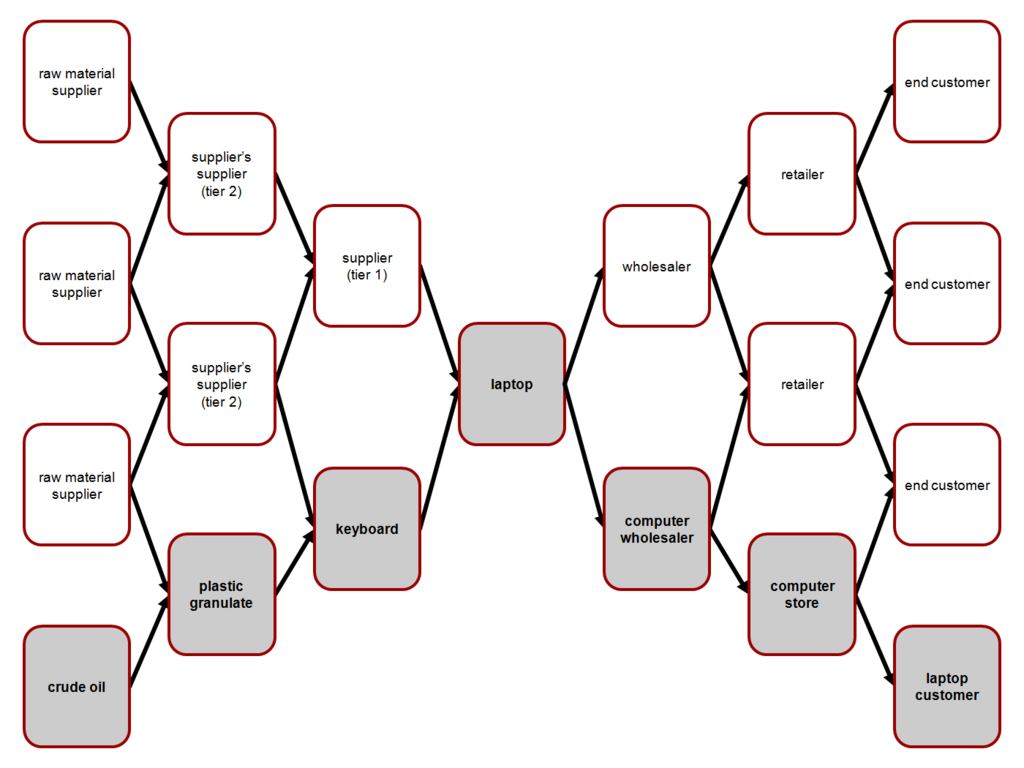
Think about the smartphone in your pocket or the coffee you drank this morning. Neither appeared out of thin air. They are the end products of a long journey involving many different companies, people, and processes. This entire network, from the raw materials pulled from the earth to the final product in your hand, is a supply chain.
Supply Chain Management spans all movement and storage of raw materials, work-in-process inventory, and finished goods from point of origin to point of consumption.
Supply Chain Management, or SCM, is the art and science of coordinating this entire process. The main goals are to make the journey as efficient, cost-effective, and reliable as possible. It's about getting the right product to the right place at the right time, all while spending the least amount of money.
The Five Links in the Chain
A supply chain can be broken down into five main components. Each stage flows into the next, and managing them together is what makes a supply chain successful.
1. Planning: This is the strategy phase. Companies forecast customer demand, decide what to produce, and figure out how to do it efficiently. Good planning ensures you don't make too much product (which creates waste) or too little (which leads to missed sales).
2. Sourcing: Once you have a plan, you need materials. Sourcing involves finding and choosing suppliers who can provide the raw materials or components needed for production. It’s a balancing act between cost, quality, and reliability.
3. Manufacturing: This is where the product is actually made. The focus is on efficiency and quality control, turning raw materials into finished goods as smoothly as possible.
4. Delivery: Also known as logistics, this stage is all about getting the finished product to the customer. It includes warehousing, transportation, and order fulfillment. Fast and reliable delivery is key to customer satisfaction.
5. Returns: Sometimes customers need to send a product back. This reverse flow, called reverse logistics, is an often-overlooked but crucial part of the supply chain. Handling returns well builds customer trust.
Benefits of Good SCM
When all five links work together seamlessly, the benefits are significant. A well-managed supply chain isn't just an operational detail; it's a powerful competitive advantage.
| Benefit | How SCM Helps |
|---|---|
| Lower Costs | Reduces waste, optimizes transportation, and minimizes storage needs. |
| Better Customer Satisfaction | Ensures products are in stock and delivered on time, leading to happier customers. |
| Increased Efficiency | Streamlines operations from start to finish, allowing the business to run more smoothly. |
| Greater Resilience | Helps companies adapt to disruptions, like natural disasters or sudden spikes in demand. |
The Role of Technology
Modern supply chains are incredibly complex, often spanning the entire globe. Managing them effectively would be impossible without technology. Software helps track inventory in real-time, manage orders, and coordinate with suppliers.
Data analytics has also become a game-changer. By analyzing vast amounts of data, companies can spot trends, predict future demand with greater accuracy, and identify potential problems before they disrupt the chain. This data-driven approach allows for smarter, faster, and more proactive decision-making.
Technology and data provide visibility into the entire supply chain, turning a series of separate steps into an integrated, intelligent system.
Now, let's test your understanding of these core concepts.
What is the primary goal of Supply Chain Management (SCM)?
A smartphone manufacturer evaluating different companies to supply their camera lenses is operating in which stage of the supply chain?
That's the basics of supply chain management. It’s the invisible backbone of commerce, ensuring the products we rely on every day make their way to us efficiently and reliably.