Stripe Usage-Based Billing Implementation
Understanding Usage-Based Billing
Pay for What You Use
Think about your electricity bill. You don't pay a flat fee each month. Instead, you're charged for the exact amount of electricity you consume. The more lights you leave on, the higher your bill. This is the core idea behind usage-based billing.
Usage-based pricing, also known as pay-as-you-go, charges customers based on the amount of product or service they use.
This model connects cost directly to consumption. For a startup, it can be an attractive way to price a product because it lowers the barrier to entry for new customers. They don't have to commit to a hefty subscription for a service they might not use much at first. Instead, they can start small and scale their spending as their needs grow.
Common Pricing Models
Usage-based billing isn't a one-size-fits-all approach. It comes in several flavors, each suited to different products and customer behaviors.
Pay-As-You-Go This is the simplest model. Customers pay a set price per unit of consumption. Think of a cloud storage provider that charges 💲0.02 per gigabyte stored. If you store 100 GB, you pay 💲2. If you store 500 GB, you pay 💲10. It's straightforward and easy to understand.
Tiered Pricing In a tiered model, the price per unit changes as consumption increases. The more you use, the less you pay per unit. This structure incentivizes higher usage by offering bulk discounts. For example, a data analytics platform might structure its pricing in tiers.
| API Calls per Month | Price per Call |
|---|---|
| 0 - 10,000 | $0.010 |
| 10,001 - 100,000 | $0.007 |
| 100,001+ | $0.004 |
Dynamic Pricing This is the most complex model, where prices fluctuate based on real-time factors like demand and supply. Ride-sharing apps are a classic example. A ride costs more during rush hour (high demand) than in the middle of the day (low demand). This model helps manage demand and maximize revenue.
Advantages and Challenges
Adopting a usage-based model has clear benefits. It’s often seen as fairer by customers, as they only pay for the value they actually receive. This transparency can build trust and attract users who are cautious about long-term subscriptions.
Usage-based pricing aligns cost with consumption and gives customers control over their spending.
However, this model isn't without its challenges. The biggest drawback for a business is unpredictable revenue. Unlike a subscription model that guarantees a certain amount of monthly recurring revenue (MRR), usage-based income can vary wildly from month to month. This can make financial forecasting difficult.
For customers, the main risk is "bill shock." If their usage spikes unexpectedly, they could face a much larger bill than anticipated, which can lead to frustration and churn. Clear communication and tools for monitoring usage are essential to prevent this.
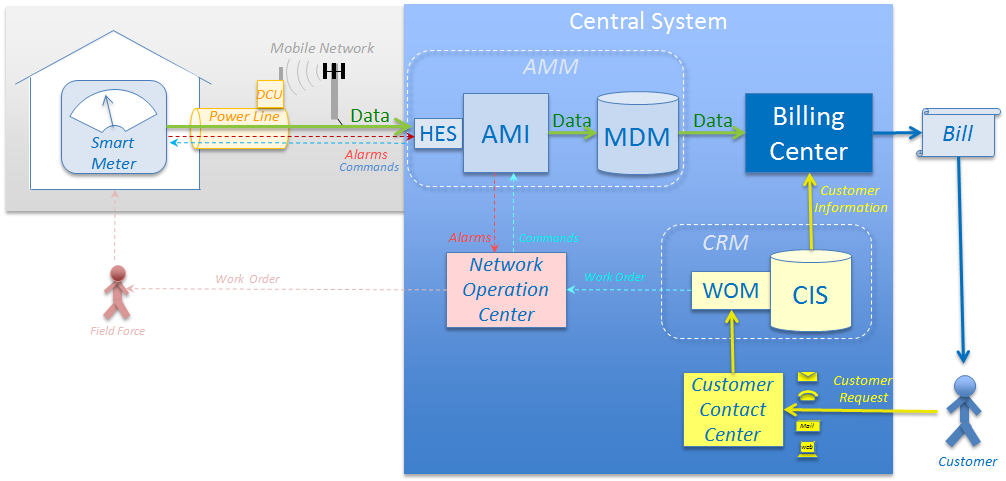
You can see usage-based billing everywhere, from your water bill and cell phone data plan to sophisticated cloud computing platforms like Amazon Web Services (AWS), which bills for computing power, storage, and data transfer by the second or gigabyte. Many modern Software-as-a-Service (SaaS) companies also use this model, charging per API call, transaction processed, or active user.
What is the core principle of usage-based billing?
Why might a startup find a usage-based model attractive for acquiring new customers?
Choosing the right pricing model is a critical decision for any startup. While usage-based billing offers flexibility and fairness, it requires careful planning to balance customer satisfaction with business stability.