STM32 Firmware Software Integration
STM32 Firmware Basics
What's Inside an STM32?
A microcontroller is a tiny, self-contained computer on a single chip. Think of it as the dedicated brain for an electronic device, from a smart thermostat to a drone. The STM32 family of microcontrollers, made by STMicroelectronics, is a popular choice for both hobbyists and professionals.
At the heart of every STM32 is an ARM Cortex-M processor. This is the central processing unit (CPU) that executes instructions. But a CPU alone isn't enough. Just like your computer, it needs memory and ways to interact with the outside world.
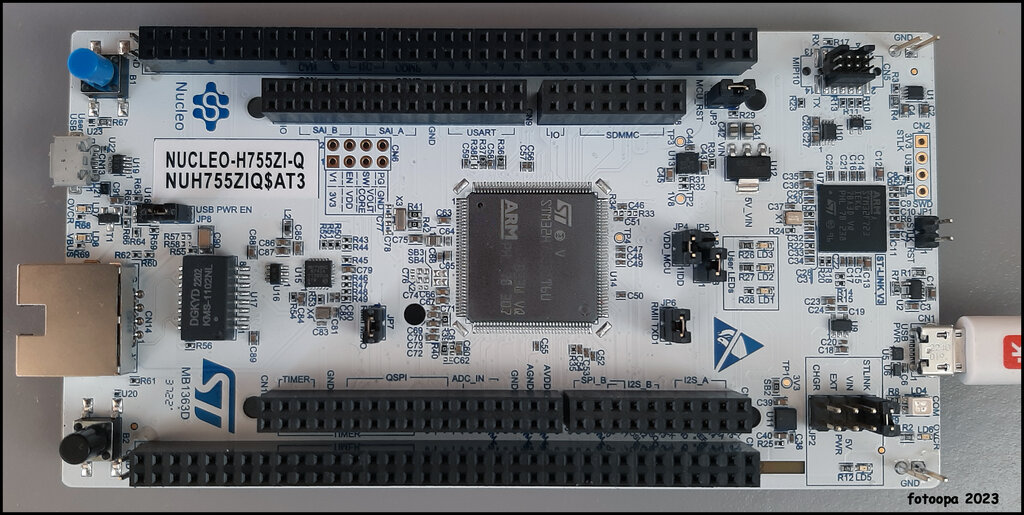
An STM32 chip packs several key components into one package:
- Flash Memory: This is where the program, or firmware, is stored permanently. It's non-volatile, meaning it retains its contents even when the power is off.
- RAM (Random Access Memory): This is temporary working memory used for storing variables and data while the program is running. It's volatile, so its contents are lost when power is removed.
- Peripherals: These are specialized hardware modules that connect the microcontroller to the real world. They handle tasks like controlling digital input/output pins (GPIO), timing events, and converting analog signals to digital values (ADC).
This integrated design is why microcontrollers are so powerful for embedded systems. Everything needed to run a dedicated task is packed into a single, efficient component.
The Role of Firmware
If the microcontroller is the hardware brain, firmware is the set of instructions that tells it what to think and do. It's a type of software written specifically for a piece of hardware, stored directly on its flash memory. It's called "firm" because it's not meant to be changed by the end-user, unlike application software on a PC.
Firmware brings the hardware to life. When an STM32 powers on, it immediately begins executing the firmware's instructions. This code is responsible for every aspect of the device's operation.
Firmware is the bridge between the hardware's potential and its actual function. It defines what the device is and what it does.
A typical firmware application follows a simple pattern:
- Initialization: Set up the microcontroller's clock, configure peripherals, and initialize variables.
- Main Loop: Enter an infinite loop that runs for as long as the device is powered on. Inside this loop, the firmware continuously reads inputs (like a button press), processes data, and updates outputs (like turning on an LED).
Development Tools
Writing firmware for an STM32 requires a specific set of tools. You'll write code on your computer, compile it into machine instructions the STM32 can understand, and then load that program onto the microcontroller's flash memory.
The most common language for STM32 development is C, often with some C++. The main tool you'll use is an Integrated Development Environment, or IDE.
IDE
noun
An Integrated Development Environment is a software application that provides comprehensive facilities to computer programmers for software development. An IDE normally consists of at least a source code editor, build automation tools, and a debugger.
For STM32, the official IDE is STM32CubeIDE. It bundles everything you need:
- Code Editor: To write and edit your C/C++ code.
- Compiler: To translate your human-readable code into binary machine code for the ARM processor.
- Debugger: A powerful tool that lets you run code on the STM32 step-by-step, inspect variables, and find bugs. This connects to the microcontroller via a hardware probe like an ST-Link.
- STM32CubeMX: A graphical configuration tool that helps you set up your microcontroller's pins and peripherals, then automatically generates the necessary initialization code.
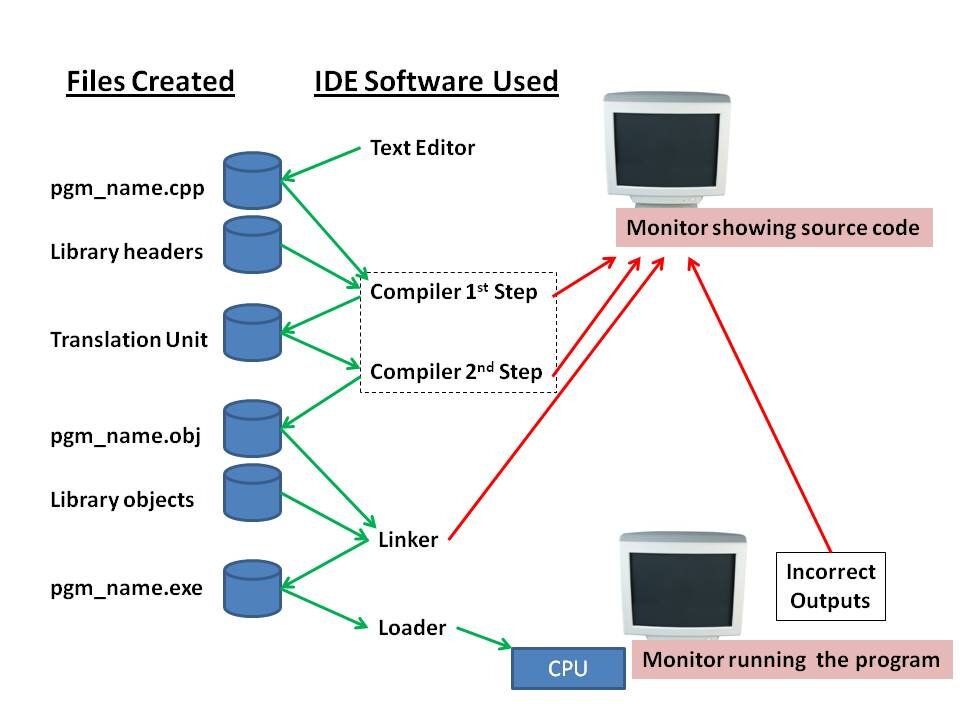
To get your compiled program from your computer onto the STM32, you'll use a programmer/debugger like the ST-Link, which is often built right into development boards like the Nucleo. This small piece of hardware creates the physical link for flashing the firmware and debugging your code in real-time.
What is the primary function of Flash Memory in an STM32 microcontroller?
A developer observes that all calculated variables and the state of their program are lost every time their device is powered off. Where was this data most likely stored?