State Expansion and the Growth of Empires
Corporate to State Rule
From Company to Crown
For nearly two centuries, vast territories in Asia were not ruled by European kings or queens, but by corporations. The British East India Company (EIC) in India and the Dutch East India Company (VOC) in Indonesia started as trading ventures but grew into powerful quasi-states. They minted their own coins, commanded massive private armies, and administered justice over millions of people. This strange blend of commerce and conquest, however, had an expiration date. Eventually, the risks of leaving a private company in charge of a colony became too great, forcing national governments to step in and take direct control.
The Spark in India
By the mid-19th century, the British East India Company controlled most of the Indian subcontinent. It wasn't just a business; it was the government. But its authority was fragile, built on a mix of alliances, military force, and economic exploitation. In 1857, that authority shattered.
A widespread uprising, known as the , erupted across northern India. It began among sepoys—Indian soldiers in the Company's army—but quickly spread to include princes and peasants united by grievances against EIC rule. The rebellion was vast, violent, and nearly succeeded in driving the British out. Though the Company eventually crushed the revolt with brutal force, the event sent shockwaves all the way to London.
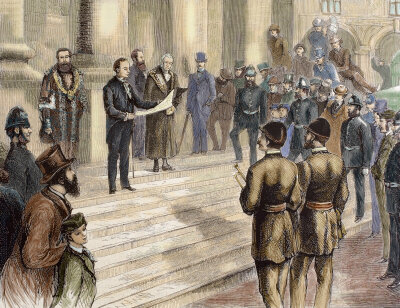
The message was clear: a for-profit company could no longer be trusted to manage Britain's most valuable colonial possession. The British Parliament acted swiftly, passing the Government of India Act of 1858. This landmark legislation formally dissolved the East India Company's administrative powers and transferred all its territories and authority directly to the British Crown. The era of company rule was over.
The Act of 1858 marked the beginning of the British Raj, a period of direct imperial rule that would last for the next 90 years.
Under the Raj, India's governance was completely overhauled. A new official, the Viceroy, was appointed as the monarch's representative in India. A cabinet position, the Secretary of State for India, was created in London to oversee policy. The goal was to create a more centralized, standardized, and predictable system of control, integrating India's economy more tightly with the rest of the British Empire.
The Collapse in Indonesia
Half a world away, the Dutch faced a similar problem, but the catalyst wasn't rebellion—it was bankruptcy. For two centuries, the Vereenigde Oostindische Compagnie, or , had dominated the lucrative spice trade in the Indonesian archipelago. It held a monopoly, operated forts, and ruthlessly enforced its will on local rulers.
By the late 18th century, however, the VOC was rotting from the inside. Widespread corruption among its officials, coupled with costly wars and growing competition from the British, had drained its finances. The company was hemorrhaging money and had accumulated a mountain of debt. The once-mighty corporation was insolvent.
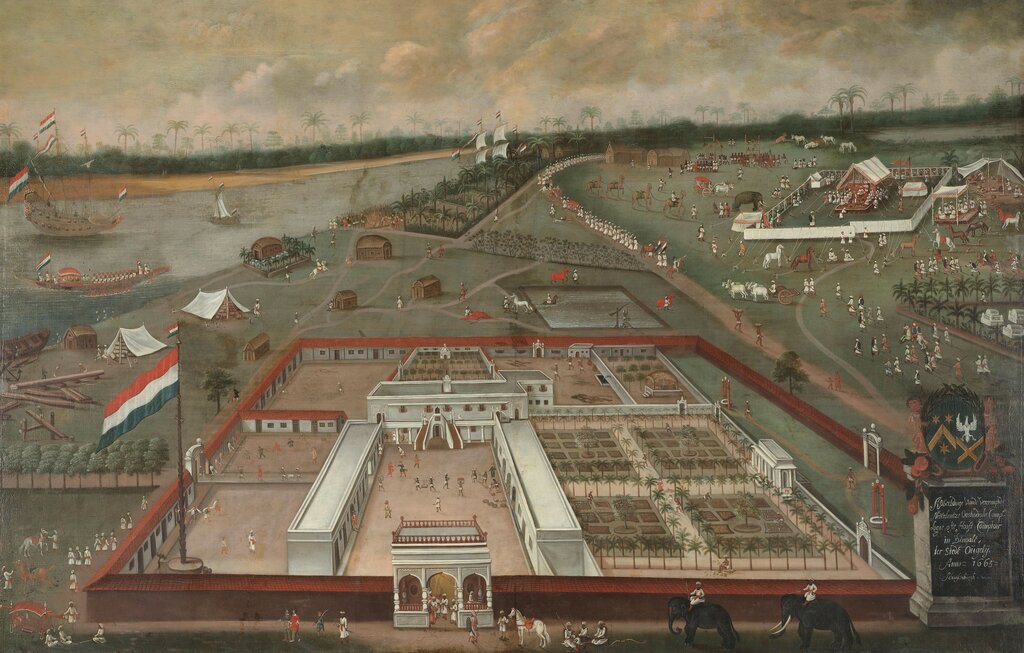
The Dutch government could no longer ignore the situation. On December 31, 1799, it allowed the VOC's charter to expire and did not renew it. The company was formally dissolved, and the Dutch state took direct control of all its debts and territorial possessions. These lands were consolidated into a formal colony known as the Dutch East Indies.
Like the British in India, the Dutch established a centralized colonial administration. They implemented policies aimed at maximizing economic extraction, particularly through forced cultivation of cash crops like coffee and sugar. This transition marked a shift from a company-led monopoly to a state-run system of colonial exploitation, embedding the islands of Indonesia firmly within the Dutch empire.
What was the primary trigger for the British government to dissolve the East India Company and take direct control of India?
In contrast to the situation in India, what was the main reason the Dutch government took control of the territories held by the Dutch East India Company (VOC)?
In both India and Indonesia, the shift from corporate to state rule represented a pivotal moment in the history of imperialism. It was a move toward a more organized, bureaucratic, and powerful form of colonial control, with consequences that would shape these regions for generations.