SQL Fundamentals
Introduction to SQL
The Language of Data
Imagine a massive library, but instead of books, it stores every piece of information a company has: customer names, product sales, employee records, and so on. Now, how do you find a specific piece of information? You can't just wander around hoping to find it. You need to speak to the librarian.
In the world of data, that librarian is a database, and the language you use to speak to it is SQL.
SQL, or Structured Query Language, is a language to talk to databases.
SQL (often pronounced "sequel") is the standard language for communicating with relational databases. It lets you ask questions, update information, and manage the structure of the data itself. Whether you want to retrieve a list of all customers in California or calculate the total sales for last month, SQL is the tool for the job.
database
noun
An organized collection of structured information, or data, typically stored electronically in a computer system.
Relational Databases
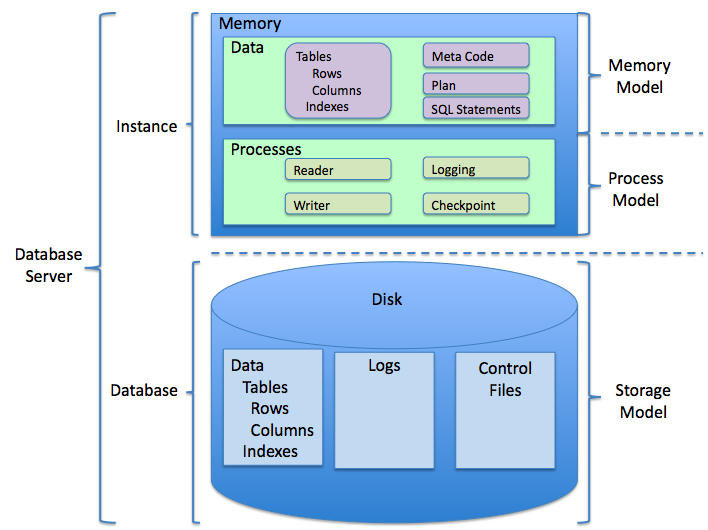
SQL was designed specifically for relational databases. This is the most common type of database, and it organizes data into tables, much like a spreadsheet. Each table consists of rows and columns.
A table for Customers might have columns like CustomerID, FirstName, LastName, and Email. Each row would represent a single customer.
The "relational" part comes from the fact that these tables can be linked to each other. For example, you might have another table called Orders. This table would also have a CustomerID column, allowing you to connect each order back to the customer who placed it. This simple, organized structure is incredibly powerful for managing complex information.
A Brief History
The story of SQL begins in the early 1970s at IBM. Researchers Donald D. Chamberlin and Raymond F. Boyce were developing a new way to manage data based on a groundbreaking paper by their colleague, Edgar F. Codd, called "A Relational Model of Data for Large Shared Data Banks."
Their goal was to create a language that was easy for people without a deep programming background to use. They wanted someone to be able to ask for data using something that resembled plain English. Their first attempt was called SQUARE, but it was difficult to type. They soon developed a new language: SEQUEL, which stood for Structured English Query Language.
Due to a trademark issue, the name was eventually shortened to SQL. Since then, it has become the standard for relational databases, adopted by organizations like the American National Standards Institute (ANSI) and the International Organization for Standardization (ISO).
Though the official standard is SQL, many tech professionals still pronounce it "sequel" out of habit from its original name.
Why It's So Important
Nearly every application you use, from social media to online banking, relies on a database. SQL is the universal key that unlocks the data inside them. It’s a skill that transcends specific technologies. Whether a database is from Microsoft, Oracle, or an open-source project like PostgreSQL, they all speak a dialect of SQL.
This standardization makes it an essential skill for a huge range of professions:
- Data Analysts use SQL to pull and analyze data to find business insights.
- Software Engineers use it to build applications that store and retrieve user information.
- Business Owners can use it to track inventory, sales, and customer growth.
Learning SQL is like learning the grammar of data. It empowers you to ask precise questions and get exactly the information you need, turning raw data into valuable knowledge.
Now that you understand what SQL is and why it's a cornerstone of modern data management, let's test your knowledge.
What is the primary purpose of SQL?
How do relational databases primarily organize data?
With this foundation, you're ready to start exploring the commands that make SQL work.