SQL Fundamentals
Introduction to SQL
What is SQL?
Think of a massive, perfectly organized library. Instead of books, it’s filled with data, all neatly arranged on shelves (tables) in specific sections. Now, how do you ask the librarian to find, add, or update a piece of information? You need a common language. For databases, that language is SQL.
SQL, or Structured Query Language, is a language to talk to databases.
SQL (pronounced either “S-Q-L” or “sequel”) is the standard language for communicating with and managing relational databases. It lets you ask questions, update information, and organize the data stored inside. It’s the bridge between you and your data, allowing you to turn raw information into useful insights.
The Relational Database
So, what exactly is a “relational database”? It’s a way of storing information in tables. A table is just a grid of rows and columns, much like a spreadsheet.
Each table stores information about one specific thing, like customers or products. Each row represents a single item (one customer, one product), and each column represents a specific attribute of that item (a customer's name, a product's price).
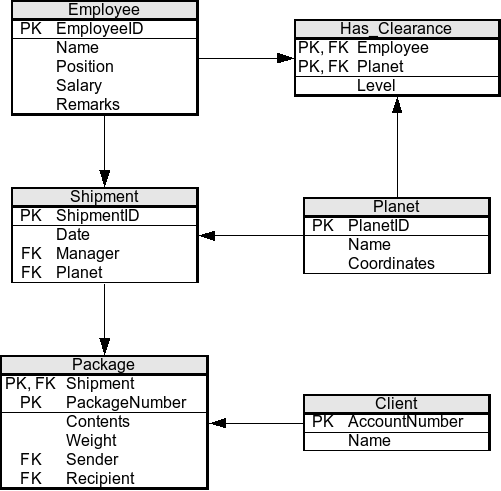
The real power comes from the “relational” part. Tables can be linked together based on related data. For example, a Customers table can be linked to an Orders table using a unique customer ID. This means you don't have to repeat a customer's shipping address every time they place a new order. The database already knows it.
This organized approach prevents data from being repeated unnecessarily and helps ensure that information is accurate and consistent. It's an efficient and reliable way to manage huge amounts of information.
A Brief History
The story of SQL begins in the early 1970s at IBM. Researchers Donald Chamberlin and Raymond Boyce were working on a new kind of database system based on the “relational model” proposed by their colleague Edgar F. Codd. Their goal was to create a simple, English-like language that anyone could use to retrieve data, not just computer scientists.
They originally called it SEQUEL (Structured English Query Language), but later shortened it to SQL. It quickly gained popularity, and in the 1980s, it was adopted as a standard by both the American National Standards Institute (ANSI) and the International Organization for Standardization (ISO). This standardization means that while there are different versions of databases (like MySQL, PostgreSQL, and SQL Server), the basic SQL they use is largely the same.
Why SQL Is Everywhere
Almost every application that deals with data relies on a database, and SQL is the universal language for talking to them. From the app that tracks your fitness goals, to the banking system that manages your money, to the e-commerce site where you buy shoes, databases are working behind the scenes. SQL is what makes it all happen.
Learning SQL is a fundamental skill for anyone working with data. Data analysts use it to pull information for reports, software engineers use it to build applications, and even marketers use it to understand customer behavior. It’s a powerful tool for unlocking the stories hidden within data.
Ready to check your understanding of these core concepts?
What is the primary function of SQL (Structured Query Language)?
The "relational" in "relational database" refers to the way that...
Now you know what SQL is, why it was created, and the kind of databases it's used to manage. In the next section, we'll start looking at how to write our first commands.