SQL for Liberal Arts Students
Introduction to Databases
The Digital Filing Cabinet
Think of a database as a highly organized digital filing cabinet. Its job is to store, manage, and retrieve information quickly and reliably. Without databases, the apps and websites we use every day would be a chaotic mess. Imagine trying to find a specific friend's photo on social media if all the pictures were just dumped into one giant, unsorted folder. It would be impossible.
Databases provide structure. They ensure that data is not only stored but also kept safe, consistent, and easy to access. Whether it's your contact list, a company's employee records, or the inventory of an online store, a database is the engine working behind the scenes to keep everything in order.
A database is a system for efficiently storing and retrieving structured data. It turns raw information into a useful, accessible resource.
Two Flavors of Organization
Not all data is the same, so databases come in different types. The two main categories are relational and non-relational.
Relational Databases organize data into tables, which are a lot like spreadsheets. Each table has rows and columns. A row represents a single record, like a specific customer, and a column represents an attribute of that record, like the customer's name or email address. This rigid structure makes it easy to see relationships between different pieces of data. For example, you could link a table of customers to a table of their orders.
| CustomerID | FirstName | LastName | |
|---|---|---|---|
| 1 | Maria | Rodriguez | m.rod@email.com |
| 2 | David | Chen | dchen@email.com |
| 3 | Fatima | Khan | fatima.k@email.com |
Non-Relational Databases, sometimes called NoSQL databases, are more flexible. They don't rely on the strict table structure. Instead, they can store data in various formats, such as documents, key-value pairs, or graphs. This makes them great for handling large amounts of varied or unstructured data, like social media posts, sensor data, or articles.
Think of it this way: a relational database is like a perfectly organized address book with neat columns for name, address, and phone number. A non-relational database is more like a collection of individual file folders, where each folder can hold a different mix of information for each person.
Databases in the Wild
You interact with databases constantly, even if you don't realize it. Every time you log into an app, buy something online, or check your bank account, a database is at work.
- E-commerce: Online stores use databases to manage everything from product catalogs and inventory levels to customer accounts and order histories.
- Social Media: Platforms like Instagram and Facebook store user profiles, posts, comments, and friend connections in massive databases.
- Healthcare: Hospitals and clinics rely on databases to securely manage patient medical records, appointments, and billing information.
- Finance: Banks use high-performance databases to process millions of transactions every day, keeping track of account balances and financial records with extreme accuracy.
These complex systems need a robust way to organize vast amounts of interconnected data, which is exactly what databases are built for.
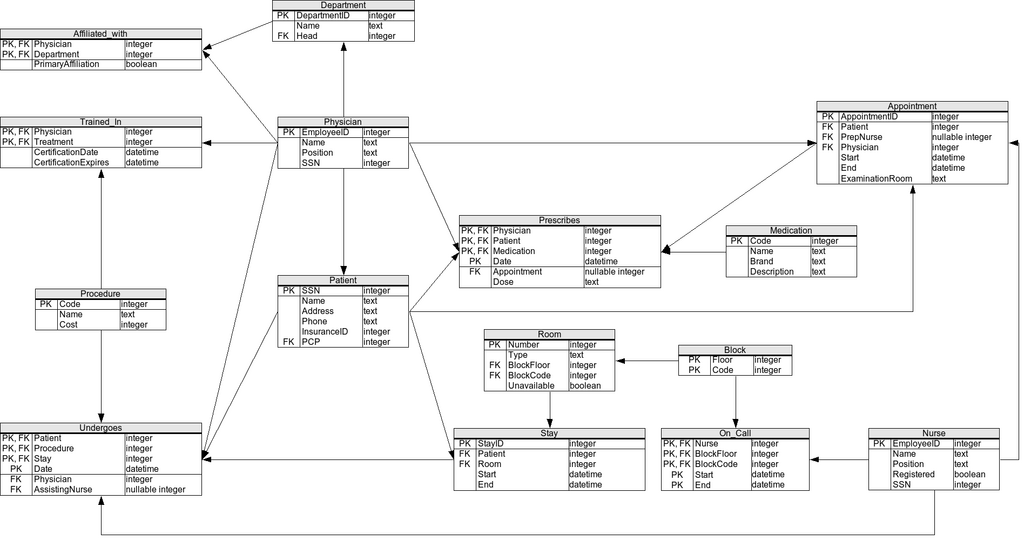
Understanding these basic concepts is the first step toward working with data. By organizing information logically, databases turn raw data into a powerful tool for businesses, researchers, and developers.
Ready to check your understanding?
What is the primary function of a database?
A hospital needs to store patient records where each patient has a structured set of information: name, date of birth, and medical history number. Which database type is best suited for this organized data?
Now that you have a grasp of what databases are and why they matter, you're ready to explore how we communicate with them.