SQL Data Types Explained
Introduction to SQL Data Types
The Rules of the Database
Think of a database table as a well-organized spreadsheet. Each column has a header, like 'First Name', 'Age', or 'Hire Date'. But how does the database know that 'Age' should only contain numbers and 'Hire Date' should only contain dates? That's where data types come in.
A data type is a rule you set for each column. It tells the database exactly what kind of data is allowed in that column. Is it a whole number? Text? A date? By defining a data type, you're creating a blueprint for your data, ensuring everything stays organized and predictable.
Every column in a database table has a name and a data type. It's a fundamental rule that keeps data clean and consistent.
Why Choosing Correctly Matters
Choosing the right data type isn't just a technical detail. It has a real impact on your database. There are three big reasons to get it right: storage, integrity, and performance.
Efficient Storage: Imagine you need to store someone's age. You could use a data type designed for huge amounts of text, but that would be like using a moving truck to transport a single shoebox. It's wasteful. Choosing a simple number type uses far less space, making your database smaller and more efficient.
Data Integrity: Data types are like bouncers at a club. If a column is set up for dates, the data type will reject anything that isn't a valid date. You can't accidentally enter "next Tuesday" or "123-ABC". This keeps your data accurate and reliable. Without these rules, your data could quickly become a messy, unusable jumble.
Faster Queries: When a database knows exactly what kind of data is in a column, it can search, sort, and calculate much faster. It uses optimized methods for numbers and different ones for text. When you run a query to find all employees over the age of 40, a proper number data type makes that search almost instant.
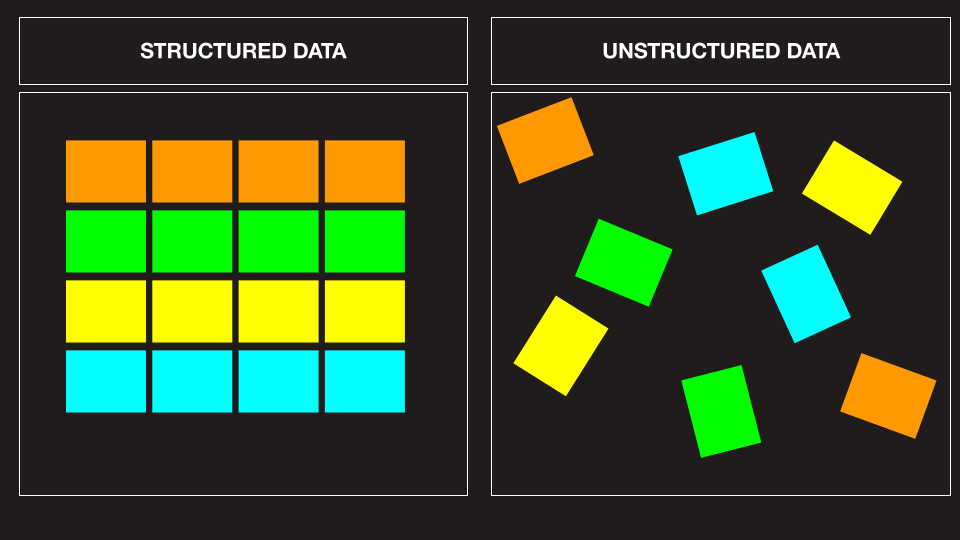
Getting the data types right from the start saves you from major headaches down the road. It's a foundational step in building a database that is fast, reliable, and easy to manage.
The Main Families of Data
While there are many specific data types, they generally fall into a few main categories. Think of them as the broad sections of a library.
-
Character Strings: Used for text. This can be anything from a single letter to a whole book. Names, addresses, and product descriptions all use string data types.
-
Numeric: For numbers. This family is split into two main groups: exact numbers for integers (like 5, 42, -100) and approximate numbers for decimals (like 3.14 or 99.95).
-
Date and Time: A special category just for handling dates, times, or both. Storing a date this way allows you to do smart things, like calculating the number of days between two events.
-
Binary: This is for storing raw data, like images, audio files, or other documents directly within the database.
-
Boolean: A simple type that can only hold one of two values: true or false. It's perfect for yes/no questions, like
IsActiveorHasShipped.
In the following sections, we'll dive deeper into each of these categories and look at the specific data types available in SQL.