Spotting Deepfakes and Misinformation
Understanding Deepfakes
Seeing Isn't Believing
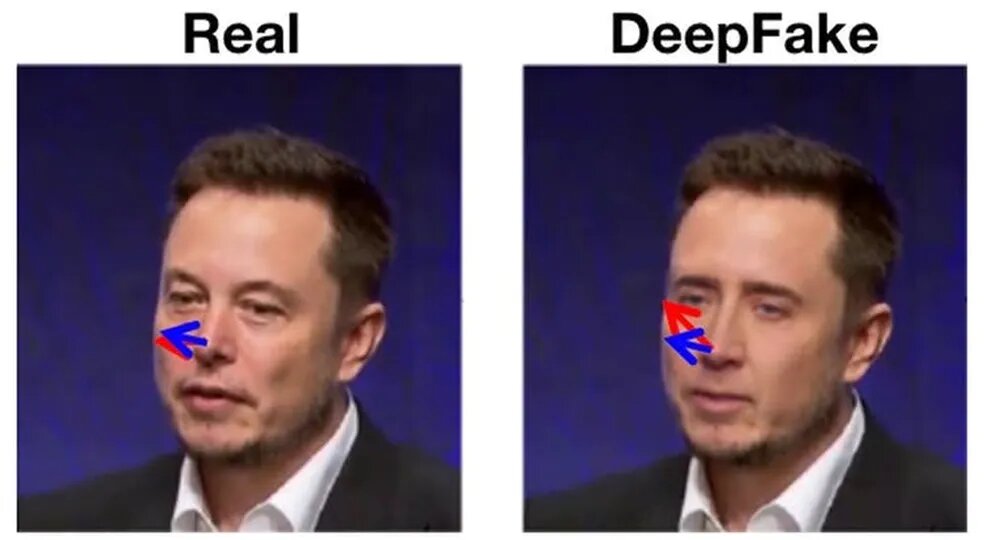
You've probably heard the term "deepfake," but what does it actually mean? It’s a blend of "deep learning" and "fake." At its core, a deepfake is a piece of synthetic media—an image, video, or audio clip—where a person's likeness or voice has been replaced with someone else's. The result is often so realistic it's hard to tell it was created by a computer.
Deepfake
noun
Synthetic media created using artificial intelligence, where a person in an existing image or video is replaced with someone else's likeness.
These aren't just simple photo edits. Deepfakes are generated by complex artificial intelligence systems that have been trained on vast amounts of data. The AI learns to mimic a person's facial expressions, mannerisms, and voice with stunning accuracy.
How Does It Work?
The technology behind most deepfakes is a type of machine learning called a Generative Adversarial Network, or GAN. Think of it as a competition between two AIs.
One AI, the Generator, creates the fake images or videos. Its job is to make them as realistic as possible. The other AI, the Discriminator, acts as a detective. Its job is to spot the fakes created by the Generator.
The two AIs go back and forth. The Generator creates a fake, and the Discriminator tries to call its bluff. Every time the Discriminator spots a fake, the Generator learns from its mistakes and gets better. This process repeats millions of times, until the Generator becomes so skilled at creating fakes that the Discriminator can no longer tell the difference between what's real and what isn't.
The term "deepfake" first gained widespread attention in late 2017 when a Reddit user posted manipulated pornographic videos featuring celebrities. While the technology had existed in academic circles for years, this was the moment it entered the public consciousness, highlighting its potential for misuse.
Uses and Misuses
Deepfake technology isn't inherently bad. It has legitimate and creative uses. In the film industry, it can be used to de-age actors or seamlessly dub movies into different languages. Artists are experimenting with it to create new forms of expression. It can also be used for satire and parody, creating humorous content that is clearly understood to be fake.
However, the potential for harm is significant. The same technology can be used to create malicious content with frightening consequences.
Deepfakes can be used to spread political misinformation, create fake evidence in legal cases, commit fraud by mimicking someone's voice over the phone, and generate non-consensual pornography to harass and defame individuals.
One of the biggest concerns is the creation of a "liar's dividend." This is a phenomenon where, because people are aware that deepfakes exist, they can dismiss real video or audio evidence as fake. It creates an environment where it becomes easier for liars to deny wrongdoing by claiming authentic media has been manipulated.
This erosion of trust in digital media is perhaps the most profound societal impact. When we can no longer trust our own eyes and ears, it becomes harder to agree on a shared reality. This complicates everything from political discourse to personal relationships, forcing us to become more critical consumers of the information we encounter online.
Ready to test your knowledge? Let's see what you've learned about deepfakes.
The term "deepfake" is a combination of which two concepts?
In the Generative Adversarial Network (GAN) model used for deepfakes, what is the role of the 'Generator'?
As this technology continues to evolve, being aware of its existence and potential is the first step in navigating a world where seeing is no longer always believing.