
provide a comprehensive overview of special education law and compliance, IDEA and MARSE rules for the state of Michigan
Welcome! I'm really looking forward to diving into the world of special education law with you. Michigan has some unique rules that build on top of federal law, so we'll have plenty of important ground to cover.
Before we map out our journey, could you tell me a bit about your background? For example, are you a parent, an educator, an advocate, or a student? And what is your main goal in learning about these laws?
I'm an educator or administrator looking to stay compliant.
It's wonderful to meet you! As an educator and administrator, staying compliant isn't just about following rules—it is about creating a reliable safety net for your students while protecting your school community.
Let's display our learning path so you can see exactly where we are heading during this session.

The Cornerstone of Special Education: IDEA
Explain FAPE with a quick example
To bring FAPE to life, think of a student with severe dyslexia. A school can't simply hand them a standard textbook and say, "We provided a free book, so that is FAPE." Under IDEA, that student might need specialized, multi-sensory reading instruction from a certified specialist and audio versions of their science books. These tailored services—the specific teaching methods and tools—are what make the education "appropriate" and ensure the student has meaningful access to learning, all without charging the family a single penny.
Where Michigan Steps In: MARSE
Are there other areas where Michigan is stricter than federal law?
Yes, extending eligibility to age 25 is a massive difference, but Michigan is also stricter than federal law in several other key areas. As a school administrator, these differences are critical to keep in mind so your district doesn't accidentally fall out of compliance.
Stricter Timelines and Clearer Standards
| Compliance Area | Federal IDEA Baseline | Michigan MARSE Requirement |
|---|---|---|
| Evaluation Timeline | 60 calendar days from parental consent to determine eligibility. | 30 school days from parental consent to complete the evaluation and hold the IEP meeting. |
| Short-Term Objectives | Only required for students taking alternative assessments. | Required for all students who receive an IEP, regardless of the type of assessment they take. |
| Age of Eligibility | Services are mandated through age 21. | Services are extended through age 25 (if the student hasn't graduated with a regular diploma). |
Make me a quick comparison diagram of these timelines
I've got you covered. Visualizing how these timelines and requirements stack up side-by-side makes remembering these strict MARSE differences much easier. I'm initiating a visual comparison diagram right now so you can see exactly how Michigan's standards compare to the federal baseline at a glance.

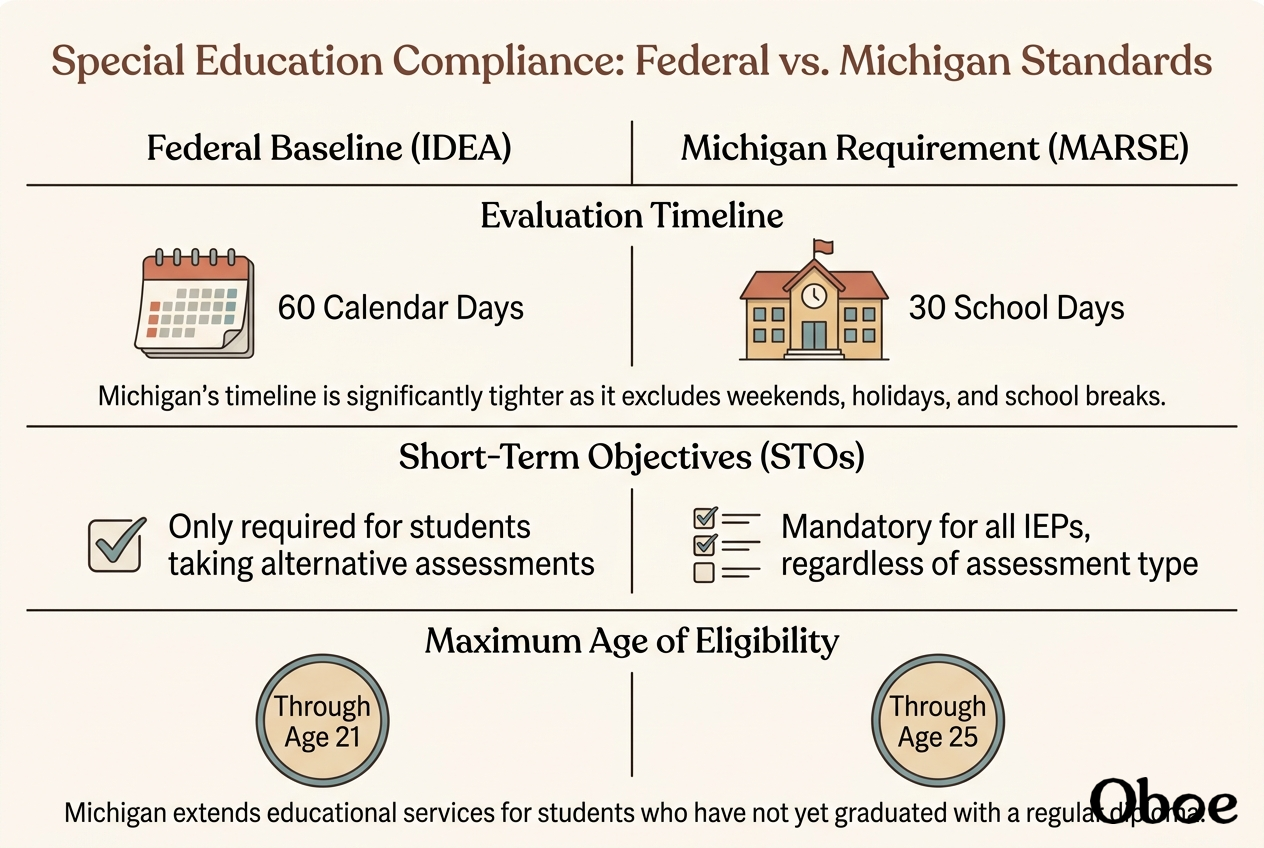
Now that we have visualized how Michigan elevates these foundational rules, let's make sure everything we have covered so far in this first section is crystal clear before we move on to how the evaluation and IEP process actually plays out in practice.
Which of these state-specific rules—the , the mandatory short-term objectives for all IEPs, or the extension of eligibility to age 25—do you think presents the biggest day-to-day administrative challenge for your district?