Spanish in Four Weeks
Spanish Alphabet and Pronunciation
The Spanish Alphabet
The Spanish alphabet, or abecedario, is your first step toward reading and speaking the language. The good news is that it’s nearly identical to the English alphabet. It has 27 letters in total.
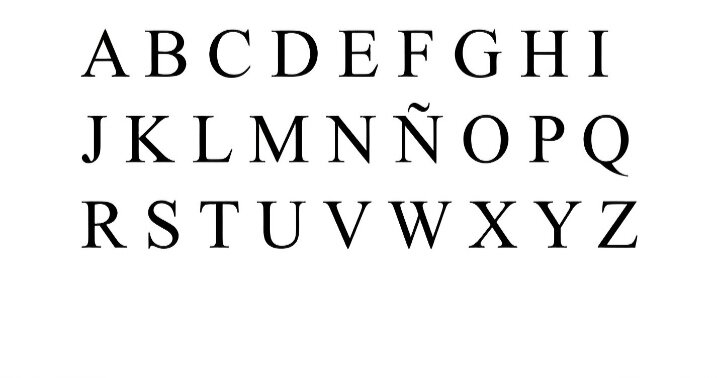
Here's a look at each letter and its Spanish name. Notice that most letter names are feminine, so you'd say la a, la be, la ce, and so on.
| Letter | Spanish Name |
|---|---|
| A, a | a |
| B, b | be |
| C, c | ce |
| D, d | de |
| E, e | e |
| F, f | efe |
| G, g | ge |
| H, h | hache |
| I, i | i |
| J, j | jota |
| K, k | ka |
| L, l | ele |
| M, m | eme |
| N, n | ene |
| Ñ, ñ | eñe |
| O, o | o |
| P, p | pe |
| Q, q | cu |
| R, r | ere |
| S, s | ese |
| T, t | te |
| U, u | u |
| V, v | uve |
| W, w | uve doble |
| X, x | equis |
| Y, y | ye (or i griega) |
| Z, z | zeta |
You might have heard about letters like ch (che) and ll (elle). While they represent unique sounds, they were officially removed as separate letters of the alphabet in 2010. Now they're just considered letter combinations, like 'th' or 'sh' in English.
Vowel Power
Here's the best part about Spanish pronunciation: the vowels are pure and consistent. Unlike English, where 'a' can sound completely different in 'cat,' 'car,' and 'cake,' Spanish vowels each have one, and only one, sound. Master these five sounds, and you're halfway there.
| Vowel | Sound | Example Word |
|---|---|---|
| A | "ah" as in father | amigo (friend) |
| E | "eh" as in get | elefante (elephant) |
| I | "ee" as in see | si (yes) |
| O | "oh" as in go | hola (hello) |
| U | "oo" as in moon | uno (one) |
Practice saying them in order: ah, eh, ee, oh, oo. Every time you see a Spanish vowel, it will make that exact sound.
Key Consonant Sounds
Most Spanish consonants sound like their English counterparts, but a few have their own personalities. Let's look at the ones that might trip you up.
| Letter | Pronunciation Rule | Example |
|---|---|---|
| C | Sounds like 'k' before a, o, u. Sounds like 's' before e, i. | casa (house), ciudad (city) |
| G | Sounds like the 'g' in go before a, o, u. Sounds like the 'h' in hat before e, i. | gato (cat), gente (people) |
| H | Always silent. Pretend it isn't there. | hola (hello), hotel (hotel) |
| J | Always sounds like the 'h' in hat. | Japón (Japan), trabajo (work) |
| LL | Sounds like the 'y' in yes. | me llamo (my name is), lluvia (rain) |
| Ñ | Sounds like 'ny', as in canyon. | español (Spanish), mañana (tomorrow) |
| R | A light tap of the tongue. When it's rr or at the start of a word, it's a rolled 'r'. | pero (but), perro (dog), Roma (Rome) |
| Z | Always sounds like the 's' in sun. | azul (blue), lápiz (pencil) |
The rolled 'rr' is famously tricky. Don't worry if you can't get it right away. It takes practice for everyone!
What's with the Accent Marks?
You'll often see accent marks, called tildes, on Spanish vowels, like in adiós or árbol. An accent mark does not change how the vowel sounds. Its job is to tell you which syllable to stress.
Most Spanish words follow a predictable stress pattern. When a word breaks that pattern, it needs an accent mark to show you where to put the emphasis. For example, the accent in música (music) tells you to stress the first syllable: MÚ-si-ca. Without it, the stress would fall on the second syllable.
Sometimes an accent can even change a word's meaning. For instance, si means 'if,' while sí means 'yes'.
Let's review the main pronunciation points.
Time for a quick check on what you've learned.
How many letters are in the official Spanish alphabet?
What is the primary function of an accent mark (tilde) on a vowel in a Spanish word?
With these rules, you can confidently pronounce almost any Spanish word you see. The key is the consistency of the vowels. Keep practicing, and soon it will become second nature.