Spacecraft Design Fundamentals
Introduction to Spacecraft Design
From Simple to Complex
The first spacecraft were simple by today's standards. Think of Sputnik 1, the beach-ball-sized satellite that kicked off the space race in 1957. It was essentially a metal sphere with a radio transmitter. Its job was to orbit the Earth and beep, proving it could be done. Early crewed capsules like Vostok and Mercury were not much more complex. They were designed for one purpose: to keep a single astronaut alive in orbit for a short time and bring them back safely.
As ambitions grew, so did the complexity of the machines. The Apollo program, with its goal of landing humans on the Moon, required a modular approach. Instead of a single vehicle, engineers designed a system of them: the powerful Saturn V rocket, the Command Module for the journey, the Service Module for power and propulsion, and the specialized Lunar Module for the landing itself. Each component had a distinct job, and they all had to work together flawlessly millions of miles from home.
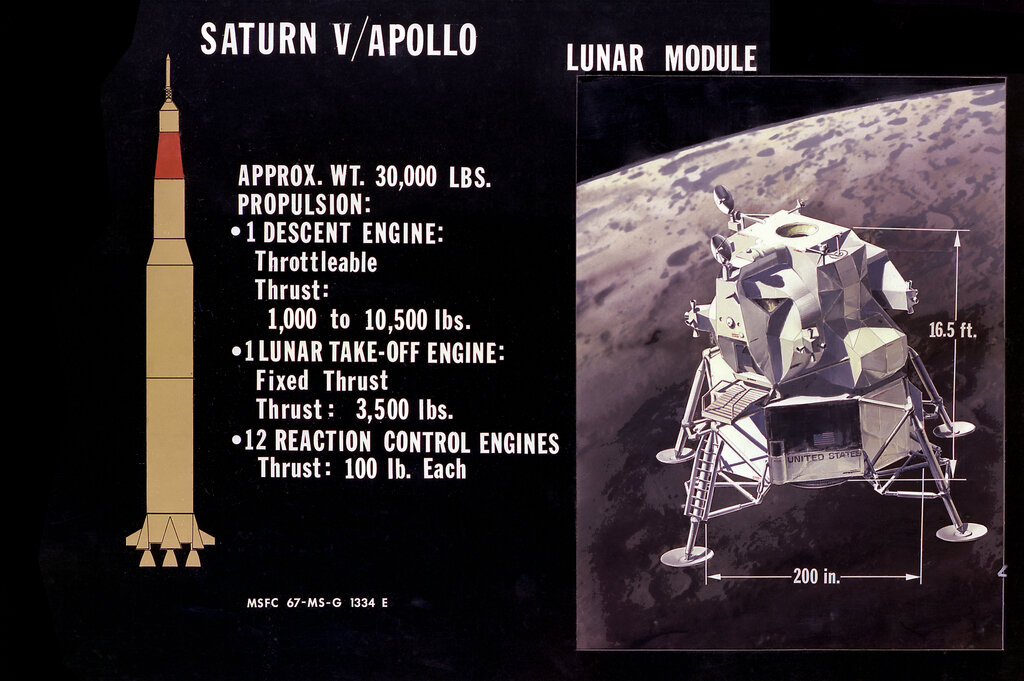
This trend continued with probes like Voyager, designed to explore the outer solar system for decades, and reusable vehicles like the Space Shuttle. Today, spacecraft design is a global and commercial endeavor, with vehicles like SpaceX's Dragon delivering both cargo and crew to the International Space Station, a massive, modular spacecraft built by a consortium of nations.
Putting It All Together
How do you manage building something as complex as a spacecraft? You can’t just have one team design the engine and another design the computer without them talking to each other. Every piece affects every other piece. This is where systems engineering comes in.
Think of it like conducting an orchestra. Each musician is an expert on their instrument—the propulsion engineer knows rockets, the software engineer knows code. But the systems engineer is the conductor, ensuring all these individual parts play together in harmony to accomplish the mission. Their job is to manage the entire system, balancing competing needs and making crucial trade-offs.
For example, adding more scientific instruments might require more power. This means bigger solar panels or batteries, which adds mass. More mass requires more propellant to launch and maneuver. Systems engineering is the process of finding the right balance to meet the mission goals within budget and physical constraints.
Idea to Blueprint
Spacecraft aren't built overnight. They go through a structured design process, typically broken into phases. While the specifics vary, the general flow follows a logical progression from a high-level idea to a detailed set of blueprints.
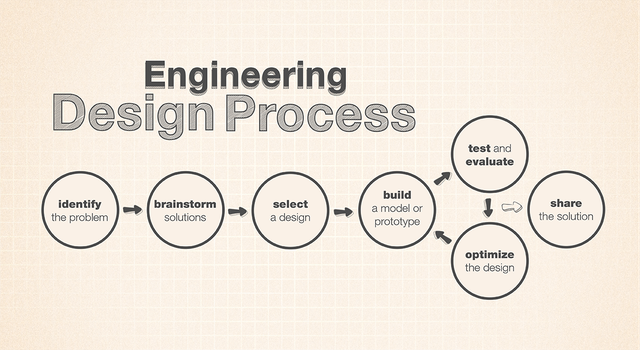
It starts with a Conceptual Design phase. Here, engineers explore the basic feasibility of a mission. What are the main goals? What kind of orbit is needed? What are the major challenges? Several rough designs, or concepts, are sketched out to see what's possible.
Next is the Preliminary Design phase. The most promising concept is chosen and fleshed out. Engineers define the spacecraft's major subsystems, create initial layouts, and run analyses to make sure the design holds up. This is where the spacecraft really starts to take shape on paper and in computer models.
Finally, the project moves into Detailed Design. In this phase, every last component is specified. Every bolt, wire, and line of code is defined. The output is a complete set of manufacturing drawings, schematics, and procedures needed to actually build the spacecraft.
The Anatomy of a Spacecraft
While every spacecraft is unique, most are built from a common set of building blocks called subsystems. Each subsystem has a critical job to do.
Here are the main players:
-
Structures and Mechanisms: This is the skeleton of the spacecraft. It provides the physical framework that holds everything together and must be strong enough to survive the violent forces of launch.
-
Propulsion: The engine system. This provides the thrust to get the spacecraft where it needs to go, make orbital adjustments, and control its orientation.
-
Thermal Control: Space is a world of extremes, from scorching heat in direct sunlight to deep cold in shadow. The thermal system acts like a sophisticated HVAC unit, keeping all the sensitive electronics at a comfortable operating temperature.
-
Power: This is the spacecraft's heart, generating, storing, and distributing electricity to all other systems. It usually comes from solar panels, batteries, or on deep space missions, radioisotope thermoelectric generators (RTGs).
-
Attitude and Orbit Control (AOCS): This system is the brain and nerves, responsible for knowing the spacecraft's orientation (attitude) and position (orbit) and controlling them. It uses sensors like star trackers and gyroscopes, and actuators like thrusters or reaction wheels to point the spacecraft in the right direction.
-
Communication: The link back to Earth. This subsystem, often called "Comms," uses antennas to send scientific data and health status updates back to ground control and to receive commands.
-
Command and Data Handling (C&DH): The central computer. It processes commands from Earth, collects data from instruments and subsystems, and manages the spacecraft's operations.
Each of these subsystems is a complex engineering challenge in itself. Creating a successful spacecraft requires them all to work together as a single, reliable system.
What was the primary design difference between early spacecraft like Sputnik 1 and the Apollo program's vehicles?
The provided text compares a systems engineer's role to that of a...