Snowflake Generative AI Certification Prep
Generative AI Basics
What Is Generative AI?
Artificial intelligence comes in many flavors. Some AI is designed to classify things. Think of a system that looks at a photo and tells you if it's a cat or a dog. This is called discriminative AI. It discriminates between different types of input.
Generative AI is different. Instead of just identifying a cat, it can create a brand new picture of a cat that has never existed. It generates new content. This content can be text, images, music, code, or even molecular structures.
Generative AI creates new content by learning patterns from existing data. Discriminative AI classifies existing data into categories.
Imagine an art history student. A discriminative model is like a student who can correctly identify a painting as a Monet. A generative model is like a student who has studied so many Monet paintings that they can create a new painting in his style.
How Does It Work?
At its core, generative AI uses complex algorithms called models. These models are trained on massive datasets. A model trained on Shakespeare's plays learns the patterns of his language, vocabulary, and sentence structure. It can then generate new text that sounds like Shakespeare wrote it.
There are several ways these models can be built. Two common approaches are Generative Adversarial Networks (GANs) and Variational Autoencoders (VAEs).
GAN
noun
A type of generative model that uses two competing neural networks, a generator and a discriminator, to produce new data.
Think of a GAN as a competition between an art forger and an art critic.
- The Generator (the forger) creates fake artwork.
- The Discriminator (the critic) tries to tell the fake art from the real art.
At first, the forger is bad and the critic easily spots the fakes. But the forger learns from its mistakes and gets better. The critic also gets better at spotting more sophisticated fakes. This back-and-forth continues until the generator's forgeries are so good that the discriminator can't tell the difference. At that point, the generator is skilled at creating realistic new content.
VAE
noun
A type of generative model that learns to compress data into a simplified representation and then reconstruct it to generate new, similar data.
A VAE works differently. It has two parts: an encoder and a decoder.
- The Encoder takes a piece of data, like a photo of a face, and compresses it into a simple set of characteristics. This is the "essence" of the face—like a recipe of features.
- The Decoder takes this simplified recipe and tries to reconstruct the original photo.
By training on many faces, the VAE learns what makes a face look like a face. To generate a new face, we can give the decoder a slightly new recipe, and it will generate a completely new, realistic face based on the patterns it learned.
Real-World Applications
Generative AI isn't just a research concept; it's already being used in many industries. Its ability to create original content has opened up new possibilities for efficiency and creativity.
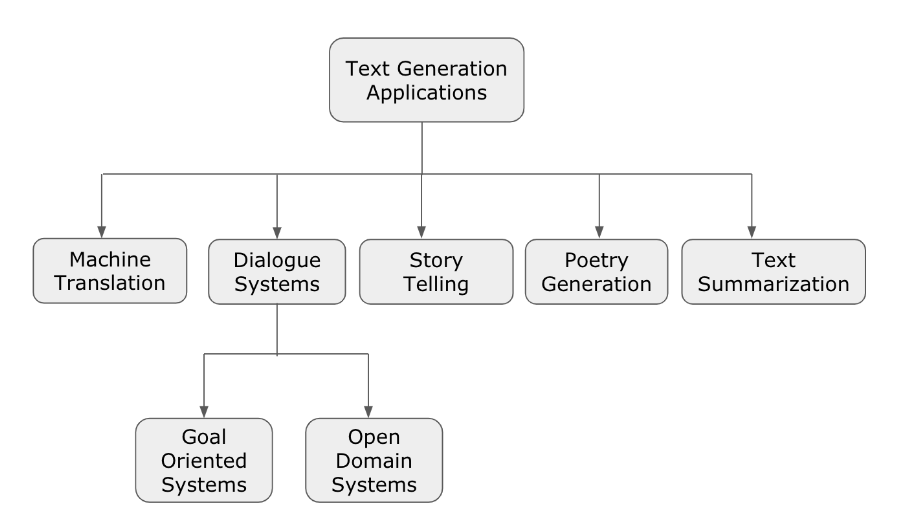
Here are a few examples:
- Media and Entertainment: Creating special effects for movies, generating scripts, or composing original music.
- Software Engineering: Writing code snippets, suggesting bug fixes, and even creating entire applications from a text description.
- Life Sciences: Designing new proteins and molecules to accelerate drug discovery and research.
- Business: Drafting emails and marketing copy, summarizing long reports, and powering intelligent chatbots for customer service.
- Design: Generating product prototypes, architectural renderings, and logos.
The Ethical Side
With great power comes great responsibility. Generative AI is an incredible tool, but it also raises important ethical questions that we need to consider.
One major concern is misinformation. Because these models can create realistic but fake images, videos (deepfakes), and text, they could be used to spread false information. It's becoming harder to know if what you see online is real.
Another issue is bias. AI models are trained on data from the real world, and that data can contain human biases related to race, gender, and culture. If the training data is biased, the AI's output will be too. For example, an image generator asked to create a picture of a "CEO" might overwhelmingly generate images of men if its training data reflects that historical inequality.
Finally, there are questions about intellectual property. Who owns an image created by an AI? What happens if an AI generates content that is very similar to a copyrighted work it was trained on? These are complex legal and ethical challenges that society is still working to figure out.
Now, let's test your understanding of these core concepts.
What is the primary difference between discriminative AI and generative AI?
An AI system that reviews an email and flags it as 'spam' or 'not spam' is an example of what?
Understanding these fundamentals—what generative AI is, how it works, its applications, and its challenges—is the first step to harnessing its power responsibly.