Sharp Regression Discontinuity Design
Introduction to Causal Inference
The Why and the How
In many fields, from medicine to economics, we want to know more than just what is happening. We want to know why it's happening. Does a new drug actually cure a disease? Does a new teaching method improve test scores? Answering these questions is the goal of causal inference.
Causal inference is the process of determining if one event is the cause of another. It's about moving beyond simple observation to understand the true effect of a particular action or intervention.
This is a surprisingly tricky task. The world is a messy place, full of interconnected events. Our job is to isolate a single relationship and say with confidence that A causes B.
Correlation Is Not Causation
You've likely heard this phrase before, and it's a core principle of causal inference. Just because two things move together doesn't mean one is causing the other. This is called a correlation.
For example, ice cream sales and shark attacks are correlated. When ice cream sales go up, so do shark attacks. Does this mean eating ice cream makes you more attractive to sharks? Of course not. There's a third factor at play: the weather. When it's hot, more people buy ice cream, and more people go swimming in the ocean, which leads to more encounters with sharks.
This third factor is called a confounding variable. It influences both the predictor variable (ice cream sales) and the response variable (shark attacks), creating a misleading correlation between them.
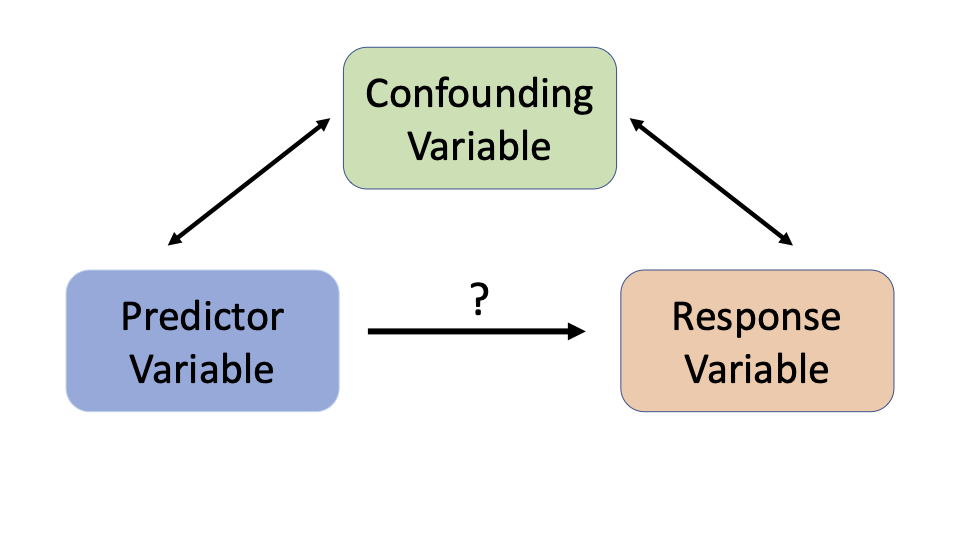
Identifying and accounting for confounding variables is one of the biggest challenges in research. If we don't, we might make a completely wrong conclusion about what's causing what.
Finding Causal Links
So how do we get around the correlation problem and confidently identify a cause? Researchers use several methods, which generally fall into two categories.
- Randomized Controlled Trials (RCTs) This is often called the "gold standard" for causal inference. In an RCT, researchers create two or more groups that are as identical as possible. They do this by randomly assigning individuals to each group. Then, they give one group a "treatment" (like a new drug) and the other group a placebo or the standard treatment (this is the "control" group).
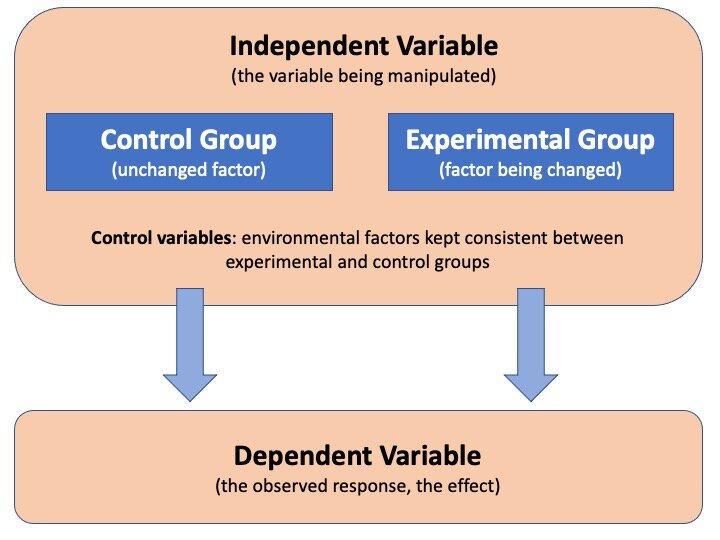
Because the only significant difference between the groups is the treatment, any difference in outcomes can be attributed to that treatment. The randomization helps ensure that other factors, like age or health, are evenly distributed and don't bias the results.
- Observational Studies Sometimes it's not possible or ethical to run an RCT. We can't randomly assign some people to smoke cigarettes and others not to. In these cases, researchers rely on observational studies. They analyze data from the real world, looking for patterns and relationships.
Observational studies are much more susceptible to confounding variables. Because we're not controlling the environment, we can't be sure that the relationships we see are causal. However, clever statistical techniques, often called quasi-experimental methods, can help us get closer to a causal answer by mimicking the conditions of an RCT. These methods allow us to find natural experiments in existing data.
What is the primary goal of causal inference?
A city finds that areas with more fire stations also have a higher number of fires. What is the confounding variable in this misleading correlation?