SEO Fundamentals for Digital Growth
Introduction to SEO
What Is SEO?
Every day, billions of people use search engines like Google to find answers. They search for everything from the best local pizza to complex programming questions. But have you ever wondered why certain websites show up first?
It’s not random. It’s the result of Search Engine Optimization, or SEO.
SEO is the practice of improving your website so that it appears higher in the unpaid search results for relevant queries.
Think of the internet as a gigantic library and a search engine as the librarian. Your website is a book in that library. SEO is how you make sure the librarian knows exactly what your book is about, considers it a high-quality resource, and recommends it to people asking the right questions.
The goal isn't just to get more visitors. It's to attract organic traffic—people who are genuinely interested in what you offer and found you by searching for it themselves. This type of traffic is valuable because it's built on trust and relevance, not on paying for ads.
How Search Engines Work
To understand SEO, you first need to understand the three main jobs of a search engine: crawling, indexing, and ranking. It’s a continuous, automated process that discovers and organizes the web’s content to deliver the most relevant results for any given search.
1. Crawling is the discovery process. Search engines use automated programs called crawlers (or spiders) to travel the web. They follow links from page to page, constantly looking for new or updated information to report back.
2. Indexing is the organization process. After a crawler finds a page, the search engine tries to understand what it's about. It analyzes the content, images, and video files on the page and stores this information in a huge database called the index. When you search for something, you're not searching the live web; you're searching this pre-sorted index.
3. Ranking is the delivery process. When you type a query, the search engine scours its index for pages that match. It then uses a complex algorithm to rank them in order of relevance and quality. The goal is to provide you with the best possible answer, instantly.
Organic vs. Paid Results
When you search for something, the results page you see—often called a SERP (Search Engine Results Page)—is usually a mix of two types of results: paid and organic.
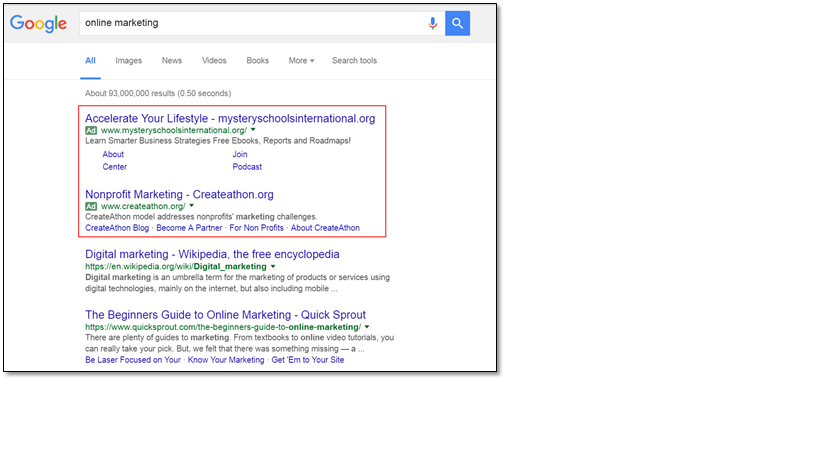
Paid search results are ads. Businesses pay the search engine to display their links at the top of the page for specific keywords. You can usually identify them by a small label like "Ad" or "Sponsored." This model is often called pay-per-click (PPC), because the advertiser pays a fee each time someone clicks their ad.
Organic search results are the unpaid listings that the search engine has determined are the most relevant and high-quality answers to the query. These are the rankings you earn through good SEO, not by paying for them.
While paid ads can deliver traffic quickly, organic traffic is often seen as more credible by users and is a more sustainable, cost-effective strategy for long-term growth. SEO is entirely focused on improving your position in the organic results.
| Feature | Organic Results | Paid Results |
|---|---|---|
| Cost | Free (earned) | Pay-per-click (PPC) |
| Placement | Based on relevance & authority | Top of the page (ad slots) |
| User Trust | Generally higher | Often seen as ads |
| Time | Long-term strategy | Immediate results |
| Goal of SEO | Improve ranking | Not applicable |
Understanding these fundamentals is the first step. SEO is ultimately about creating a great experience for users while making it easy for search engines to understand and value your content.