Secure Your Space DIY Camera Installation
Understanding Security Camera Basics
What Security Cameras Do
At its core, a security camera is a tool for observation. Its primary job is to deter potential trouble and to record events if something does happen. Seeing a camera can make a would-be thief think twice. If they don't, the recorded footage provides crucial evidence for law enforcement.
Beyond deterring crime, cameras offer peace of mind. They allow you to check in on your home, pets, or business when you're away. This could mean watching for a package delivery or ensuring your kids got home safely from school. It's about staying connected and aware of your surroundings.
Common Camera Types
Cameras come in various shapes and sizes, each suited for different environments. While the internal technology can be similar, the housing often dictates where and how the camera is best used. The three most common types you'll encounter are dome, bullet, and PTZ cameras.
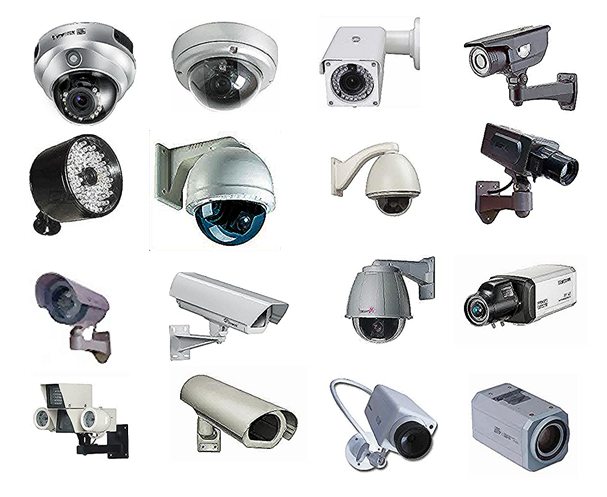
Dome cameras are named for their dome-shaped casing. This design makes it difficult for onlookers to tell which way the lens is pointing, which is a deterrent in itself. They are common indoors and outdoors and are relatively discreet.
Bullet cameras are more conspicuous. Their classic, cylindrical shape is highly visible, which can be a powerful crime deterrent. They are typically used outdoors and are often built to withstand harsh weather.
PTZ cameras, which stands for Pan-Tilt-Zoom, are more advanced. An operator can remotely control the camera to pan left and right, tilt up and down, or zoom in on specific details. This makes them ideal for monitoring large areas like parking lots or warehouses.
| Camera Type | Best For | Key Characteristic |
|---|---|---|
| Dome | Discreet surveillance, indoors/outdoors | Hard to see where it's pointing |
| Bullet | Visible deterrence, outdoor monitoring | Obvious presence, weatherproof |
| PTZ | Active monitoring of large areas | Remote pan, tilt, and zoom control |
Key Features and Components
When you look at different cameras, you'll see a few key specifications mentioned repeatedly. Understanding these will help you know what a camera is capable of.
Resolution
noun
The level of detail a camera can capture, measured in pixels. Higher resolution means a clearer, sharper image.
Another critical feature is the field of view. This is essentially how much of the scene the camera can see, measured in degrees. A wide-angle lens might have a 130-degree field of view, letting you see an entire room from one corner. A narrower lens will see less of the scene but can capture objects that are farther away with more detail.
Most modern security cameras also come with night vision. They use infrared (IR) LEDs, which are invisible to the human eye, to illuminate the area. To the camera, the scene looks bright and clear, even in complete darkness. The camera's sensor switches to a black-and-white mode to capture the IR light.
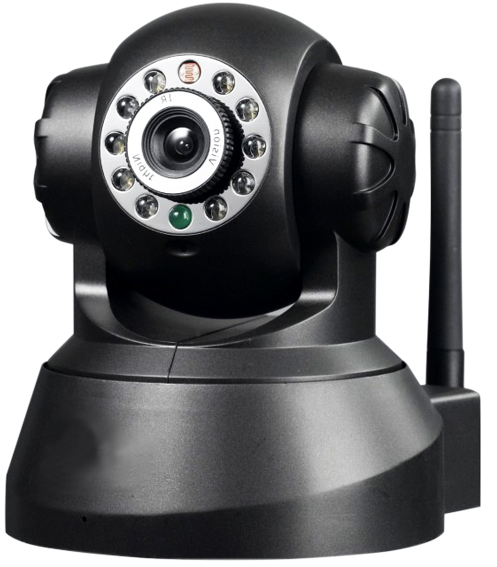
Finally, every system has a few basic components:
- The Camera: Captures the video.
- A Recorder: This could be a Network Video Recorder (NVR) for IP cameras or a Digital Video Recorder (DVR) for analog cameras. Some cameras also record directly to a memory card or the cloud.
- Cabling: To provide power and, for wired systems, to transmit the video signal.
You'll also need a way to watch the footage, usually through a monitor, smartphone app, or web browser.
Wired vs. Wireless
One of the first choices you'll make is whether to go with a wired or wireless system. The names are a little misleading, as both types need power. A "wireless" camera still needs to be plugged into a power outlet; it just transmits its video signal over Wi-Fi.
A wired system uses physical cables to connect the cameras to the recorder. This connection is generally more stable and secure, as it isn't subject to Wi-Fi interference. However, installation can be more complex, often requiring you to run cables through walls and ceilings.
A wireless system is much easier to set up. You just need to mount the camera and connect it to power and your Wi-Fi network. The downside is that they rely on a strong Wi-Fi signal. If your network goes down, the camera might stop recording or you might lose remote viewing access.
| System Type | Pros | Cons |
|---|---|---|
| Wired | Highly reliable connection, no Wi-Fi needed | More difficult installation |
| Wireless | Easy to install, flexible placement | Requires strong Wi-Fi, potential for interference |
Now that you're familiar with the basics, let's test your knowledge.