Secure DevOps with Vercel and GitHub
Introduction to Secure DevOps
Security From the Start
Traditionally, software development and IT operations were two separate worlds. The development team would build the software, then hand it off to the operations team to run and maintain it. This often created a wall of confusion, with each side having different priorities and goals. DevOps emerged to break down that wall, merging development (Dev) and operations (Ops) into a single, collaborative process.
But what about security? In the old model, security was often an afterthought. A security team would review the finished product right before release, looking for vulnerabilities. This approach is slow, expensive, and often creates conflict. Finding a major flaw at the last minute can mean delaying a launch for weeks or even months.
DevSecOps
noun
The practice of integrating security into every stage of the DevOps lifecycle, from initial design to final deployment and beyond. It's often called Secure DevOps.
Secure DevOps, or DevSecOps, flips the script. Instead of treating security as a final inspection, it weaves security practices into the entire software development lifecycle. Think of it like building a house. It's much easier and more effective to include fire-resistant materials and strong locks in the original blueprint than it is to try and add them after the house is already built.
By following a secure SDLC, you can build security into your application from the very beginning, rather than trying to bolt it on after the fact.
A Shared Responsibility
The most significant change in DevSecOps is cultural. Security is no longer the sole responsibility of a separate security team. Instead, it becomes a shared responsibility for everyone involved in the software lifecycle. Developers, operations engineers, and security specialists work together from day one.
This collaborative approach prevents security from being a bottleneck. When security is part of the conversation from the beginning, potential issues are identified and fixed early, when they are cheapest and easiest to address. Waiting until the end of the process to find problems is not only inefficient but also costly.
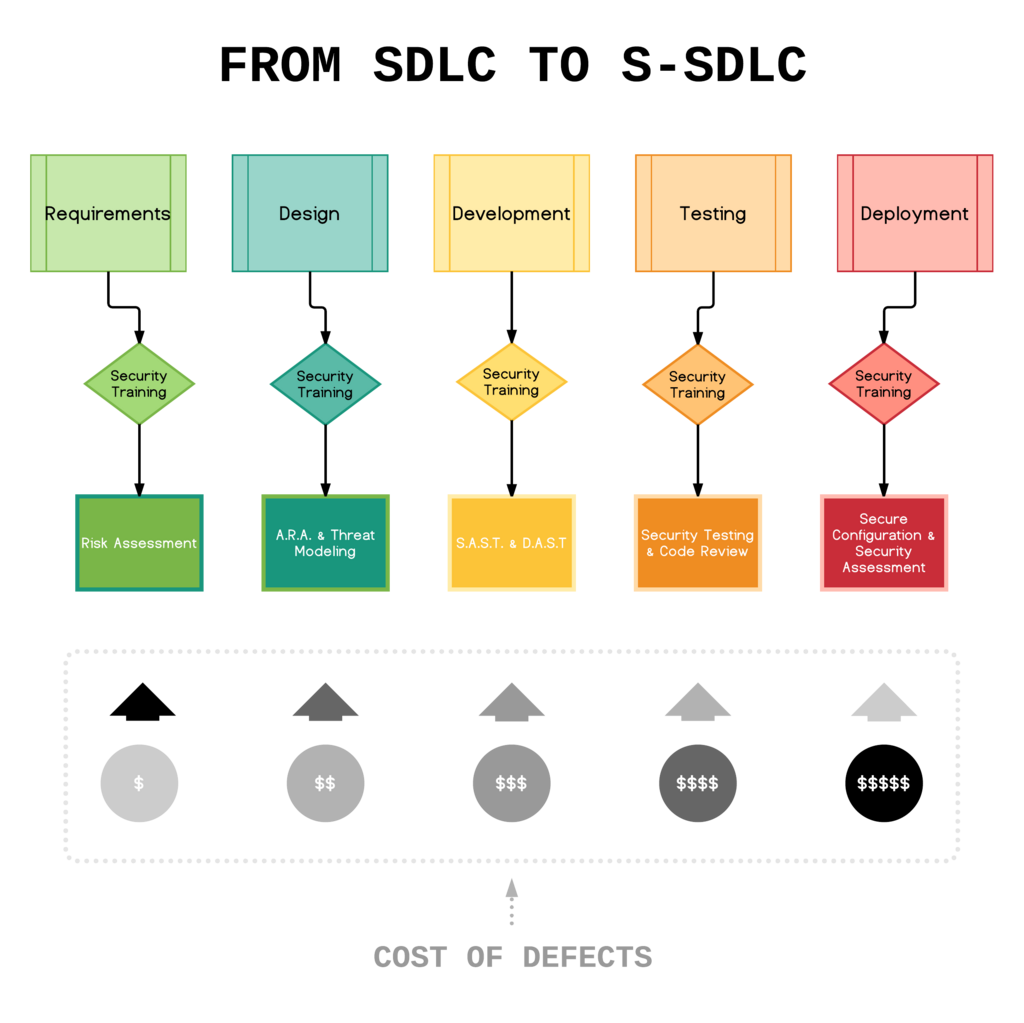
This mindset transforms security from a gatekeeper that says "no" into a partner that helps the team build better, safer products.
Key Principles of DevSecOps
DevSecOps is guided by a few core principles that help teams integrate security smoothly.
Shift Left. This is the idea of moving security-related activities as early as possible in the development process. Instead of testing for vulnerabilities at the end, developers get tools and training to write more secure code from the start.
Automation. To keep pace with rapid development cycles, security checks must be automated. This means integrating security scanning tools directly into the CI/CD (Continuous Integration/Continuous Deployment) pipeline. These tools can automatically check for common vulnerabilities, misconfigurations, and outdated software components every time code is changed.
Continuous Monitoring. Security doesn't end once the software is deployed. DevSecOps emphasizes continuous monitoring of live applications to detect and respond to threats in real-time. This creates a feedback loop that helps teams strengthen security for future releases.
The Benefits
Adopting a Secure DevOps culture offers significant advantages. By catching and fixing vulnerabilities early, teams can release software faster and with greater confidence. The automated nature of security checks reduces the manual workload on security teams, freeing them up to focus on more complex threats.
Most importantly, it results in more secure products. Integrating security throughout the development process significantly reduces the risk of a breach, protecting both the organization and its customers. It builds a culture where everyone feels ownership over security, leading to a stronger, more resilient organization.
Ready to test your understanding of these core concepts?
What is the primary cultural shift introduced by DevSecOps?
In a traditional software development model, security is typically treated as a final inspection step before release.