Screenwriting Essentials
Introduction to Screenwriting
The Architect of the Story
Every movie, every TV show, every scene that's ever moved you started in the same place: with a writer and a blank page. A screenwriter is the architect of a film or television show. They create the blueprint that everyone else on the production—the director, actors, designers, and crew—will use to build the final product.
Their job is to dream up the world, the characters who inhabit it, and the story that unfolds. They decide what people say, what they do, and where the story goes. Before a single camera rolls or an actor is cast, the screenwriter has already built the entire experience in words.
The screenwriter's primary role is to translate a story idea into a visual narrative that can be filmed.
What is a Screenplay?
A screenplay, or script, is the written version of a film or show. But it's not just a story. It's a unique document with a very specific job. It has to work on two levels: it must tell an engaging story for a reader, and it must provide a clear, practical guide for hundreds of people to create a visual and auditory experience.
Screenplay
noun
A written work by screenwriters for a film, television program, or video game. It's a technical document that formats a story into scenes, action, and dialogue for production purposes.
Think of it this way: a novel tells you what a character is thinking. A screenplay shows you what they're doing and tells you what they're saying. It's a medium of external action, leaving the internal thoughts and feelings to be conveyed by the actors' performances.
The screenplay serves as the foundation for television production, defining narrative structure, character development, and dialogue.
The Basic Building Blocks
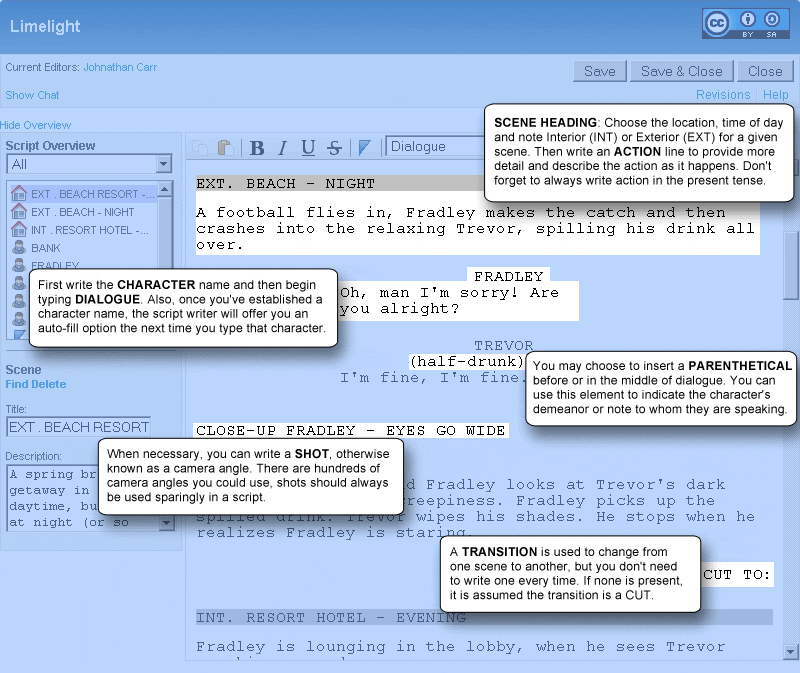
While we'll dive into specific formatting later, all scripts are built from a few core components. These elements work together to paint a picture of what will eventually appear on screen.
| Element | Purpose |
|---|---|
| Scene Heading | Tells us where (INT. for interior, EXT. for exterior) and when (DAY or NIGHT) the scene takes place. |
| Action Lines | Describes what the characters are doing and what we see and hear. Written in the present tense. |
| Character Name | Indicates who is speaking. It's written in all caps above their dialogue. |
| Dialogue | The words the characters speak. |
These are the fundamental tools a writer uses to build scenes, string them together, and create a complete narrative. The specific rules for how they look on the page ensure that anyone in the industry can pick up a script and understand the writer's vision.
From Spark to Story
Every screenplay begins with an idea. But an idea isn't a story. The first step is to distill that initial spark into a solid concept that can support a whole film or series. This often starts with a simple "what if?" question.
What if a pessimistic weatherman is forced to relive the same day over and over? (Groundhog Day)
What if a family of superheroes has to live a quiet suburban life in hiding? (The Incredibles)
These questions create a central conflict and a hint of character. They are the seeds from which the entire story grows. A good starting point is to try and capture your idea in a single sentence, often called a logline. This forces you to clarify the protagonist, their goal, and the main obstacle they face.
Ideas can come from anywhere: a news article, a personal experience, a dream, or a simple observation. The key is to find a concept with enough tension and potential for change to sustain a narrative. Once you have that core concept, you can begin to explore the characters who would live in that world and the plot that would challenge them.
Now that you understand the fundamentals, let's test your knowledge.