Retirement Portfolio Construction
Investment Basics
Building Your Investment Foundation
Think of investing as putting your money to work. Instead of sitting in a savings account, your money buys assets that have the potential to grow. For retirement, this growth is crucial. It's the engine that helps your savings outpace inflation and build a nest egg for the future. The key is to understand the basic building blocks.
The Main Ingredients
Investments are grouped into categories called asset classes. Each has a different personality and plays a unique role in your portfolio. The three main ones you'll encounter are stocks, bonds, and cash equivalents.
Asset Class
noun
A group of financial instruments that have similar financial characteristics and behave similarly in the marketplace.
Stocks represent ownership in a company. When you buy a share of stock, you're buying a tiny piece of that business. If the company does well and its profits increase, the value of your stock can go up. If it struggles, the value can go down. Stocks offer the highest potential for long-term growth, but they also come with the most volatility.
Bonds are essentially loans. When you buy a bond, you're lending money to a government or a corporation. In return, they promise to pay you back the full amount on a specific date, plus regular interest payments along the way. Bonds are generally considered safer than stocks, but their potential returns are usually lower.
Cash Equivalents are super-safe, short-term investments that are almost as liquid as cash. Think of things like money market funds or short-term treasury bills. Their main job is to preserve your capital and provide stability. They won't make you rich, as their returns are very low, often just enough to keep up with inflation.
| Asset Class | Potential Return | Risk Level | Primary Role in a Portfolio |
|---|---|---|---|
| Stocks | High | High | Growth |
| Bonds | Moderate | Moderate | Income & Stability |
| Cash Equivalents | Low | Low | Safety & Liquidity |
The Risk-Return Tradeoff
In investing, there's no free lunch. The relationship between risk and return is fundamental: to get a higher potential return, you generally have to accept a higher level of risk. Risk means there's a chance your investment could lose value. A stock could drop in price, or a company could fail to pay back its bond.
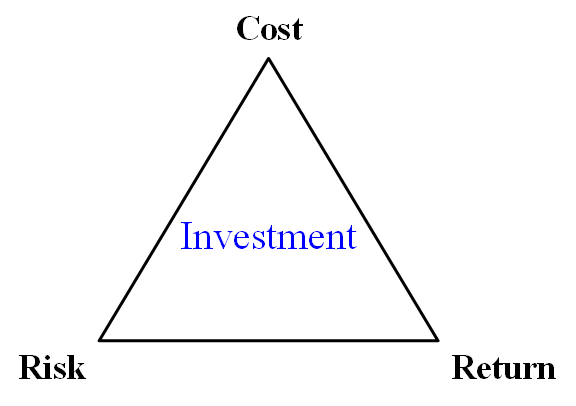
This tradeoff is why understanding different asset classes is so important. Stocks have a high potential return because you're taking on the risks of business ownership. Bonds are less risky because you're a lender, not an owner, so your potential returns are more modest. Cash is the safest of all, offering minimal returns for minimal risk.
Know Thyself: Goals and Guts
Before you invest a single dollar, you need to look inward. Your personal financial goals and your comfort with risk will shape every decision you make.
First, what are you investing for? 'Retirement' is a good start, but get more specific. Are you hoping to retire at 65? 55? Do you want to travel the world or live a quiet life? A clear goal helps determine your time horizon—how long you have to invest. Someone saving for a retirement 30 years away can afford to take more risks than someone who needs the money in five years.
Second, what's your risk tolerance? This is about how you would feel emotionally if your portfolio's value dropped by 10% or 20%. Would you panic and sell everything, or would you stay calm, knowing that markets fluctuate? There's no right or wrong answer. It's a gut check.
Being honest about your comfort with risk is one of the most important steps. An investment strategy you can't sleep with is a strategy that's destined to fail.
One of the keys to successful investing is learning how to balance your comfort level with risk against your time horizon.
Understanding these foundational concepts is the first step. They provide the framework for building a portfolio that's right for you.
Let's check your understanding of these core ideas.
What is the primary reason for investing your money for retirement instead of keeping it in a standard savings account?
When you purchase a bond, what are you essentially doing?
By knowing the building blocks and understanding yourself as an investor, you're ready to start making informed decisions for your financial future.