Reinforcement Learning Fundamentals
Introduction to Reinforcement Learning
Learning from Experience
Think about how a dog learns a new trick. You say “sit,” and if the dog sits, it gets a treat. If it doesn't, it gets nothing. Over time, the dog connects the action of sitting with the reward of a treat and starts to sit on command. This is the basic idea behind reinforcement learning (RL).
Reinforcement learning is a type of machine learning where an agent learns to make decisions by performing actions in an environment to achieve some goal. It learns from the consequences of its actions, not from being explicitly taught.
Instead of being fed a giant dataset with all the right answers, an RL agent learns through trial and error. It tries different things and sees what happens. Actions that lead to good outcomes are reinforced, while actions that lead to bad outcomes are discouraged. The ultimate goal is for the agent to figure out the best strategy for getting the most rewards over time.
The Key Players
Every reinforcement learning problem has a few core components that interact with each other in a continuous loop. Let's imagine a simple video game where you control a character to collect coins and avoid monsters.
| Component | Description | Video Game Example |
|---|---|---|
| Agent | The learner or decision-maker. | The character you control. |
| Environment | The world the agent interacts with. | The game level, including walls, coins, and monsters. |
| State | The agent's current situation. | The character's location, score, and health. |
| Action | A possible move the agent can make. | Moving left, right, up, down, or jumping. |
| Reward | The feedback from the environment. | Gaining points for a coin (+10) or losing a life for hitting a monster (-100). |
This interaction creates a feedback loop: the agent is in a certain state, takes an action, the environment gives back a reward and a new state, and the cycle continues. The agent uses the rewards to update its strategy, trying to figure out which actions are best in which states.
How RL is Different
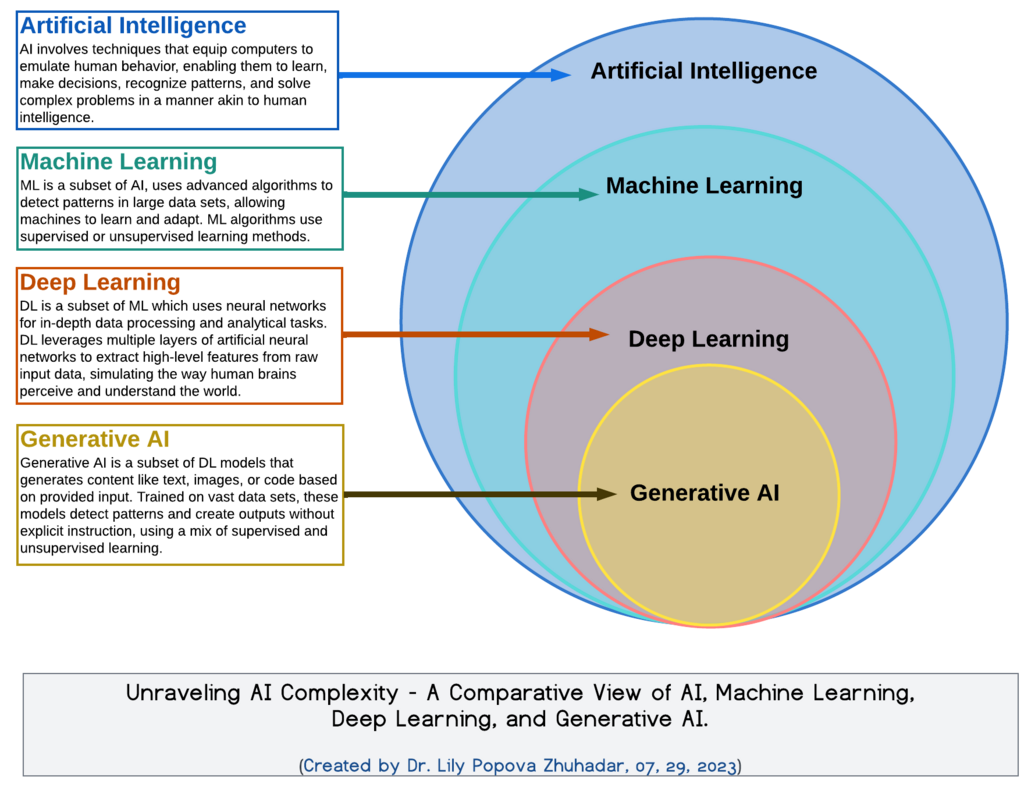
Reinforcement learning is one of three main paradigms in machine learning. Its focus on learning from interaction makes it fundamentally different from the other two: supervised and unsupervised learning.
Supervised learning is like studying for a test with an answer key. The model is given a dataset where each data point is labeled with the correct answer. Its job is to learn the relationship between the data and the labels. For example, you might train a model on thousands of pictures of cats and dogs, each labeled "cat" or "dog," so it can learn to identify them in new pictures.
Unsupervised learning is like being given a box of jumbled Lego bricks and being asked to sort them. There are no labels or correct answers. The goal is to find hidden patterns or structures in the data on your own, such as grouping the bricks by color or shape.
| Learning Type | How it Learns | Example |
|---|---|---|
| Supervised | From labeled data (an "answer key"). | Email spam detection (emails are labeled 'spam' or 'not spam'). |
| Unsupervised | By finding patterns in unlabeled data. | Grouping customers into different segments based on purchasing habits. |
| Reinforcement | Through trial and error with rewards and penalties. | Training an AI to play chess by rewarding it for winning games. |
The key difference is the feedback. Supervised learning gets direct, correct labels. Unsupervised learning gets no labels at all. Reinforcement learning gets rewards, which are signals that evaluate how good an action was, but they don't explicitly say what the best action would have been.
What is the primary way an agent learns in reinforcement learning?
In the analogy of a dog learning a new trick, what does the dog treat represent?
By learning through interaction, agents can master complex tasks, from playing games to controlling robotic arms, all by discovering for themselves what actions lead to success.