Reducer Shaft Machining Range
Reducer Shaft Fundamentals
The Heart of the Gearbox
At its core, a speed reducer, or gearbox, has a simple job: it takes high-speed, low-torque power from a source like an electric motor and converts it into low-speed, high-torque power. The component that makes this transformation possible is the reducer shaft. It’s more than just a spinning rod; it’s a precisely engineered part that transmits this altered power to the rest of the machine.
Think of it like using a long wrench to turn a stubborn bolt. You apply a small amount of force over a long distance (high speed) to generate a large amount of twisting force on the bolt (high torque). A reducer shaft is the central component in a system of gears that accomplishes this same mechanical advantage. This principle is at work in everything from the transmission in a car to the conveyor belts in a factory and the giant turbines in a power plant.
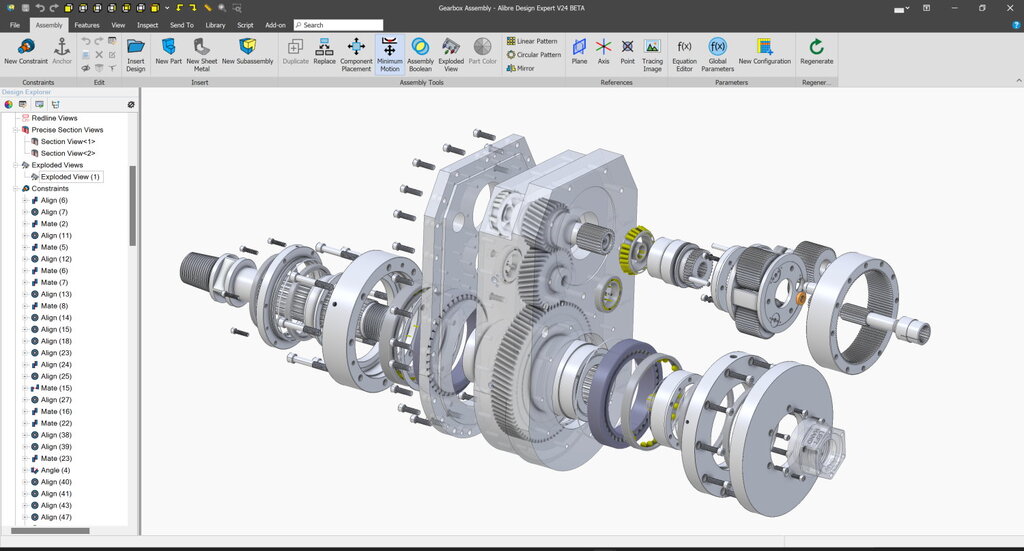
Designed for a Purpose
A reducer shaft is not a simple cylinder. Its geometry is carefully designed to handle immense forces and to interface perfectly with other components like gears and bearings. Different sections of the shaft have different diameters and features, each with a specific role.
Engineers must balance several key factors when designing a shaft:
- Torque Transmission: The most basic function. The shaft must be thick enough to handle the twisting forces without shearing. More torque requires a larger diameter.
- Stiffness and Deflection: A shaft will always bend slightly under the weight and force of the gears. The design must minimize this bending, or deflection. Too much deflection can cause gears to misalign, leading to noise, excessive wear, and eventual failure.
- Fatigue Resistance: A shaft is subjected to repeating cycles of stress as it rotates. Over millions of cycles, these stresses can cause microscopic cracks to form and grow, a phenomenon called fatigue. The design and material must ensure the shaft can last its intended service life without failing from fatigue.
- Mounting Points: Features like keyways (notches), splines (ridges), and tapers are used to securely mount gears and other parts, ensuring they rotate with the shaft and don't slip.
Every feature on a reducer shaft, from a change in diameter to a tiny groove, is a calculated decision to manage stress and ensure proper function.
Choosing the Right Material
The performance of a reducer shaft is critically dependent on the material it's made from. While various metals can be used, steel alloys are the most common choice due to their excellent balance of properties and cost-effectiveness. The specific alloy is chosen based on the demands of the application.
| Property | Why It Matters for a Reducer Shaft |
|---|---|
| Strength | Resists permanent bending or breaking under high torque and shock loads. |
| Hardness | Prevents wear and indentation on surfaces where bearings and gears sit. |
| Toughness | Allows the shaft to absorb sudden impacts without fracturing. Essential for machinery that starts and stops abruptly. |
| Machinability | Determines the ease and cost of manufacturing the shaft's complex shape with high precision. |
To achieve the desired blend of these properties, shafts often undergo heat treatment. This process involves carefully controlled heating and cooling to alter the steel's microscopic structure. For example, a shaft might be through-hardened for overall strength and then induction hardened on its surface to create an extremely hard, wear-resistant layer where the bearings will sit, while the core remains tougher and less brittle to handle shock loads.
What is the primary function of a speed reducer, also known as a gearbox?
In reducer shaft design, what does the term 'deflection' refer to?
Understanding these fundamentals—function, design, and materials—is the first step in appreciating the engineering that goes into these critical mechanical components.