Quantitative Finance and Investing Foundations
Market Microstructure
The Market's Engine Room
Knowing what a stock or bond is doesn't tell you how to trade it effectively. The price you see on a news ticker is just a snapshot, often the price of the last transaction. To truly understand quantitative trading, we need to look under the hood at the mechanics of the market itself. This is the world of market microstructure.
Market microstructure is the study of how exchanges function, how prices are formed, and how trades are actually executed. It's the bridge between a theoretical asset price and the real, executable price you get.
The Limit Order Book
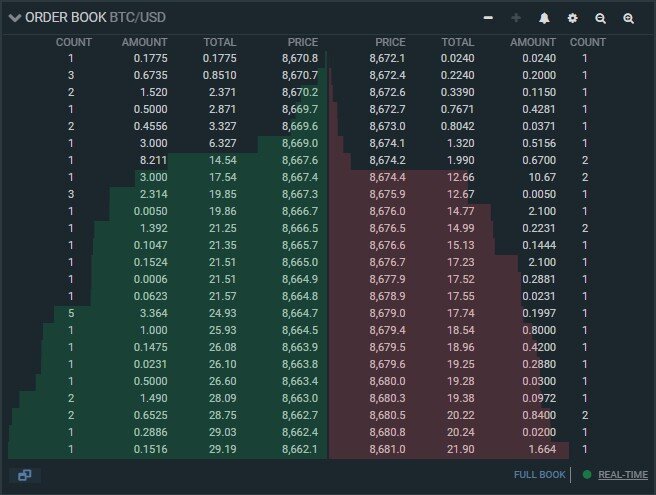
At the heart of most modern exchanges is the Limit Order Book (LOB). Think of it as a digital, double-sided auction list for a specific asset. On one side, you have the bids—all the outstanding offers from traders who want to buy. On the other side, you have the asks—all the offers from traders who want to sell.
Each line in the book represents a limit order: a commitment to buy or sell a certain quantity of an asset at a specific price or better. The highest price a buyer is willing to pay is the best bid. The lowest price a seller is willing to accept is the best ask. The difference between them is a critical concept.
Makers, Takers, and Spreads
How you interact with the order book defines your role in the market. There are two primary order types:
-
Limit Orders: When you place a limit order, you specify your price. A buy limit order will only execute at your price or lower, and a sell limit order only at your price or higher. If your order isn't immediately matched, it gets added to the LOB. By doing this, you are making liquidity—you're adding a new potential trade for others. You become a market maker.
-
Market Orders: When you place a market order, you're saying, "I want to buy/sell right now at the best available price." Your order immediately executes against the best opposing orders in the book. You are taking liquidity from the book. You are a market taker.
liquidity
noun
The ease with which an asset can be bought or sold at a stable price. A market with high liquidity has many buyers and sellers, meaning trades can be executed quickly without significantly impacting the price.
This leads us to the bid-ask spread. It's the difference between the best bid and the best ask. In our diagram above, the spread is $0.01 ($100.02 - $100.01). If you place a market order to buy, you'll pay the ask price ($100.02). If you immediately place a market order to sell, you'll receive the bid price ($100.01). You would instantly lose $0.01 per share. This cost is the spread, and it represents the price of immediacy.
The bid-ask spread is a fundamental transaction cost. For quantitative strategies that trade frequently, minimizing the cost of crossing the spread is paramount.
Professional market makers, often large financial institutions or high-frequency trading firms, profit by constantly placing both buy and sell limit orders, hoping to earn this spread over and over. They provide the valuable service of ensuring there is always someone to trade with, but they are compensated for the risk they take by the spread.
Slippage: The Hidden Cost
The order book also reveals the market's depth—the quantity of shares available at each price level. Look back at our order book diagram. If you want to buy 500 shares with a market order, you have a problem. The best ask is only for 150 shares at $100.02.
Your order will first consume those 150 shares. Then, it will move to the next best price, which is $100.03, to buy the remaining 350 shares (assuming there are at least 350 available at that level). Your average purchase price wouldn't be $100.02, but a weighted average of the prices you actually paid. The difference between the price you expected (the best ask) and the average price you got is called slippage.
Slippage is a major risk for any strategy, especially those trading large volumes or in less liquid markets. A shallow order book, with small quantities at each price level, means that even a moderately sized market order can significantly move the price and incur substantial slippage. This is why quantitative traders meticulously analyze order book data. They need to know not just the price, but how much they can trade at that price before costs start to escalate.
Understanding these mechanics is the first step toward building robust quantitative models. A strategy that looks profitable on paper can easily fail if it ignores the realities of the bid-ask spread and the potential for slippage. The true price of an asset is not a single number, but a dynamic, multi-layered book of supply and demand.
In the context of a Limit Order Book, what is the 'bid-ask spread'?
A trader who places a limit order that is not immediately filled is said to be ________ liquidity and is acting as a ________.