Python SQLite CRUD App
Python and SQLite Setup
Setting Up Your Workspace
Before you can build anything, you need the right tools. For our projects, we'll need two main components: Python, the programming language we'll write our logic in, and SQLite, the database where we'll store our data. Let's get them set up.
Installing Python
Python is a powerful and popular programming language known for its clear, readable syntax. If you don't already have it on your computer, you can download it from the official website, python.org. It's best to download the latest stable version available.
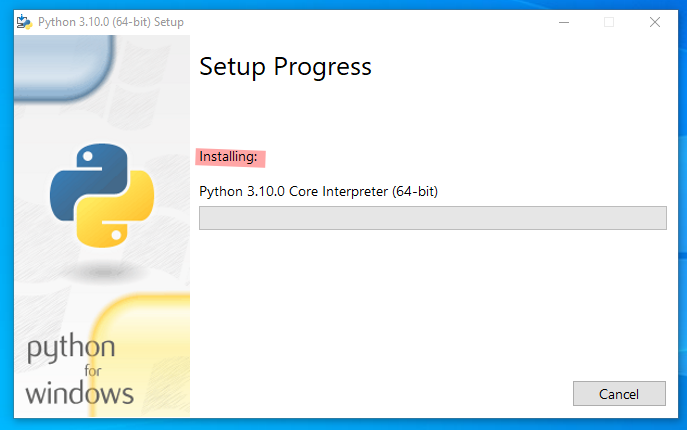
During the installation process on Windows, you'll see a checkbox that says "Add Python to PATH." It's very important to check this box. This allows you to run Python from your computer's command line, which is a tool we'll use to check our setup.
Once the installation is complete, you can verify that it worked. Open your command line (Terminal on Mac/Linux, or Command Prompt/PowerShell on Windows) and type one of the following commands:
python --version

# Or, on some systems, you might need to use python3
python3 --version
If you see a version number printed out, like Python 3.11.4, you're all set. Python is successfully installed.
Connecting Python to SQLite
Next up is SQLite. The great news is that SQLite support is built directly into Python's standard library. This means you don't need to install anything extra to use SQLite databases within a Python script. It's ready to go right out of the box.
To use these built-in tools, you just need to tell your Python script to access them. You do this by importing a special library, or module, called sqlite3.
A module in Python is just a file containing code that someone else wrote, which you can use in your own programs.
Importing the sqlite3 module gives your script all the functions it needs to communicate with an SQLite database. You simply add this line to the top of your Python file:
# This line makes the SQLite tools available in your script.
import sqlite3
With that one line, your program is ready to interact with a database. Let's see how to create a connection. The following script imports the module and then attempts to connect to a database file named mydatabase.db. If this file doesn't exist, Python and SQLite will automatically create it for you.
# 1. Import the sqlite3 module
import sqlite3

# 2. Create a connection to a database file.
# This will create the file if it doesn't exist.
connection = sqlite3.connect("mydatabase.db")

print("Database connected successfully!")

# 3. Always close the connection when you're done.
connection.close()
Let's break that down:
import sqlite3gives us access to the necessary tools.sqlite3.connect("mydatabase.db")creates a connection object and opens or creates the database file.connection.close()is a crucial last step. It safely closes the connection, ensuring all data is saved correctly.
If you run this script, you won't see much happen besides the success message. But if you check the folder where you saved your script, you'll find a new file: mydatabase.db. That's your empty database, ready for you to work with.
When installing Python on Windows, which of the following is a crucial step mentioned in the setup guide to ensure Python can be easily run from the command line?
True or False: To use SQLite with Python, you must first find and install a separate SQLite library.
Now that your environment is set up, you're ready to start defining your database structure and interacting with it.