Python Programming Fundamentals
Introduction to Python
What is Python?
Python is a popular programming language created by Guido van Rossum and first released in 1991. Its design philosophy emphasizes code readability with its notable use of significant indentation. It's often praised for being easy to learn, which makes it a great starting point for new programmers.
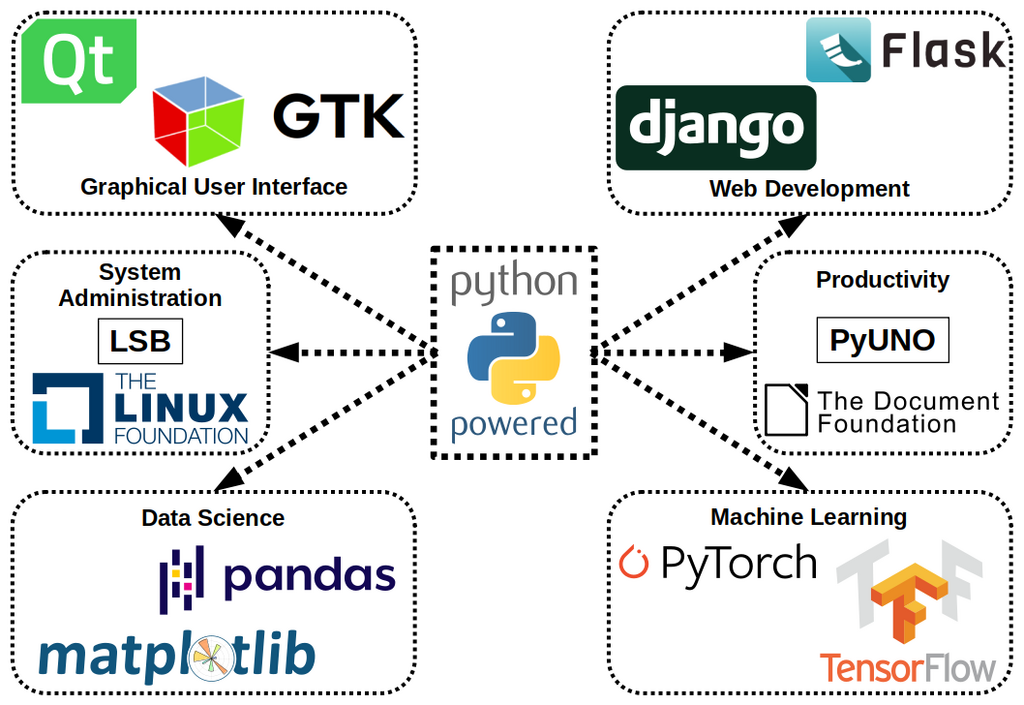
One of Python's biggest strengths is its versatility. You can use it for web development, data science, artificial intelligence, and automating simple tasks. This wide range of applications is possible thanks to a massive collection of libraries, which are pre-written bundles of code that you can use in your own projects.
Getting Started
First, you need to install Python on your computer. The official Python website, python.org, is the best place to download it. The installation process is straightforward, and the website has guides for Windows, macOS, and Linux.
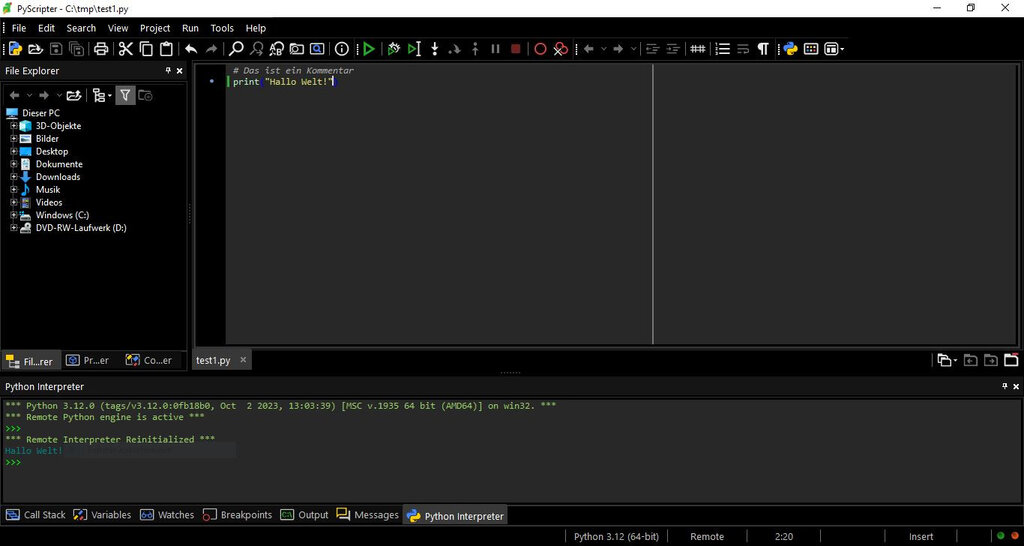
Once Python is installed, you need a place to write your code. While a simple text editor works, most programmers use an Integrated Development Environment, or IDE. An IDE is software that combines a text editor, a debugger (for finding errors), and other helpful tools in one place. Popular choices for Python include Visual Studio Code (VS Code) and PyCharm. They help you write code faster and with fewer mistakes.
Your First Program
Let's write a program. It's a tradition in programming to start with a simple program that just displays the text "Hello, World!" on the screen. In Python, this is incredibly simple.
print("Hello, World!")
That's it. The print() part is a function, which is a command that performs a specific action. In this case, it tells the computer to display whatever is inside the parentheses. The text inside the quotes is called a string. When you run this single line of code, you will see Hello, World! appear in your output window.
Making Code Understandable
As your programs get more complex, it can be hard to remember what each line of code does. That's where comments come in. Comments are notes for you and other programmers to read. The computer completely ignores them.
In Python, any line that starts with a pound sign (#) is a comment.
# This is a comment. The computer will ignore it.
# The line below displays a greeting.
print("Hello, World!")
Using comments is a great habit to build. They make your code easier to understand when you come back to it weeks or months later. They also help others who might need to read or work on your code.
Talking to Your Program
Besides displaying information, you can also write programs that ask the user for information. This is called input. The input() function pauses your program and waits for the user to type something and press Enter.
# Ask the user for their name
name = input("What is your name? ")

# Greet the user by name
print("Hello, " + name)
Let's break this down. First, the input() function prints "What is your name? " and waits. When you type your name and press Enter, the text you typed is stored in a variable called name.
A variable is like a container for storing a piece of information. Finally, the print() function combines the string "Hello, " with the value stored in the name variable to create a personalized greeting.
Let's try one more example to see both input and output in action.
You ask a friend their favorite color. They say "blue." You then say, "Oh, blue is a great color!" The program does the same thing: it asks for input (
input()) and then gives a response based on that input (print()).
Now you're ready to test what you've learned.
What is the primary purpose of the print() function in Python?
How do you write a single-line comment in Python?
You've taken the first steps into the world of Python. You know what it is, how to set it up, and how to write a simple, interactive program. These are the fundamental building blocks for everything that comes next.