Python Programming Fundamentals
Introduction to Python
What is Python?
Python is a programming language known for its clear, readable syntax. It was created in the late 1980s by Guido van Rossum, who wanted a language that was easy to write and understand. Think of it as a set of instructions you can give a computer, written in a language that looks a lot like plain English.
Because of its simplicity, Python is one of the most popular languages for beginners to learn.
But it's not just for beginners. Python is incredibly versatile. Professionals use it for a huge range of tasks, from building websites and mobile apps to analyzing scientific data and creating artificial intelligence systems. This flexibility is one of its biggest strengths.
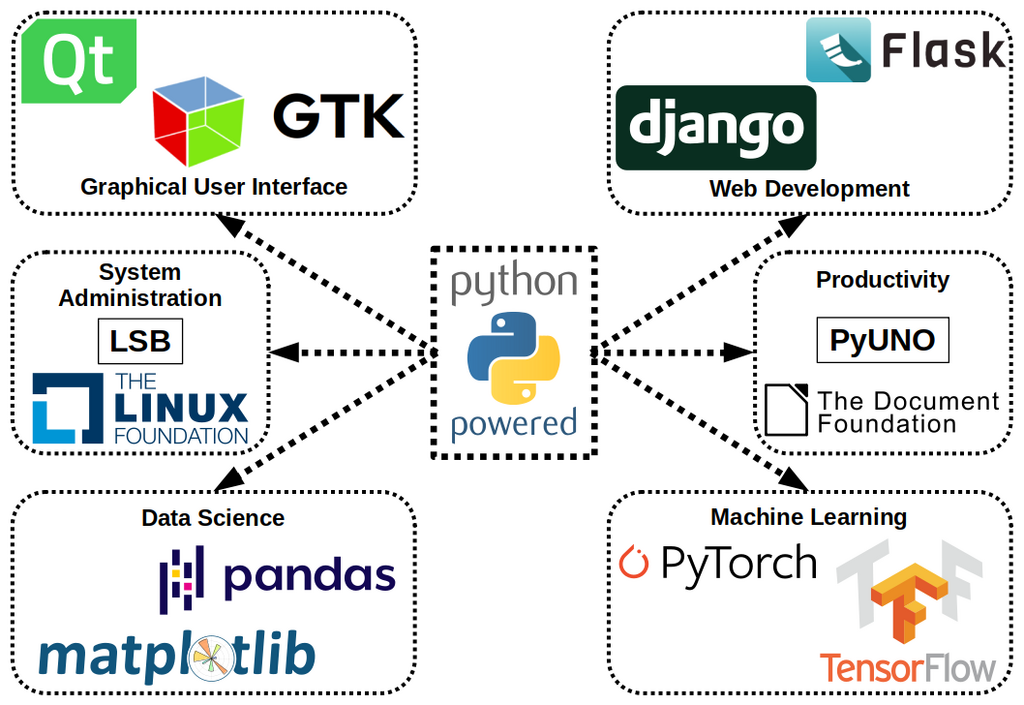
Some of Python's key features include:
- Readability: The code is clean and easy to follow.
- Large Standard Library: It comes with a vast collection of pre-written code (called modules) that you can use to perform common tasks without starting from scratch.
- Active Community: A massive global community of developers means you can almost always find help, tutorials, and third-party tools for any problem you're trying to solve.
Getting Set Up
Before you can write Python code, you need to install it on your computer. The official Python website provides installers for Windows, macOS, and Linux. This installation includes the Python interpreter, which is the program that reads your code and carries out your instructions.
While you can write Python code in a simple text editor, most developers use an Integrated Development Environment, or IDE. An IDE is a software application that bundles together all the tools you need for programming, like a code editor, a debugger for finding errors, and tools for running your code.
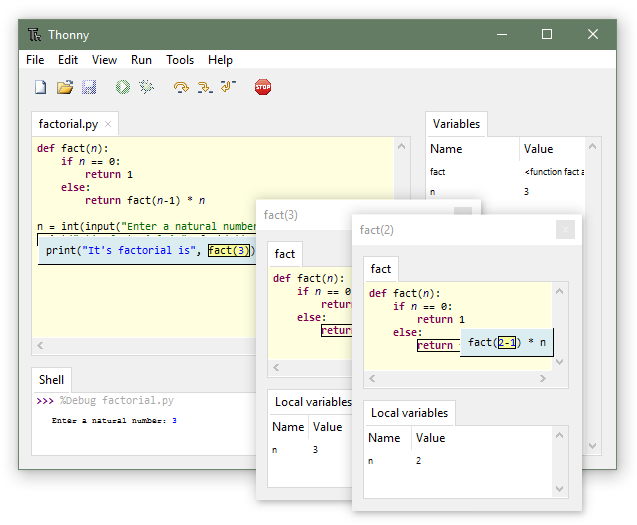
For beginners, an IDE called Thonny is a great choice. It's designed specifically for learning, with a simple interface and helpful features. It lets you see how your program is running step-by-step and even shows you how the values of your variables change as the program executes.
Your First Program
It's a tradition in programming to start by making the computer say "Hello, World!". This simple task confirms that your setup is working correctly and gives you a first taste of the language's syntax.
Open your IDE, create a new file, and type the following line of code:
print("Hello, World!")
Let's break this down. print() is a built-in Python function that outputs text to the console. The text you want to print goes inside the parentheses, wrapped in quotation marks. The quotation marks tell Python that Hello, World! is a string of text, not a command to be executed.
Save the file (for example, as hello.py) and run it. In most IDEs, there's a "Run" button or a menu option to execute the script. When you run it, you should see the words Hello, World! appear in your IDE's output window. Congratulations, you've just written and run your first Python program!
Who is the creator of the Python programming language?
Which of the following is NOT considered a key feature of Python?
That single line of code is the first step on a long and exciting journey. You've installed the necessary tools and learned how to communicate a basic instruction to your computer.